Thursday, February 16, 2023

Book Review: The Romantic Agenda by Claire Kann

Joy is in love with Malcolm.
But Malcolm really likes Summer.
Summer is in love with love.
And Fox is Summer’s ex-boyfriend.
 
Thirty, flirty, and asexual Joy is secretly in love with her best friend Malcolm, but she’s never been brave enough to say so. When he unexpectedly announces that he's met the love of his life—and no, it's not Joy—she's heartbroken. Malcolm invites her on a weekend getaway, and Joy decides it’s her last chance to show him exactly what he’s overlooking. But maybe Joy is the one missing something…or someone…and his name is Fox.
 
Fox sees a kindred spirit in Joy—and decides to help her. He proposes they pretend to fall for each other on the weekend trip to make Malcolm jealous. But spending time with Fox shows Joy what it’s like to not be the third wheel, and there’s no mistaking the way he makes her feel. Could Fox be the romantic partner she’s always deserved?

You all know of my quest to read every asexual book, and Claire Kann's books have been on my radar ever since I read Let's Talk About Love. You can tell how the book is going to be like and how it's going to end just by reading the synopsis (the tropes are strong with this one), but it's kept from being formulaic by Joy and Malcolm being ace and having a really deep friendship that veers into queerplatonic relationship territory. However, their (kinda codependent) best friendship doesn't keep Joy from feeling the pain of unrequited love and seeing Malcolm date other women. I felt that Malcolm took her for granted and asked too much of her, on top of being too bossy. Who makes a weekend trip agenda planned down to the minute for three other people and doesn't give it to them ahead of time, keeping every aspect of it a secret until each event occurs? Who sulks when someone wants to go grocery shopping because tHaT's NoT iN tHe AgEnDa? An uptight jerk unworthy of #carefreeblackgirl Joy, that's who. He just expected her to pull out the trampoline every time he said jump. Anyway that's where the title comes from (agenda).

I'm not sure if this is also in other "make him jealous by fake dating the other guy" books, but Summer was not a jealous bitch like I suspected and was actually a rather rounded character who did genuinely want to befriend Joy, even if she went about it a weird way. Fox is a typical Brooding Hunk™ who's the Grumpy to Joy's Sunshine; their dynamic was overall rather formulaic but still fun to read because Claire Kann incorporates discussions of consent and asexuality. I like the way asexuality was handled in this book a bit better, as it felt a little less didactic. It also helps that all the characters are all about 30 years old, lol. The characters did feel a bit stock character-y, but I still enjoyed the book. This is definitely a "kicking my heels and giggling" kind of romance book, and would make such a fun beach read.

Spoilery comments because that's who I am as a person: we learn that Malcolm is really intense as a partner and has been in love with Joy the whole time, yet he never pulled out the stops to try to woo her or even just tell her how he feels? Joy doing everything for him and being devoted while in (she thinks) unrequited love with him really made me feel for her, as I went through something somewhat similar in the past. I understood Joy's reluctance to let go because what if that's the best she ever gets, what with being asexual? What's the point of having Joy and Malcolm be in mutual perceived-unrequited love and then confess it if they end up with their respective partners? I hated Malcolm's ex-fiance for being such a bitch to Joy and blaming her for trying to "steal her man"; it wasn't Joy's fault that Malcolm refused to own up to his feelings and continually chose Joy over her (although it's not like Joy chose to get sick the same night as Whatsherface's big work party). I didn't love how both Summer and Malcolm wanted to get married for the sake of getting married; I feel it caused them to overlook each other's faults and settle, kinda. It's not a healthy mentality to have. Apropos of nothing, but I feel like Claire Kann has a k!nk for men who cook, based on these two books of hers that I've read. Fair. Oh also, one of the pairs sort of make out and caress partially unclothed, but there isn't any actual sex.

I recommend this book for people who want to read trope-y romance novels that aren't so cishet, and/or who want a romance novel with asexual characters. I don't think you'll like this book if you don't like romance. 

Cover notes: This book cover is cute and sums up the vibe, although I don't love how cartoony it is. The heart dotting the i seems to be made by one of those skywriting planes, which makes no sense because they never ride a plane, only helicopters.

Score: 4 out of 5 stars
Read in: February 13
From: Book Outlet (before I found out they're antisemitic)
Status: keeping

See my aesthetics moodboard for The Romantic Agenda!

Trigger warnings: mentions of past partners expecting/demanding sex from asexual character, discussion of aphobia (homophobia against asexual people), acrophobic character made to fly in helicopter, character outed without her consent, online harassment, past off-page death (I want to say car accident?), grief, alcohol mentions (various), drunkenness, female character objectified mentions, unrequited love, emotional labor taken for granted

Wednesday, February 15, 2023

Book Review: The Color Purple by Alice Walker

Summary from Barnes & Noble for a different version than my copy:

A powerful cultural touchstone of modern American literature, The Color Purple depicts the lives of African American women in early twentieth-century rural Georgia. Separated as girls, sisters Celie and Nettie sustain their loyalty to and hope in each other across time, distance and silence. Through a series of letters spanning twenty years, first from Celie to God, then the sisters to each other despite the unknown, the novel draws readers into its rich and memorable portrayals of Celie, Nettie, Shug Avery and Sofia and their experience. The Color Purple broke the silence around domestic and sexual abuse, narrating the lives of women through their pain and struggle, companionship and growth, resilience and bravery. Deeply compassionate and beautifully imagined, Alice Walker's epic carries readers on a spirit-affirming journey towards redemption and love.

 I'd picked up The Color Purple from the thrift store. I'd of course heard of it before as it's a classic, but it was (unsurprisingly) the queer relationship plot line that piqued my interest. Also, purple is my favorite color. As is usual when reading when reading Black/African American stories from before the 1980s, I steeled myself for a super sad story, and was right to do so. Celie goes through so much abuse from her father and husband, as well as the systemic racism and misogynoir of her time. Major, major trigger warnings for rape and abuse (the full list is of course at the end of this post). I felt for her and was so glad that she got to be in a loving relationship and eventually became a respected member of her married-into family. Even her relationship with her husband Albert developed from abuser/abusee to friends, which was nice to read, although I would have been fine with reading that he died in a fire or something. The scene where Celie stands up for herself and calls Albert well-deserved names made me cheer! Almost all of the men suck in this book, unsurprisingly, but it is clearly due to the sexist, misogynistic culture they live in and the way they are brought up. Even the one character (Sofia, Celie's step-daughter in law) who seemingly is unaffected by and does not buy into misogynoir and racism is severely punished for it. There are so many heartbreaking family estrangements in this book: Celie and Nettie, Celie and her children, Sofia and her family, etc. Nettie has her own story that is fascinating to read. I did find it interesting how the family included mistresses and everyone helped raise everyone else's babies.

It's Shug Avery who first gives Celie the ability to dream. Celie finds her photograph (Shug is a famous singer and "bad girl") and falls in love with her immediately. They meet because Shug and Albert were in love and have an on-again, off-again thing, and he brings her home because she is very sick, making Celie take care of her. Celie and Shug become friends and then more, and Celie is inspired by Shug's openness about sexuality and spirituality. I think it's pretty clear that Celie is a lesbian and Shug is bisexual, although of course those terms aren't used. Surprisingly little to no homophobia; heteronormativity is of course there but everyone just accepts Celie and Shug's relationship. That they are able to make a home together in Celie's abusive 'father's' house after he dies is beautifully symbolic. I'm so glad Celie got to have the love she deserved.

This book was so sad and hard to read but so necessary, and Celie gets her happy ending. This is a very important book that I think most people should read, but if you cannot read about rape or abuse or incest, do not read this. 

Score: 4 out of 5 stars
Read in: February 9
From: thrift store
Status: giving away

Trigger warnings: rape, rape of a child/teen, parental rape, spousal rape, parental abuse, spousal abuse, domestic abuse, physical abuse, incest, misogyny, misogynoir, racism, hate crimes, off-page lynching in the past, murder, death, a character is beaten severely for being "uppity" to whites and fighting back, verbal abuse, teen forced into marriage/slavery, character's children from rape taken away from her without her consent, a character is imprisoned, prison, a jail-connected official rapes a character as payment for getting the imprisoned character out of jail, said jailed character is forced to work for free for a white family (slavery again), adult man forcibly kisses and pursues/stalks a teen girl, imperialism, colonialism, Christian missionaries, xenophobia, non-Western customs and culture looked down on and tried to change by missionaries, African tribe forcibly displaced by English colonizers, religious abuse via promoting white supremacy, slut-shaming, and ignoring domestic violence; physical fights, sex/slut-shaming, illness

Monday, February 6, 2023

Rest of January books

The Library written by Sarah Stewart and illustrated by David Small (picture book) - read on January 6

This is a cute picture book about Elizabeth Brown, a book-obsessed lady who is literally never shown without her face in a book who eventually buys so many books that she ends up turning her house into a library (relatable). I liked the cute poem-story and slightly zany illustrations, but nothing much happens in the book. Elizabeth Brown was a real person, and she is my new hero. I bought this from Book Outlet before I learned about their antisemitism. 3.5 out of 5 stars, tentatively keeping but eventually giving away. 

Trigger warnings: claustrophobia due to the book-filled house


The House at Pooh Corner by A.A. Milne with illustrations by Ernest A. Shepard (children's chapter book) - read on January 21)

It was Winnie the Pooh Day/A.A. Milne's birthday on January 18, so I read this book later that week to celebrate. This is of course a reread, and I'm always charmed by the stories and pleasantly surprised by just how dang funny this book is (Eeyore in particular). The ending suggests this is the last of the WtP books, as Christopher Robin tells Pooh he's being sent off to school. With what we know about English boarding schools, it's even sadder (and grim) to read that as an adult. 4 stars, permanent collection. 

Trigger warnings: characters get lost, characters get stuck in tall trees, a character's tree house falls down (no one is hurt), growing up (the last chapter)


Once Upon a More Enlightened Time by James Finn Garner (short stories for adults) - read January 29

You'll remember I read the companion books in this series earlier last year in order to get rid of them (Politically Correct Bedtime Stories, Politically Correct Holiday Stories). Like the others, this "politically correct" fairytale retellings were somewhat amusing, but you can't really tell if they're parodying the original patriarchal tales or political correctness itself. Maybe that's the point. A fun read, but not worth keeping. 3 stars, giving away.

Trigger warnings: inclusivity and political correctness mocked; depictions of misogyny, capitalism, sexism, and politics; children are abandoned in woods by father (Hansel & Gretel), baby girl is cursed to have a non-feminist view of men as saviors and completers, body horror via genetic manipulation, cities portrayed as dirty and crime-filled


Love Poems by various authors - read January 29

I've owned this nice Everyman's Library edition of love poetry for some years now. My goal was to read the poems I'd listed as my favorites on a post-it note inside the front cover after the first time I'd read the book, but then I just ended up reading them all. You get many of the classics, such as Neruda and Shakespeare, plus some lesser known poems as well. The poems, unsurprisingly, tend very old and Western, with a few Japanese and Chinese poems (translated into English) thrown in as well. There might be other countries represented; I'm not familiar with every poet included in this book. Recommended if you like poetry, as I do. Since I'm very short on space, I found and bookmarked all the poems I like online, then ended up finding the whole book on the Internet Archive. Go figure. I think I bought this one at my library's book sale or a thrift store. 4 stars, giving away.

Trigger warnings: poetic sensuality/sex descriptions, amatonormativity, heteronormativity, heartbreak, probably death mentions

Thursday, February 2, 2023

Book Review: How Moon Fuentez Fell in Love With the Universe by Rachel Vasquez Gilliland

When her twin sister reaches social media stardom, Moon Fuentez accepts her fate as the ugly, unwanted sister hidden in the background, destined to be nothing more than her sister’s camerawoman. But this summer, Moon also takes a job as the “merch girl” on a tour bus full of beautiful influencers and her fate begins to shift in the best way possible.

Most notable is her bunkmate and new nemesis, Santiago Phillips, who is grumpy, combative, and also the hottest guy Moon has ever seen.

Moon is certain she hates Santiago and that he hates her back. But as chance and destiny (and maybe, probably, close proximity) bring the two of them in each other’s perpetual paths, Moon starts to wonder if that’s really true. She even starts to question her destiny as the unnoticed, unloved wallflower she always thought she was.

Could this summer change Moon’s life as she knows it?

My friend S gave me this book for Christmas (we have a habit of accidentally giving each other gifts way after the events they were for), so I read it a week or so after I got it. I mentally put every latine kids' and young adult book in my to read list, so I was happy to receive this book. It's so great how there's so much more latine representation now than there was when I was a teen. I only remember one or two YA books with latine protagonists, and one was about undocumented immigration and the other may have been about gangs. I feel like nearly everything else that I read had white protagonists. I was on board for body positivity and tsundere pairings, but this book really blew me away. 

Non-spoilery summary: Moon overcomes her trauma and low self-esteem to come out from her sister's shadow and let herself find love with a hot guy who does the same. This book celebrates food, spirituality, art, and finding the beauty in the world and in yourself. I very much enjoyed reading this book and highly recommend it.

~

Spoilers below, because I'm incapable of talking about a book without talking about everything. For trigger warnings, see the list at the end of this post.

Moon and Star are fraternal twins who were raised by their narcissistic, fatphobic, ashamed of her heritage, looks-obsessed, militant Catholic, religiously, verbally, and physically abusive mother. True to narcissistic parent form, thin, beautiful, white-passing Star is the favorite/golden child, and plus-size, brown-skinned Moon is the scapegoat. (Weird theme to have for January, right? I swear it's accidental.) Strangers ignoring Moon to gawk at and beg Star for her signature/a selfie cements Moon's low self-esteem. Seeking the love she doesn't get at home from boys, Moon accidentally acquires a Reputation and incurs the wrath of her mother. Moon and Star are close, but when Moon begins to be seen and acknowledged for her art while on the influencer tour, Star cannot handle not being the only one in the spotlight and sabotages her. There is a happy ending, but it's realistic. I loved Moon, felt for her, and rooted for her. I'm glad she was able to get everything she deserved.

On to the love interest. Santiago is a really hot buff guy a year or so older than Moon, whose grumpy demeanor and chip on his shoulder instantly annoy her. A misheard conversation makes him 'dislike' her. Lots of attraction, "nooo I'm supposed to hate him!!" thirsting, fun cute flirty banter, and cooking and sharing meals together (Santiago is a world-class cook) take them from enemies to lovers. This was very fun to read, even if I wanted to smack them in the beginning. Moon and Santiago's insecurities are similar and cause them to withdraw from/get mad at the other at various times, usually also due to misunderstandings. Santiago's older brother is the inventor of the Instagram-like app that Star and the influencers create content on, and is also very attractive and rich. Consequently, Santiago is used to people overlooking him or using him to get to his brother. Santiago is missing a hand and is used to dealing with microaggressions and ableism from people; that is his source of low self-esteem. He and Moon bond over the "in their more famous siblings' shadows" thing and over their similar trauma from losing a loved one in a car accident. Oh, and also delicious food (which Santiago is a snob about). Like yes, their relationship is very YA-ish, but it's also realistic and wonderful because they have to deal with and overcome their insecurities and traumas in order to let themselves fall in love.

Other random stuff I want to talk about: 

Star's type of influencing is being a "religious model". Wut. Like she'd post pictures of herself with a bible verse. It makes no sense and is kind of hilarious because one of the first scenes we meet her in, she's in a bikini at the beach to take pictures for her account. Much Christian so spiritual wow. At one point she's blessing her fans and putting her hands on their heads like the pope?? LMAO

Moon loves flowers and does flower/plant/rock art, which she photographs and turns into tarot cards, something she keeps from her mother because she knows she wouldn't approve (Christians consider tarot cards to be demonic). Thanks to influence from her bruja-y aunt, she's getting more into pre-Christian/pre-Columbus types of spirituality and belief from her LatAm indigenous heritage. It's understandable that she would, as her mother's traditional Catholicism is used to shame and abuse. Even their priest is a huge judgy bitch to Moon. I did like how Moon pushes back as best she can against the shitty stuff she's been taught, and stands up to people when they're inappropriate or racist to others. She's working on standing up for herself too.

The women in Moon and Star's family are subject to a curse called La Raiz: after the first time they've had sex, flying insects are drawn to and surround/cover them. Moon is distressed by and ashamed of this, as she sees it as a physical manifestation of her "sluttiness" and failings (plus, yikes, bugs). This isn't really addressed, but I think it's not necessarily a curse. Moon says that sometimes the insects come when she's by herself out in nature creating her art, and the bugs surrounded her when she's engrossed in it. Also, when Moon sees Star making out with fellow influencer Bella, fireflies surround them too (Star says she hasn't had sex, but it's not stated whether she slept with Bella. I'm leaning on the side of she didn't). I believe the so-called "curse" is actually drawn to love, and the reason Mrs. Fuentez says she trapped the curse in a jar and is therefore immune is because she is a psychopath incapable of love, so it never happened to her. In my opinion, the "curse" is a manifestation of the immense spiritual power and magic that the women in Moon and Star's family are capable of. Moon knows how to use tarot cards and do obsidian mirror divination from her aunt, and she starts selling her tarot card decks. La Raiz and Moon's abilities give this book a magical realism label, in my opinion.

Did your jaw drop, spoilers reader, when you saw that Star kisses a girl? Mine did! It's kind of satisfying and funny because Star spends the entire book being this super-Christian little goody two-shoes Catholic, all judging Moon for having slept with guys, and it turns out she's queer! Bella is a makeup influencer, and she and Star met at a different influencer event the previous year; they clearly had a fling that didn't end well (my money is on Star having freaked out due to internalized homophobia). Because Star gets all weird when Bella is mentioned, Moon assumes they're nemeses. lol  This isn't delved into as much as my Christian queer ass would have liked, but that makes sense since this is Moon's story, not Star's. I would actually love a companion book with Star's point of view, since I want to really delve into how she dealt with her attraction to Bella and falling in love with her as a conservative Catholic. We get the idea from this book that Star was in denial about being queer/in love with Bella and chose to ignore it until the kiss. I felt for her, despite her repeated bitchiness, and it's clear being the golden/favorite child did not inoculate her from her mother's abuse and expectations. 

Moon has body image issues due to her mother's constant fatphobic verbal abuse. It's clear that much of the mother's hatred and abuse of Moon is because she looks like her (brown skin, tendency towards curviness). Moon is a size 16, which, lack of size standardization in the fashion industry aside, is just barely the first size in plus-sizing. That's only one size bigger than I am. It also turns out that Moon is not fat and ugly but rather curvy and beautiful (and has low self-esteem). That's... kind of a pet peeve for me, and I'm not even in the fat community. See the fourth paragraph in this other book review to see what I think about that. Obviously people can be and are fatphobic to size 16 individuals, and we are always more critical about ourselves than others are of us, but like... sigh. 

Anyway, fantastic book that broke my heart and inspired me and will stay with me for a long time. Highly recommended. Rachel Vasquez Gilliland, turn this book into a series so I can keep hanging out with Moon?

Score: 4 out of 5 stars
Read in: January 19
From: Christmas gift from a friend
Status: keeping tentatively

See my aesthetics moodboard for How Moon Fuentes Feel in Love with the Universe!

Cover notes: I like the purple, flowers and moon on the cover, of course. I think it's dreamy and fine for the book. Not sure about the lavender background with the circle of night sky at the top, suggesting she's inside of a lavender cone for some reason? The illustration more or less depicts how I see Moon.

Trigger warnings: parental abuse, physical abuse, verbal abuse, emotional abuse, religious abuse, parent throws knives at teenaged child, controlling parent, narcissistic parent, neglect, off-page past suicide, off-page past death from car accident, off-page past loss of limb from car accident, slut-shaming, bullying, creepy adult man gropes teenage girl, creepy adult men hit on teenage girls, street harassment, racism, xenophobia, colorism, fatphobia, abusive parent controls/restricts what her children eat, mental illness, ableism, sexism, linked aquaphobia and gephyrophobia due to past trauma, parental favoritism, insects and bugs show up in this book a lot, internalized homophobia, on-page sex scenes, underage sex, bad sex, a character experiences hunger, food restriction, lovingly detailed descriptions of food and eating

Thursday, January 26, 2023

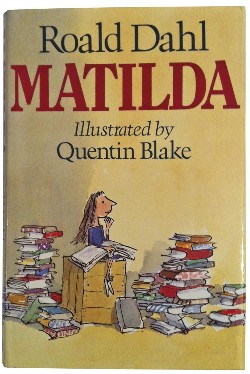
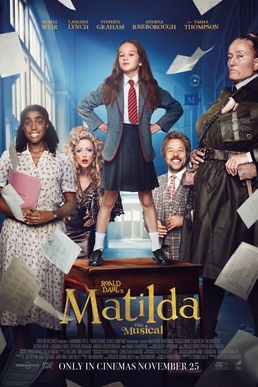
Book (and movie) Review: Matilda by Roald Dahl

Ok, right off the bat, this is not going to be a traditional book review, as I've read this book several times and it's one of my favorites. Much like my All Creatures Great and Small review, I'm just going to be talking about both and comparing them. Spoilers for both, obvi.

Matilda is one of my favorite books of all time. She's the first character I remember looking at and thinking "oh she's me for real". As the tiny, dark-haired, overlooked, book-loving daughter of a smallish, angry, mustachioed man prone to shouting, I added her to my heart immediately. She's the first mirror I remember. While I technically haven't read Matilda that many times, I remembered quite a lot of the book and its little details. I had forgotten Matilda was kind of rude to Miss Honey about being poor and living in a cottage just barely better than a shack (unsurprising, given her awful parents), leaving me to mentally go "that's not in the book!" when the movie showed it. I'd forgotten about the boys Miss Trunchball tortured, although I re-remembered the ear-stretching scene when it happened in the movie. I remembered Bruce Bogtrotter and the enormous chocolate cake, Mrs. Phelps and the library, and Lavender and the newt. I'd remembered most of Matilda's revenge pranks on her family, and of course the wonderful comeuppance at the end. It struck me how quiet and slow-moving the book is, compared to my memory of it. Each chapter focuses on a specific part, and we move along like a bulleted list.

It's interesting how many British authors have written about characters stuck in horrible, abusive schools. This mirrors their own experiences; British boarding schools have historically been neglectful, abusive places filled with bullies and tyrannical teachers who used physical force. Major trigger warnings for all the abuse, but this article talks about it. Roald Dahl himself wrote a memoir, Boy, about his childhood and experiences in said schools. C.S. Lewis went to one such awful boarding school, and the schools in his children's books are similarly awful. It strikes me that having so many generations go through abusive & neglectful schools kind of explains why England was so awful to the countries it invaded; abused people often abuse people.

On to the movie. Going off of people's clothing and hair, the movie is set in the 1980s, which is when the book was published. This is an interesting choice, and I like it. It makes sense too, as they were more lenient on physical punishments in schools back then. The opening song mirrors the book's opening chapter about parents who think their kid is special and brilliant despite what they're really like. The girl who played Matilda was basically perfect. She played Matilda a trifle less quiet than she seems in the book, but that's to be expected in a musical and movie, where you want your characters to stand out. Matilda has dark eyes as well as hair in the book, and the actress having blue eyes as well as brown hair made her look rather like me as a child (definitely a plus). It made me a bit sad that the lovely language Matilda uses to describe how she feels when she uses her powers was downgraded: "flying over the silver stars" etc. to "it fizzes". Matilda and all the children were a bit too old, which is expected in movies. Matilda and her class are basically kindergartners (5 or 6 years old), and seemed about 7-9 years old in the movie. Hortensia, the one older kid Matilda talks to, seems about 12 or 13 rather than 11. She is so cool in the movie and rather wasted, imo. I'm wondering if one of the songs that was cut from the movie was her describing her pranks on Miss Trunchbull like she does in the book. I wish they'd left all the songs in.

The parents were pretty much perfect (i.e. gross and mean). The actress playing Mrs. Wormwood is very thin; the book Mrs. Wormwood is fat, and the view and descriptions of her character are pretty fatphobic, so I'm not mad at the change. Both movie parents have more middle?-class accents, which makes sense for a used car dealer and his wife, but can come off as classist as all the other characters have nicer British accents (I love all British accents). In the movie, Mrs. Wormwood didn't want to be pregnant or have a baby at all, being in denial about it, and Mr. Wormwood wanted a boy and not a girl. He refers to Matilda as "boy" and he/him during the movie, with Matilda saying "I'm a girl" after each time; this, as some tumblr user pointed out, makes her trans-coded. They cut out Matilda's older brother, which I guess kind of makes sense for movie streamlining, but that also lowers the heartbreak and unfairness as the parents treat the son normally/nicely and treat their daughter terribly. This is consistent with what narcissistic parents often do; they have a favorite child and a scapegoat child. The only parental prank they cut out was the parrot one, which makes sense. It's probably the least satisfying one, anyway. It would have been funnier if Mrs. Wormwood cut the glued-on hat off Mr. Wormwood's head like in the book, but I guess they wanted to cut down on the hair and makeup budget. I'm guessing the other song that was cut was the parents', maybe the "you chose books/I chose looks" line, which would make a fantastic song. In the end of the movie, when Matilda magics the hat off her father's head as a thanks for finally calling her his daughter and letting her stay with Miss Honey, was nice but not in the book. The Wormwoods deserve no redemption.

I like the diverse casting for the movie. I'm guessing they changed Mrs. Phelps' library into a cute retro bookmobile library so they could shoot in different pretty locales, but I'm not mad at it. I want to dress like her when I grow up. I'm not sure why the movie adaptations all tend to make Lavender (Matilda's best friend) meek and sometimes even mousey; maybe it's to set off how courageous Matilda is? In the book, they are described as equally gutsy and adventurous. The movie understandably made the other memorable kids (Bruce, the pigtails girl) be in Matilda's class. I get the reason for this, but it does mean we don't deal much with the other students. I didn't like how Bruce gets dragged to the chokey after finishing the cake in the movie; this doesn't happen in the book, as Trunchball accepts her defeat angrily. Miss Honey was perfect. You felt for her and rooted for her to be free. Emma Thompson played Miss Trunchbull very well, with her weird square fake jaws and fatsuit and weird, blocky platform shoes. She was adequately scary. I'm not sure why they moved the chokey from her headquarters to the woods, but it was creepy. It could definitely be argued that movie!Matilda's final revenge was definitely way past her abilities (making a chain monster AND destroying all the chokeys [excellent choice btw] AND plaiting Trunchball's hair into two braids at the same time AND spinning and throwing her out the window by her hair). That would've knocked Matilda out a third of the way through. The changes did feel more cathartic, though; Trunchball deserved to be thrown out the window by her hair. Having the children read out the "ghost's" words on the chalkboard out loud in unison? Perfectly creepy.

On the biggest addition to the movie: despite their backstories already being incredibly similar, the movie decided to really underscore this by giving Matilda psychic abilities on top of her telekinesis: she sees pieces of Miss Honey's story, in which Miss Honey's parents are circus performers for some reason and Miss Trunchbull is responsible for Miss Honey's mother's death as well as her father's, and abused Miss Honey as a child. It is really interesting, though, how we the audience are made to think it's Matilda dealing with her parents' abuse and neglect through this story she's telling Mrs. Phelps; indeed, Matilda sees herself as the abused little girl. They sadly left out Miss Honey's courageousness in becoming a teacher and renting the cottage behind her aunt's back; I love that for her. I love her cottage, too; it makes sense she'd decorate it with her pupils' art, and it should have been like that in the book. TBH, the book takes it a bit too far: Miss Honey sleeps on the floor and owns no furniture. You're telling me she wouldn't find stuff off the street or at yard sales? Anyway. The movie ends very similarly to the book, with Miss Honey getting her house back and the Wormwoods running away from the consequences of Mr. Wormwood's crookedness and letting Matilda live with Miss Honey. In the movie, Miss Honey is also left in charge of the school and turns it into a beautiful, colorful, carnival-inspired Montessori dream. The book is more practical: an older, good teacher became headmaster after Trunchbull bounced.

I really liked the songs in the movie; they intersected and played together beautifully. I really like the cleverness of the alphabet/school song and had "Revolting Children" stuck in my head for days. It's been ages since I've watched the 1990s Matilda, but I feel that this one is the closest adaptation yet. Matilda the Musical is on Netflix, and I really recommend it.


Trigger warnings for both book and movie: child abuse, physical abuse, verbal abuse, neglect, child endangerment, children forced to stand in nail-studded spiky closet for hours without being able to sit, child forced to eat a huge cake (food-related abuse), abusive parents, narcissistic parenting, abusive and enabling school staff, adult basically enslaves child and forces her to do all the cleaning, adult waterboards child (book only), off-page/screen suggested murder, poor adult, food insecurity, newts

Tuesday, January 10, 2023

Books Read in 2022

  • Total books read during this year: 45
  • Total books that I started to read but didn't finish: 1
  • physical books read: 43
  • digital/ebooks read: 2
  • physical books started but unfinished: 1
  • ebooks started but unfinished: 0
  • Library books read: 0
  • Library books started but unfinished: 1
  • Books I liked: 25
  • Books I loved: 16
  • Books I hated: 0
  • Books I disliked or found meh: 2
  • Books I felt neutral about: 0
  • Books I felt strongly about but can't classify as love or hate: 1
  • Books given away: 0 I think
  • Books purchased: 116 😓
  • #1 most loved book this year: ugh I can't choose!
  • #1 most hated book this year: I did like some of it, but Upside Down irritated me the most

So I thought I hadn't read that much and that it was only a little bit more than the previous year, but last last year I read 27 books and this last year I read 45!!! TBH, I did count every picture book and children's book that I read (except the Frida Kahlo's parrot one), so if you remove all the picture books it drops to 37!! That's still counting middle grade books, of course. Wow! I did really good!

Here's some charts for my fellow data sluts:

I read significantly less mystery/crime (my largest percentage in 2021) as I did not find more Agatha Christies in the thrift store. The previous year my fantasy percentage was 11.1%, and I read no memoirs or biographies (!). 

As usual, prose dominates. A bit less this last year, as in 2021 it was 77.8% of the pie. I did not count picture books that I read in 2021; then, my second largest slices were essays and comics (7.4% each). Slightly more than 2022's 6.5% for essay collections. 

Fairly consistent reading last year, with my two lowest months both being 1 book only. My only dry spell was July. Interestingly, in 2021 my most books read month was October with 8 (all those Agatha Christies).

Author/Artist Gender: Exactly half of the authors/artists I read were/are women, while my percentage of male authors jumped 13% (I reread The Chronicles of Narnia, which is why). In 2021 I did not read any nonbinary authors/artists. Side note: there's no way to differentiate between the authors and artists, so it's kind of pointless to put author/artist. It's not like it asks for that data separately. For instance, Miss Meteor was written by one nonbinary author and one female author, and I had to mark it Other in order to not erase one of them. My other Other book is by a university. Kind of demeaning if you think about it.

Nation of Origin: US and UK are both down a bit, with a few more countries added. China is there because of Starry River of the Sky (at the time I thought it meant story origin, not book/publisher origin).

Authors'/Artists' Race/Ethnicity: My amount of authors/artists of color has really jumped! Last year it was only 3.8 percent, and now it's over a third!

Protagonists' Race/Ethnicity: Ditto for the amount of books with protagonists of color. We're getting there!

Last year I didn't include my data on queer, trans, or disabled authors/artists and protagonists because I got tired of writing the post. I'm not going to bother opening up the 2021 spreadsheet just to compare the data, but this last year:

-- 18.2% (i.e. 8/44) of the authors/artists I read were queer. This is IMO somewhat difficult to determine; quite often I had to go off of stuff like 'do they have their pronouns; husband, wife, or partner in their author bio' or just straight-up googling. Not everyone volunteers this information, and they shouldn't have to. So, that's my percentage of openly, obviously queer authors/artists.

-- 25% of the protagonists in my books were queer (LGBTQ+).

-- I read 2 trans (actually nonbinary) authors this last year, that I know of (see note at queer authors/artists). My spreadsheet chart is messed up for some reason, and I don't know how to change it. I didn't read any trans protagonists in 2021. 

-- 4.5% of my books had disability representation (both books were about Frida Kahlo). 

-- 2 of my books were translated from other languages (the Verne and the Cuentos books). 

-- Oh, and just over a quarter of the books I read were nonfiction, while the rest were fiction. 

-- A little under half the books I read were children's and middle grade, just over a third were adult, and 19.6% were young adult. 

-- 4.3% of the books I read were published this year, but one is that nice edition of Persuasion and the other is the book I never finished, so IDK if they count. 

-- I read slightly over a fifth (21%) of all the books I purchased this year, not counting gifts. You do not even want to know how much I spent on books this year. Book Outlet turned out to be antisemitic so I'm not shopping there ever again. This should keep this year's book spending down. However, a used bookstore just opened near me... (it's manga tho).

As always, I owe my entire life to Tirzah Price and her wonderful reading log spreadsheet. Can you believe she gives it away for free? I better repay her by buying her books for full price in an indie bookstore. Thanks queen!

Thursday, January 5, 2023

Jane Austen Christmas gift books

Two of the books I received for Christmas were Jane Austen-related: this gorgeous edition of Persuasion, with real letters and paper items from the story, and a lovely edition of some of Jane Austen's letters with illustrations from the period. I read them both during winter break. Ah, winter break; how I miss thee. All I did was sit around and read books.


Persuasion is my favorite Jane Austen book, and the letters and calling cards etc. are done up in the most beautiful calligraphy. They are all printed/written on paper that really looks like it came from the 1800s, spots and all. Each item is held in a somewhat sheer vellum? slip cover/envelope thing that is bound into the book right after the pertinent page, and it's fun to pull out and unfold each item to read it. Despite being cursive, each letter was easy to read; the font size is bigger than extant letters of the period precisely for this reason (legibility). I would be completely unable to read one of those tiny handwriting, crisscrossing letters. A map of Bath is included, so you can find the places mentioned in the book if you want. I love the cover, with its gilt handwriting from Wentworth's letter. They are quite expensive, and understandably so. Highly recommended for Austen fans! 4.5 stars. Trigger warnings: a character jumps from a height and hits her head, incurring head trauma; said character is in a coma for a while, implied ableism, poverty, implied parental emotional neglect, a disabled character has her rights and property withheld, man in his 30s dates 19 and 20 year old girls, classism, implied ageism, lookism, past off-page deaths


The Illustrated Letters of Jane Austen includes some of Jane's letters along with illustrations from books, newspapers, and magazines etc. of the Regency period. You'll read a letter from Jane when she was staying in a certain village, and a drawing or painting of the village by somebody, maybe even someone known by Jane, will be included. A letter where Jane mentions what she's wearing  to a ball is  accompanied by a fashion illustration of the style of dress, etc. The letters are split up according to seasons in her life, with an essay at the beginning of each section that talks about what was going on in her life then. After each letter, a short explanation of who Jane is talking about is given. This was fun to read, but still a bit of work due to all the essays. Jane was hilarious. My only quibble: in one letter, Jane told her sister about a gallery she visited and saw a painting of "Mrs. Bingley" aka Jane from Pride & Prejudice, and the painting was not included. Okay, so it's only "assumed to be" the painting Jane was talking about, but it wouldn't have hurt to include it. Here it is, in case you're wondering. I recommend this book for Jane Austen fans as well. 4 stars. Trigger warnings: stillbirth mention, Jane makes a mean joke at the bereaved parents' expense; corpse mentions, death, illness. That's all I can think of

Sunday, January 1, 2023

Rest of non-HC childrens' books of 2022

I read Bravo! Poems About Amazing Hispanics back in September for Hispanic Heritage Month. It was purchased from Book Outlet. This brightly colored picture book contains short poem-bios of notable Hispanic figures from history (many of which I had not heard about) written by Margarita Engle and illustrated by Rafael Lopez. I've enjoyed every book I've read from Engle and know her to be a notable Hispanic author of Hispanic books for kids. This was no exception, and I learned a lot from this book, and want to learn more about the people in it.  Highly recommended. 5 stars, keeping.  Trigger warnings (that I remember): racism, discrimination, poverty, sexism, injustice


Another purchase from Book Outlet, Viva Frida is a dreamy picture book of/on/about Frida Kahlo. It's not really a biography as much as it is a book celebrating Frida, her aesthetic and imagination. It's written by Yuyi Morales, who has created many beautiful latine picture books, and the illustrations are actually pictures taken by Tim O'Meara of Yuyi's beautifully styled marionette puppets of Frida, Fulang Chang (Frida's monkey), the iconic Frida deer, etc. There are a few traditional illustrations for the dream aspects which are by Yuyi. This was a lovely, dreamy celebration of Frida and I enjoyed it. 4 out of 5 stars. No trigger warnings that I can think of, except dolls/marionettes


I hadn't bothered to put this in my reading spreadsheet, but I also bought and read another Frida kids' book from Book Outlet, per my goal to own every book about Frida Kahlo. A Parrot in the Painting: The Story of Frida Kahlo and Bonito is an early reader book for like first graders. It's a fictionalized story of Bonito, Frida's parrot, trying to think of things to do that would make Frida paint him. She'd painted her other pet animals but not him. It's a cute story that kids might enjoy. I may give this one to my nephew when he's old enough. No star grade. No trigger warnings except possibly for birds and animals, owning exotic pets (in the 1940s)


Okay, that's it, since the rest of the picture books I read were from HarperCollins or its subsidiaries, and the strike is ongoing.