Showing posts with label art history. Show all posts

Wednesday, December 1, 2021

Book review: The Rule of Four by Ian Caldwell & Dustin Thomason

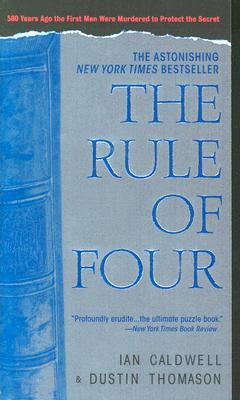
book cover of The Rule of Four. blue text on silver background, blue book spine to the left of text
The first book I read in November was The Rule of Four by Ian Caldwell and Dustin Thomason. It's a bibliomystery and is about two friends at Princeton trying to figure out the codes and secrets held in a mysterious Renaissance book, the Hypnerotomachia Poliphilli (which is real!). Murders start happening, and they start searching for clues for those too. They have to find all the answers before their dissertation is stolen or they're kicked out of Princeton. Read the official synopsis here.

The authors are two best friends who also both went to Princeton, so the setting felt real and lived in. The characters felt a bit stiff and formal, more like adults in their late twenties and early thirties than college students, but I was invested in them and their friendships. This may be because the book is set in 1999, but I don't think that would make the characters more mature. I liked the friendships between the four young men. I liked how Tom and Paul's friends helped with the riddles and clues; their med student friend helped with the medicine stuff, and Tom's girlfriend helped with riddles that had to do with her own major. The plot with the Tom and his girlfriend Katie was interesting enough, and she did feel mostly like a fleshed-out character, but I would have rather spent more time with the book. 

The HP incunabulum and its history was my favorite part, of course; there were so many things that I learned about in rare books classes (Aldus Manutius!) and things about Italian renaissance history, science and art (Florence! the Bonfire of the Vanities!).  The cryptology stuff was fascinating, with hidden messages encoded in the text which contained riddles, with the numerical code to the next riddle contained in each answer. The rule of four refers to the last numeric code needed to detect the book's hidden messages. One riddle had to do with who gave Moses his horns, which Paul did not get immediately. I call bull on this; everyone who tangentially knows anything about renaissance art and the Bible knows that Moses has horns in Michelangelo's statue of him because of a mistranslation (rays and horns being the same word). Paul, who knows Italian and Latin and basically everything there is to know about Renaissance Italy and its art, history, you name it, would have picked up on this right away. Paul says in the book that Michelangelo (or Jerome?) depicted Moses with horns because he felt only God should have glory radiating from His face, but I don't think that's true. 

The Hypnerotomachia Poliphilli wove its way through Tom and Paul's lives and the lives of Tom's father and his friends, who became Paul's advisors and mentors. The HP was a source of life-long obsession to these men, and it impacted their relationships with their partners and each other. Tom's father being obsessed with the HP damaged his relationship with his wife and son, while Tom's obsession with the HP strained his relationship with his girlfriend. Tom's father and his friends echoed Tom and his friends. This book deals with loss, obsession, academia, friendship, depression, relationships, and more. It was very sad but very fascinating. I loved the HP parts but I don't think I'll reread or keep this one. It stayed with me for a while. 

Score: 3.5 out of 5 stars
Read in: November 2-3
From: the thrift store?
Format: paperback
Status: giving away

Trigger warnings for this book: murder, death (various methods, some of them violent), car crash, blood, semi-graphic major injury, other injuries requiring hospital stays, alcohol overuse, obsession, depression, sex, mentioned nudity, sexism/misogyny, privileged Princeton pigs

Tuesday, March 20, 2018

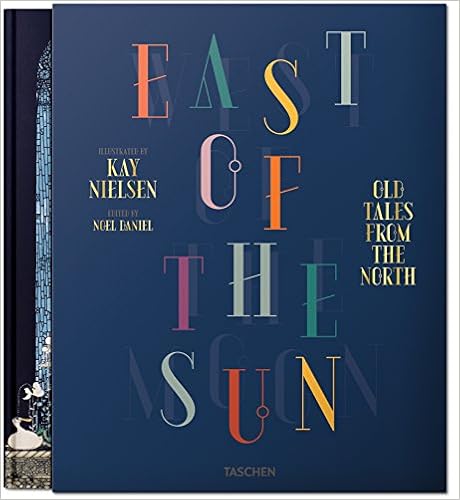
Book review: East of the Sun and West of the Moon - Kay Neilsen et al.

One of the new books that I had to look through at work was a big, beautifully illustrated version of East of the Sun and West of the Moon, a collection of Norse fairytales with essays on the history of their collection, translation, and illustration. Kay Neilsen did the illustrations for these stories, and they are just gorgeous. You can see the Art Deco and stage scenery influence. If you've never seen his art, I recommend searching for his name in Google Images. I'd read most of these stories before; if you've done any extensive reading of fairytales, you'll recognize the tales (animal husband, youngest son hero, do not go into that room, magical help, etc.). I liked this book because of the essays in the beginning, which talked about the history of illustrated fairytale book publishing, fairytale collecting and publishing, Kay Neilsen's life (he sadly died penniless and nearly obscure), etc. If you're one of those people who want to buy every kind of fairytale book there is or are huge fans of Neilsen's art, I would recommend this. The only downside was that the cardboard (!) covering of this hardcover got a rip on the spine, which is really weird for such an expensive-looking book. I was shocked to learn there are murals by Kay Neilsen in Los Angeles and in the town where my sister went to college--I could have visited had I known!


Score: 4 out of 5 stars
Read in: mid-late February
From: new library acquisitions (work)
Format: hardcover
Status: still at the library, obviously

Sunday, February 25, 2018

Book Review: The Lost Tomb by David Gibbons

The Lost Tomb is one of those archaeological/religious mysteries, a la The Da Vinci Code . It is about an archaeologist, Jack Howard, who makes all sorts of exciting discoveries in and around the Mediterranean Sea which lead him on a wild goose chase to London and Southern California etc. to find what might be the actual written words of Jesus Himself. Of course, a shadowy Roman Catholic organization will do anything to bring him down, including MURDER.

David Gibbons is a diver and has dived in the Mediterranean and made interesting finds, which lends ample credence to the parts of the book where Jack and Costos dive in the Mediterranean Sea and try to find stuff on the sea floor that belonged to Paul. It is also evident that he did his research. 

TLT is apparently the third book in the Jack Howard series. In the prior books Jack discovers Atlantis and the lost menorah from the Temple in Jerusalem, and the rest of the series seem to be about similar historical discoveries. Jack is the typical ruggedly handsome archaeologist who is also a dynamite deep sea diver and is very physically fit and fearless and knows about like every type of history, art and architecture. Very Gary Stu-ish. As a result he is not a very well-rounded character, although the book tries to make him interesting by giving him a like star-crossed former lover who maybe is killed because she tried warning him about the danger (signs point to her maybe surviving).

 The other characters in TLT are from his archaeological diving team and/or are contacts in the history/archeology etc. fields who help him out in his travails. I noticed that despite their being experts in their fields, at some point or another they have an oddly out of character blank in their knowledge, something even I know, which is clearly there so that Jack can swoop to the academic rescue and explain it for them and the reader. They also spend a lot of time explaining historical/archaeological facts to each other, which is clearly intended to inform the audience. This wasn't too annoying for me, because I like these topics, but it might annoy other readers. One character, Costas, got very grossed out when having to navigate around dead and rotting bodies (that had been dead for hundreds if not thousands of years), which would be accurate for a lot of people, but I felt like it was written in for comic relief and to showcase how stoic and brave Jack is. My favorite character was the Ethiopian nun who helped them get into the main cathedral in Jerusalem.

Despite the characterization flaws, The Lost Tomb is a very interesting story that pulls you in and makes you want to know what happens next. The flatness of the characters does not diminish the story; the discoveries and chases are the point. I liked the different settings in places I'd like to visit and the subject matter. Obviously, in a genre like this you have to compare the book, main character, and writing to Dan Brown's Da Vinci Code books. I read the latter in high school, so it's been quite a while, but I think David Gibbons' series comes out on top, mostly because it isn't trying to be more than what it is and isn't smugly patting itself on the back at every clever turn. Brown's series also uses sex and murder to be shocking, while Gibbons relies on the twists and turns to keep you reading. I will say that if memory serves, Brown's writing is better than Gibbons', with more character growth. It also has more intrigue, if you're into that. Both books obviously rely on unproven things being true in order to build on them and have more untrue things being true (because A, then B, therefore C, even though A has never been proven and is probably made up). For The Lost Tomb, it was assumed that the shipwreck the Apostle Paul went through when being taken prisoner to Rome happened off a different island than was mentioned in the Bible. 

The Lost Tomb also has the same assumption as The Da Vinci Code that because the Bible has had so many transcribers and translators, the original meaning was lost, and rapacious Christian leaders co-opted Jesus' words to their own means for both profit and power. This is untrue, since great care was taken in both the transcribing and translation of the texts, and it bugs me to hear educated people still parroting that sort of view. The issues within the Church are the same as the issues with humanity in general: we are imperfect and proud and like to be right, and this creates problems when there are large groups of us. No one who began the Christian Church ever set out to profit; they wanted to spread the good news. Also, obviously the Roman Catholic church has done a lot of harm over the ages, and is not great today in terms of women's rights, covering up child abuse, and birth control, but I think we're all over making them the Big Bad. Like, it's so done. Find a new villain, you know? 

While he is not religious, Jack finds religion interesting and thinks certain things about are true, which contrasts him with the evil priest dude who wants to keep the truth about Jesus' gospel a secret in case it dismantles the Catholic church's power. This also did not really ring true to me. What devout Christian wouldn't want to hear what Jesus said? Wouldn't they want to read it even if it demolishes certain beliefs they've always held? I doubt any Christian, including high-up Catholic officials, would be like "screw what Jesus wrote! It will take away my power!" Also, murder is clearly outlined as Wrong in the 10 Commandments. There was also this whole subplot about Boudicca and how Christianity was brought to the British Isles that I thought was unnecessary (as much as I love Boudicca and Gothic architecture). Like, wasn't it just the Romans who brought it to them? I thought that was obvious. A lot of religious weirdness going on here. 

Ultimately I enjoyed this book, even though I had to suspend my disbelief a lot. I'll read the others if I come across them. 

Score: 4 out of 5 stars
Read in: mid January
From: free books rack at the library
Format: paperback
Status: put back on the free books rack at the library

Monday, March 9, 2015

Book review: The Second Mrs. Giaconda by E.L. Konigsburg

[Spoilers throughout because this is an old story about an older event and I don't care]

E.L. Konigsburg is the author of From the Mixed Up Files of Mrs. Basil E. Frankenweiler (I think that's the title; I'm not bothering to look up the spelling), which I love. I've read a couple of her other books and really like her voice/writing style. I was excited about this one because it's her take on why a thieving apprentice might have been important to Leonardo da Vinci and why LdV might have painted an unknown merchant's second wife when he had all the big names in Italy begging him for a portrait.

Clearly she loves the Italian Renaissance era and finds it fascinating, as this is the second (as far as I know) of her books that deals with a secret behind a beautiful artwork by a teenage mutant ninja turtle  Master from that genre/era. However, I was disappointed in this book. The premise was interesting, and while I feel that the idea that Salai (the aforementioned apprentice) was Leonardo's foil and basically allowed him to be carefree and daring vicariously through him, as well as Salai being in love with the duchess, had a lot of promise, ELK basically did nothing with these ideas. There was a lot of description and scenebuilding, everything that ELK is good at, but there was no plot. No one really had anything to lose (although the duchess dies and it's sad because everyone liked her and she's the sole rounded female character). There were no stakes. No one really changed much at the end of the novel. It just was kind of dissatisfying.

Salai as the protagonist is almost entirely unlikeable. He has no moral scruples whatsoever and is completely baldfaced about it, with no negative repercussions to anything he does. The tone of the book didn't match with Salai's tone and vocabulary, which was weirdly slangy in a 20th century way. Despite the title, the subject of the Mona Lisa literally enters the book about three pages from the end. According to this book, Leonardo painted the portrait of this second wife of a nobody merchant because Salai saw that she was basically who the duchess would have been had she lived, and he talked Leonardo into doing it. Yep. Freaking Salai. I don't hate this book, but I feel annoyed that ELK didn't turn it into what it could have been. This could have been really something. It's like you had all the necessary ingredients to make a really good cake, but instead you have a weird flat boring doughy substance that is edible and not that bad but it makes you mad because you could've had delicious cake! 3/5 stars probably

Thursday, November 1, 2012

Michelangelo's paintings on the Sistine Chapel ceiling


On this day, November 1, 1512, Pope Julius II unveiled Michelangelo Buonarroti's frescoes on the ceiling of the Sistine Chapel in Rome for the first time. It took Michelangelo four years to paint them, and he hated it. He wrote this poem about it, which I love because it's one long complaint:

To Giovanni da Pistoia
"When the Author Was Painting the Vault of the Sistine Chapel"

I've already grown a goiter from this torture,
hunched up here like a cat in Lombardy
(or anywhere else where the stagnant water's poison).
My stomach's squashed under my chin, my beard's
pointing at heaven, my brain's crushed in a casket,
my breast twists like a harpy's. My brush,
above me all the time, dribbles paint
so my face makes a fine floor for droppings!
My haunches are grinding into my guts,
my poor ass strains to work as a counterweight,
every gesture I make is blind and aimless.
My skin hangs loose below me, my spine's
all knotted from folding over itself.
I'm bent taut as a Syrian bow.
Because I'm stuck like this, my thoughts
are crazy, perfidious tripe:
anyone shoots badly through a crooked blowpipe.
My painting is dead.
Defend it for me, Giovanni, protect my honor.
I am not in the right place—I am not a painter.

Not a painter! I love him. I went to the Sistine Chapel when I was in Italy, and it was glorious. Absolutely gorgeous and breathtaking. I'm sad he was forced to do it and that he suffered, but I think it was worth it because of the beautiful legacy he left to the world. Think of all the people who have been uplifted by its beauty.

You can read all of Michelangelo's poems here
The text of the poem is from this Slate article, which is excellent and you should totally read it
Image source
History info is from The Writer's Almanac's enewsletter for today