Showing posts with label American literature. Show all posts

Thursday, February 26, 2026

Book review: Mules and Men by Zora Neale Hurston

Zora Neale Hurston brings us Black America’s folklore as only she can, putting the oral history on the written page with grace and understanding. This new edition of Mules and Men features a new cover and a P.S. section which includes insights, interviews, and more.

For the student of cultural history, Mules and Men is a treasury of Black America’s folklore as collected by Zora Neale Hurston, the storyteller and anthropologist who grew up hearing the songs and sermons, sayings and tall tales that have formed and oral history of the South since the time of slavery. Set intimately within the social context of Black life, the stories, “big old lies,” songs, voodoo customs, and superstitions recorded in these pages capture the imagination and bring back to life the humor and wisdom that is the unique heritage of Black Americans. 

I had downloaded Mules and Men by Zora Neale Hurston last year when Barnes & Noble decided to drop a staggering amount of legit, popular free ebooks. I loved Hurston's writing in Their Eyes Were Watching God, and I'm always interested in folklore, so this was a no-brainer. I read this book for Black History Month, reading it slowly during my family's Mexico trip.

I was sort of expecting a straightforward telling of the folklore tales, like in Cuentos: Tales from the Hispanic Southwest, but the book is actually Hurston's account of her sponsored travels to Florida and Louisiana to collect the folklore and hoodoo knowledge. She relates how she goes back home (she'd been up north for college) to her hometown and then other Florida cities' African American communities, and the parties and get-togethers where the tales and 'lies' are told and songs are sung. I do think keeping the conversations and activity details was a good idea, as it keeps the context the stories were told in. The tone is narrative and casual rather than scholarly, as one might expect from a work of anthropology. There are footnotes for many (not all) of the slang and dialect terms and names, and glossaries in the back; it was very tedious to tap on the hypertext footnote numbers (I usually had to blow up the text size) and then tap back. This is the ebook formatting's fault, though, obviously. 

The folklore tales include stories of how things came to be (e.g. why cats and dogs don't get along), stories from slavery times, and more mythological stories involving God, the devil, angels, etc. Many stories are about an everyman named John who often outsmarts the slavemaster or the devil, but not always. The overall vibe is that these stories aren't true, but they're entertaining (even when things don't end happily for the characters). 'Lies' are things like, "I heard about land so fertile that when the farmer buried a dead donkey, a new one grew up out of the ground." These are often told by different people in quick succession on the same theme, to one-up each other and make everyone laugh. 

The speech is written in dialect, which is a bit difficult to read. How much you'll understand depends on what you know, as, as I mentioned, not all of the slang and dialect terms are translated in footnotes. It took me a second to realize that 'pail' in a food context meant a lunchpail, i.e., the lunch you pack to take to work or school. The term jookhouse* is never explained to my satisfaction; it's maybe like a brothel and a party house where jazz is played and dances are held all at once. The ballad of John Henry is given in full in the back of the book, but not the children's play songs. Sometimes historians omit things because they think they're common knowledge, and then future readers/scholars don't know what they are. :/

Hurston then goes to Louisiana to study hoodoo (also known, incorrectly, as voodoo) practices. She is initiated by and becomes an acolyte to at least three different hoodoo practitioners. This part took me longer to read because it freaked me out and I didn't want to read it at night (I'm a wuss when it comes to scary stuff). Besides being scared, I didn't like this part so much because some of the hoodoo practices involved killing animals in what felt like cruel ways (boiling or burying a cat alive, etc.). I thought it was kind of odd that Hurston begs her friends not to kill a venomous snake they find sleeping in her room when she's in Florida, sparing its life, but she's fine with the hoodoo animal sacrifices when those animals weren't a danger to anyone. There are lists of hoodoo practices and tools/ingredients in the back of the book. The ceremonies she observes and participates in are shared in detail, which I think is rather irresponsible (one is to bring about someone's death). Did the hoodoo practitioners, and their customers, know Hurston was going to write and share all of what they did and how they did it? Hurston says that hoodoo's whole thing is secrecy, then she shares all the secrets she learns. Ah well. 

Overall, this was a very interesting book. Hurston is an engaging and talented writer, and I enjoyed reading about her experiences. 

Score: ★★★.75 out of 5 stars (StoryGraph has opened my mind to the concept of quarter stars)
Read in: February 8-16
From: Barnes & Noble Nook

Genres/classification: nonfiction, folklore, fables, travelogue

Representation: African American/Black, poor, Southeastern American; Black female author

Trigger warnings: racism, slavery, beatings mentions, animal murder, animal cruelty, frequent period-typical N-word usage, sexism/misogynoir, violence, guns I think, alcohol

*had a sudden lightbulb moment and realized that this probably has the same root word as jukebox! See the Wikipedia entry's second paragraph. 

Wednesday, February 15, 2023

Book Review: The Color Purple by Alice Walker

Summary from Barnes & Noble for a different version than my copy:

A powerful cultural touchstone of modern American literature, The Color Purple depicts the lives of African American women in early twentieth-century rural Georgia. Separated as girls, sisters Celie and Nettie sustain their loyalty to and hope in each other across time, distance and silence. Through a series of letters spanning twenty years, first from Celie to God, then the sisters to each other despite the unknown, the novel draws readers into its rich and memorable portrayals of Celie, Nettie, Shug Avery and Sofia and their experience. The Color Purple broke the silence around domestic and sexual abuse, narrating the lives of women through their pain and struggle, companionship and growth, resilience and bravery. Deeply compassionate and beautifully imagined, Alice Walker's epic carries readers on a spirit-affirming journey towards redemption and love.

 I'd picked up The Color Purple from the thrift store. I'd of course heard of it before as it's a classic, but it was (unsurprisingly) the queer relationship plot line that piqued my interest. Also, purple is my favorite color. As is usual when reading when reading Black/African American stories from before the 1980s, I steeled myself for a super sad story, and was right to do so. Celie goes through so much abuse from her father and husband, as well as the systemic racism and misogynoir of her time. Major, major trigger warnings for rape and abuse (the full list is of course at the end of this post). I felt for her and was so glad that she got to be in a loving relationship and eventually became a respected member of her married-into family. Even her relationship with her husband Albert developed from abuser/abusee to friends, which was nice to read, although I would have been fine with reading that he died in a fire or something. The scene where Celie stands up for herself and calls Albert well-deserved names made me cheer! Almost all of the men suck in this book, unsurprisingly, but it is clearly due to the sexist, misogynistic culture they live in and the way they are brought up. Even the one character (Sofia, Celie's step-daughter in law) who seemingly is unaffected by and does not buy into misogynoir and racism is severely punished for it. There are so many heartbreaking family estrangements in this book: Celie and Nettie, Celie and her children, Sofia and her family, etc. Nettie has her own story that is fascinating to read. I did find it interesting how the family included mistresses and everyone helped raise everyone else's babies.

It's Shug Avery who first gives Celie the ability to dream. Celie finds her photograph (Shug is a famous singer and "bad girl") and falls in love with her immediately. They meet because Shug and Albert were in love and have an on-again, off-again thing, and he brings her home because she is very sick, making Celie take care of her. Celie and Shug become friends and then more, and Celie is inspired by Shug's openness about sexuality and spirituality. I think it's pretty clear that Celie is a lesbian and Shug is bisexual, although of course those terms aren't used. Surprisingly little to no homophobia; heteronormativity is of course there but everyone just accepts Celie and Shug's relationship. That they are able to make a home together in Celie's abusive 'father's' house after he dies is beautifully symbolic. I'm so glad Celie got to have the love she deserved.

This book was so sad and hard to read but so necessary, and Celie gets her happy ending. This is a very important book that I think most people should read, but if you cannot read about rape or abuse or incest, do not read this. 

Score: 4 out of 5 stars
Read in: February 9
From: thrift store
Status: giving away

Trigger warnings: rape, rape of a child/teen, parental rape, spousal rape, parental abuse, spousal abuse, domestic abuse, physical abuse, incest, misogyny, misogynoir, racism, hate crimes, off-page lynching in the past, murder, death, a character is beaten severely for being "uppity" to whites and fighting back, verbal abuse, teen forced into marriage/slavery, character's children from rape taken away from her without her consent, a character is imprisoned, prison, a jail-connected official rapes a character as payment for getting the imprisoned character out of jail, said jailed character is forced to work for free for a white family (slavery again), adult man forcibly kisses and pursues/stalks a teen girl, imperialism, colonialism, Christian missionaries, xenophobia, non-Western customs and culture looked down on and tried to change by missionaries, African tribe forcibly displaced by English colonizers, religious abuse via promoting white supremacy, slut-shaming, and ignoring domestic violence; physical fights, sex/slut-shaming, illness

Monday, May 9, 2022

Book Review: Postcolonial Love Poem by Natalie Diaz

Uncharacteristically, I bought this book at full price from the McNally-Jackson branch inside the LaGuardia airport before flying out of New York (I had been visiting my sister and her family). Yes characteristically, I did not read it right away as planned, and it sat around in my house and various bookshelves before I finally read it at the end of April. Back of book summary:

Postcolonial Love Poem is an anthem of desire against erasure. Natalie Diaz’s brilliant second collection demands that every body carried in its pages—bodies of language, land, rivers, suffering brothers, enemies, and lovers—be touched and held as beloveds. Through these poems, the wounds inflicted by America onto an indigenous people are allowed to bloom pleasure and tenderness: “Let me call my anxiety, desire, then. / Let me call it, a garden.” In this new lyrical landscape, the bodies of indigenous, Latinx, black, and brown women are simultaneously the body politic and the body ecstatic. In claiming this autonomy of desire, language is pushed to its dark edges, the astonishing dunefields and forests where pleasure and love are both grief and joy, violence and sensuality.

Diaz defies the conditions from which she writes, a nation whose creation predicated the diminishment and ultimate erasure of bodies like hers and the people she loves: “I am doing my best to not become a museum / of myself. I am doing my best to breathe in and out. // I am begging: Let me be lonely but not invisible.” Postcolonial Love Poem unravels notions of American goodness and creates something more powerful than hope—in it, a future is built, future being a matrix of the choices we make now, and in these poems, Diaz chooses love.

This book won the Pulitzer Prize for poetry, and wow I can see why. I had already read a couple of the poems that had been shared on tumblr, and I loved her writing. She's so so good: passionate and angry and grieving and heartfelt and poetic and in love; a master of her craft. This is a short book, but I had to put it away for a couple of days instead of reading it in one sitting because it's so intense. It will stay with me for a long time. In a classic "oh, Michelle" I don't know what I expected given the title way, I was somewhat surprised by the sheer amount of explicit poems about e*ting a woman 0ut in the most poetic, beautiful language. Every couple of poems it was like, oh another one, godspeed Natalie. Although this does raise a point I've read before: we always expect women's poetry to be purely autobiographical, while allowing men to be seen as artists who write whatever they want and are respected. It may very well be that these poems aren't all strictly autobiographical. They all feel deeply personal, though, regardless of whether or not they actually happened in real life. 

Anyway, I loved this and recommend it highly, although of course the poems are often difficult to read (some topics covered include missing & murdered indigenous women, water protestors, America's anti-indigenous history and mentality, etc.). Themes I kept seeing: green, bulls/horns, the land/desert, rivers/water...

Score: 5 out of 5 stars
Read in: April 28-May 2
From: McNally-Jackson, LaGuardia airport branch
Status: keep

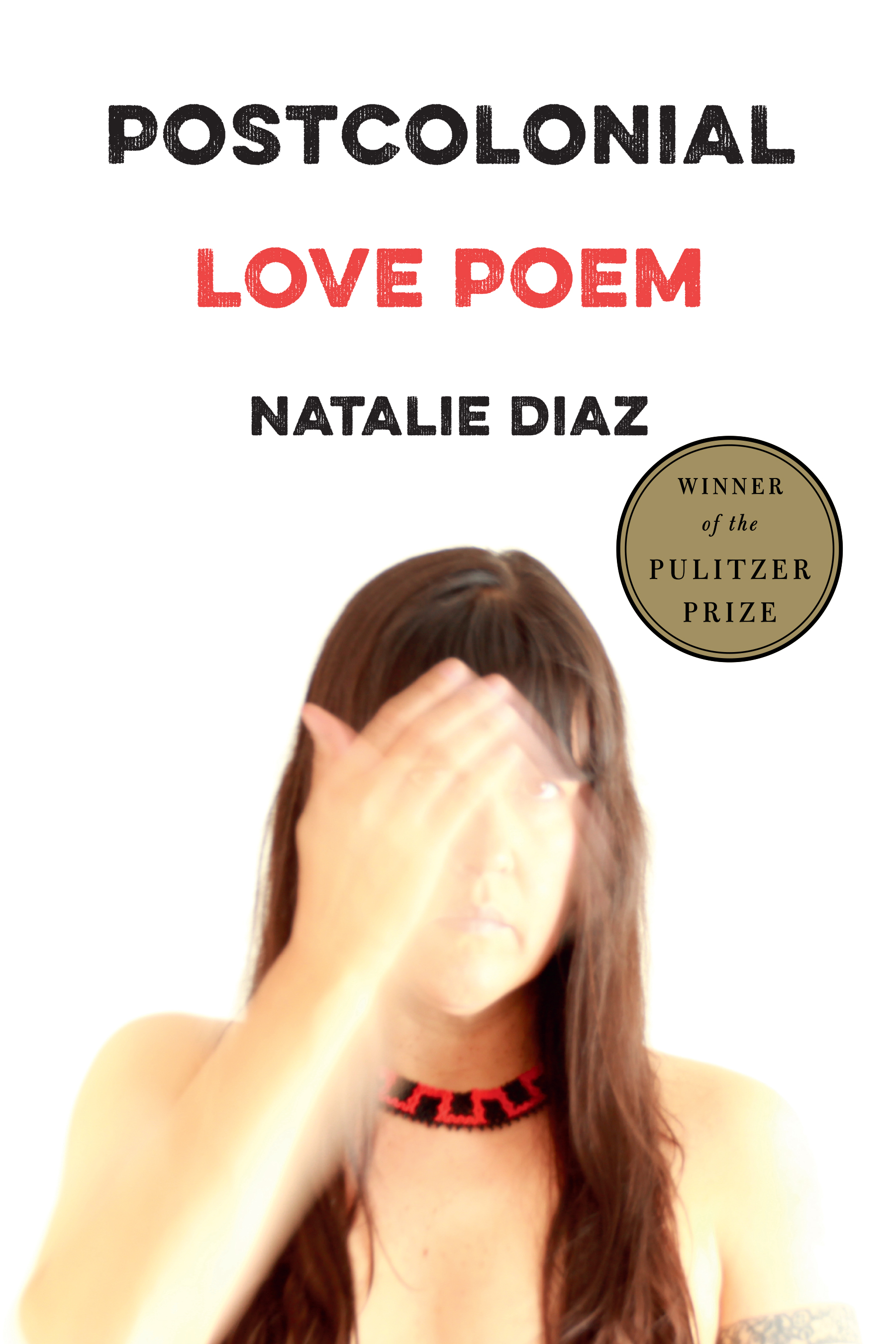
Cover notes: The cover features Natalie Diaz herself. She appears to be obscuring her face with her hand, but if you keep looking you'll see one of her eyes peeking out, locked directly on the viewer. Both obscured/hidden and watching. She appears to be wearing indigenous jewelry. I think the cover goes well with the tone of the poetry.

Trigger warnings for this book: missing & murdered indigenous women mentions, suicide mention, drugs and alcohol abuse mentions, anti-indigenous racism (systemic and internalized), violence mentions, police brutality (including towards elders), mental illness mentions, explicit poetic sex act descriptions

Wednesday, February 26, 2020

Book review: Their Eyes Were Watching God by Zora Neale Hurston

I think most people have heard of this book, as it is a classic. Zora Neale Hurston was one of the Harlem Renaissance artists. This book has been sitting on my shelf for a long time, because I knew it would be sad. I think I originally got it from a thrift store.

Amazon summary:
One of the most important and enduring books of the twentieth century, Their Eyes Were Watching God brings to life a Southern love story with the wit and pathos found only in the writing of Zora Neale Hurston. Out of print for almost thirty years—due largely to initial audiences’ rejection of its strong black female protagonist—Hurston’s classic has since its 1978 reissue become perhaps the most widely read and highly acclaimed novel in the canon of African-American literature.

I was right, of course; this book is sad. Any book about any slice of the African American experience, especially during the nineteenth and twentieth centuries, is going to be sad. Janie's family stories and first two marriages are very sad. But the writing! The writing is just lovely. This book has sentences like pearls. Even in describing things that may seem mundane, Hurston give them a glow. I could quote you like half the book, but I won't. Here are a few single lines from several different parts of the book.


There are years that ask questions and years that answer. 

Somebody near about making summertime out of lonesomeness.


He drifted off to sleep and Janie looked down on him and felt a self-crushing love. So her soul crawled out from its hiding place.

Anyway, a lot of sad, bad stuff happens to Janie, but she is able to retain her sense of self and what she wants out of life. And she gets the soul-affirming relationship she deserves. I really like books that deal with the interior lives of women and what they think, feel, and want. I highly recommend this book for teens and up. Halle Berry played Janie in the movie adaptation, and that sounds like a good choice. 

Cover notes: My cover, above, is fine, although not accurate as to Janie's skin tone (she is at least a quarter white and is described as being light-skinned). I like most of the other options better. My least favorite options are the ones where Janie's turning into a tree, and this one, because it looks too much like a fun middle-grade novel which it decidedly is not. 
 
Score: 4 out of 5 stars
Read in: February 19
From: thrift store?
Format: paperback
Status: giving away

Trigger warnings I'd apply to this book: rape mentions, period-typical racism, domestic violence, domestic abuse, period-typical and constant N-word usage, controlling relationships, a narrative about being enslaved and escaping slavery,  a minor is made to marry an older adult, period-typical sexism, period-typical misogynoir, physical violence, internalized racism, verbal abuse, colorism/shadeism, guns, a character dies by shooting, death, disease (especially rabies), descriptions of dead bodies, natural disasters/floods, period-typical racism towards Native Americans, alcohol mentions, tobacco use, animal deaths, gambling mentions, elder abuse of very minor character