Showing posts with label mine. Show all posts

Tuesday, August 27, 2019

Latinx representation

Study finds films lag significantly in Latino representation


Latina women in films are all maids, immigrants (undocumented or not), gang girls or cholas, spicy and tempestuous, Jennifer Lopez, or all of the above. I'm trying to think of a Latina in movies I could relate to. America Ferrera has come close; she played Carmen in Sisterhood of the Traveling Pants, but her story was not my story. I have yet to watch Real Women Have Curves, but it's on my list.

Representation matters. Ask me why I, a white, blue-eyed, brown-haired girl, never really saw any character I identified with. (Maybe I would feel differently if I had watched Gilmore Girls. Alexis Bledel is a white Argentinian with blue eyes and brown hair and her character loved books. But her character was white.) Ask me why I saw America Ferrera's awkward bespectacled face as Ugly Betty and immediately placed the TV show in the #1 slot in my heart. Ask me why her Mexican apron-wearing, cooking dad and prettier, more popular sister felt so familiar. Ask me why I latched on to Jane the Virgin, with her love of books and dreams of being a writer and the specter of religion haunting her desires. When Jane and her mom and her abuela sang feliz cumpleaƱos to her son, harmonizing, I burst into tears. My family does that. I had never seen anything on television so close to my personal experiences. I feel uncomfortable when, in TV shows and movies, second and third generation Latinx Americans speak in English to their parents and grandparents while they speak to them in Spanish. I do that to my dad without knowing, and it makes me feel guilty.

Depending on your interpretation, Latinxs have been here since before the United States claimed its independence. J.Lo goes to the gym every day, but she cannot carry us all on her shoulders. Nor should she.

Wednesday, January 16, 2019

I was in the bathroom when they handed out...

  1. social skills
  2. sex appeal
  3. puberty
  4. regular-sized foreheads
  5. athletic ability
  6. good balance
  7. self control
  8. the knowledge of what to do in social situations
  9. good, even teeth
  10. the ability to make friends without some sort of scaffolding such as school
  11. melanin
  12. confidence
  13. mental fortitude
  14. math skills (higher than simple algebra)
  15. decisiveness
  16. perseverance
  17. energy
  18. the desire, knowledge, and ability to network
  19. the appeal, knowledge, and ability to date
  20. courage

Monday, February 1, 2016

from a dream

they showed us the answer in a painting, unveiling it before all the assembled dead, and it made no sense at all to us (it somehow left us more confused than we were before we had been given an answer), but it helped us so much to have something to talk about, my aunt said

I see my grandmother in her room, all of us gathered around her bed, and I know I am dreaming
I try to wake up and return to the room; she is gone but the bed is still there; I am still dreaming

it is unsettling to dream dreams steeped in fantasy and fairytales, the dark rules-bound side of it, when it includes my relatives, some of whom are not dead and all of whom I know would not approve

Tuesday, November 3, 2015

Science Fiction & Fantasy class essays: Ursula K. Le Guin's The Left Hand of Darkness & Charlotte Perkins Gilman's Herland


Gender and Science Fiction

Ursula K. Le Guin's The Left Hand of Darkness and Charlotte Perkins Gilman's Herland both deal with alternately gendered societies, but in different ways. Herland is a country that has been peopled only with women for hundreds of years; the women become pregnant independently, through asexual reproduction. The Left Hand of Darkness takes place in Winter, where everyone is genderless, except during their mating periods when one individual becomes male and one individual becomes female in order to reproduce. These lands are seen as very strange by the protagonists, who are men from our society/world.

The authors of both these books were women, which is unsurprising considering how in-depth and concerned with gender and its role in our and the alternate societies both stories are. In contrast, male SF writers such as Burroughs and Bradbury have written SF stories where the male themes of exploration and colonization/domination take place on Mars, a newer Wilder West. Many men who wrote SF have used the genre as a way to satirize their cultures or human nature, but they have not dealt with gender anywhere near as much as these two authors have. But then, men don't really have to deal with gender the way women do.

Broadly, female SF writers use SF as a way to imagine a differently cultured world, a different society, where gender does not shape the people, their destinies and their culture the way it does in our world or society. They want to explore worlds where gender is a non-issue: Gilman because there are no men and as such only one gender with nothing to contrast with, and Le Guin because no one has a gender and everyone is the same. To me, these books earn their science fiction status not because they take place on other planets (only Le Guin's does), but because they deal with the soft sciences: sociology and psychology.

Wednesday, October 28, 2015

Science Fiction & Fantasy class essays: Ray Bradbury's The Martian Chronicles

Science fiction and fantasy stories are always placed together, and with good reason. Fantasy uses magic and myth to explain or drive its stories along, while science fiction uses science. To me, fantasy is dreaming about the past, back when things were shadowy, mysterious, holy, when there were any number of gods and spirits and fey folk. Science fiction is dreaming about the future, when technology makes all kinds of things possible and the limit has blasted past the sky. However, science fiction is sometimes only fantasy with a light dusting of science, mythology set in space. Stories like The Martian Chronicles blur the line between the two and act as a sort of transition.

Ray Bradbury posits in his introduction to The Martian Chronicles that his stories are "pure myth", which lends to them staying power: "If it had been practical technologically efficient science fiction, it would have long since fallen to rust by the road. But since it is a self-separating fable, even the most deeply rooted physicists at Cal-Tech accept breathing the fraudulent oxygen atmosphere I have loosed on Mars. [...] Myth, seen in mirrors, incapable of being touched, stays on."

In "And the Moon Be Still As Bright", Spender says of the Martians, "They blended religion and art and science because, at base, science is no more than an investigation of a miracle we can never explain, and art is an interpretation of that miracle." Stories are literature and literature is art. No matter the setting, we tell ourselves and each other stories, reaching toward the miracle, trying to explain it and capture it and understand it better. Within that miracle lies the key to who we are.

Tuesday, October 20, 2015

Science Fiction & Fantasy class essays: A Princess of Mars by Edgar Rice Burroughs

While reading A Princess of Mars I kept thinking, is John Carter a Gary Stu? A Gary Stu (or Marty Stu) is "an annoyingly 'perfect' male fanfiction character"[1] who is unbelievably great at everything and loved by everyone in the story. Wikipedia links this trope to that of the competent man, "a stock character who can do anything perfectly, or at least exhibits a very wide range of abilities and knowledge"[2].

John Carter already has fighting and wilderness survival skills as a Civil War veteran and prospector, but once he inexplicably finds himself on Mars, he becomes almost a superhero. Mars' lesser gravity means he can leap huge distances in a single bound, and his strength is also magnified to this extreme, enabling him to overpower and even kill at one blow huge Martians three times his height and weight. He rises up in the Thark ranks ridiculously fast. He's also a genius; it takes him less than a week to learn the Martian language, and while he can read everyone's thoughts telepathically, they cannot read his.  Obviously he and the titular princess fall in love and marry. Most interestingly, John claims not to remember anything before the age of thirty, and that he is ageless as well as immortal.

What keeps John from fully being a 'competent man' trope is that there are explanations given for most of his skills. One could argue that the term Gary Stu doesn't apply to John either since there is no evidence that Edgar Rice Burroughs wrote him as a self-insert character, but the Barsoom series are based on the writings of the astronomer Percival Lowell [3], so in a sense those (and all science fiction) are fanfiction about science. Such perfect characters seem to speak to a universal longing to be better than we are, to have the strength and skills to face an obstacle-filled life and come out on top.


1. nscangal. (June 27, 2005). "Marty-Stu." The Urban Dictionary. http://www.urbandictionary.com/define.php?term=Marty-Stu
2. "Competent man." (last modified April 30, 2015). Wikipedia. https://en.wikipedia.org/wiki/Competent_man


3. "A Princess of Mars." (last modified May 1, 2015). Wikipedia. https://en.wikipedia.org/wiki/A_Princess_of_Mars

Wednesday, October 14, 2015

Science Fiction & Fantasy class essays: H.G. Wells

Science as the Enabler of Evil
It is interesting to read the stories from when science was new and unknown. These authors during the early modern era seem to have seen science as a marvel, a new magic, something fearful and fascinating. The level of new discoveries and scientific possibilities was the highest since the Enlightenment, and because it was so new it was feared due to uncertainty and unfamiliarity.
Since the dawn of time, stories have been filled with people who had some fatal flaw that brought about their destruction, but science and advanced knowledge drive the stakes higher. The bigger they are, the harder they fall. There is more to lose, and more evil to be wrought due to this increased knowledge.
In The Island of Doctor Moreau and The Invisible Man, as in Frankenstein and some of Hawthorne and Poe's stories, science is a medium by which men who wish to further their and the world's knowledge and make a difference end up becoming obsessed. This obsession corrupts them and leads to their downfall, and they end up unleashing some new horror into the world instead of improving it. Science is then seen as a medium by which man's hubris may more fantastically, horribly and more speedily lead to their ruination.
We saw this first from Shelley's Frankenstein, but Wells especially seems to suggest that science can do away with our empathy and compassion. Dr. Moreau cares only for the advancement of knowledge that his vivisection experiments bring him; he doesn't care one whit about the pain he inflicts upon the poor animals and the ethical questions raised by his experiments. Likewise, Gibson's invisibility from his experiments gives him an advantage over others, and thus he becomes more and more violent and selfish as his story goes on. Wells et al. seem to suggest that science accelerates our natural selfishness and willingness to hurt others.


I don't think I mentioned this before, but these class essays were written in one go the night before the due date (as I'm sure you can tell). They could have benefited from some editing and reflection, but self-editing has never been my strong point and I was always too tired from work. After uploading her or his essay to Coursera, each student then had to grade three or four other students' essays. I had the harshest criticism of probably my entire academic career from this essay. One of the students who graded my essay hated it, reviled my writing and actually accused me of not having done ANY of the readings for the class. It was like the written equivalent of Donald Duck's tantrums. It was so irate and over the top that I went straight past hurt and offended and landed squarely on amused. Coursera lamely won't let me see anything I've done in that class since it ended, otherwise I would share the original feedback with you. 

Tuesday, October 6, 2015

Science Fiction & Fantasy class essays: Dracula by Bram Stoker

That Dracula has heavy religious, especially Christian, influences throughout the story is obvious. The crucifixes, Holy Wafers, funeral prayers for the dead, etc., all act as weapons against the vampire and his powers of evil. The life-giving blood the men selflessly give Lucy in order to try to save her is the opposite of the awful “baptism of blood” Count Dracula forces upon Mina in order to damn her. Dracula and the vampire wives are four, an unlucky number associated with death in Chinese culture, while our group of heroes number seven, a holy and/or lucky number in Western culture. Even some of the characters’ names are significant: “YAHWEH has given” (Jonathan), “will/desire to protect” (Wilhelmina), “light” (Lucy), “YAHWEH is gracious” (John), while Arthur and Abraham are important literary and biblical heroes, respectively. The group fights Dracula not just because of the suffering of the women they love, but because they feel a moral obligation to stop him. To be a vampire or to succumb to one means that one will be damned and cut off from salvation. Dracula is a deeply religious book, which seems strange since it is also a horror and fantasy book, but such contradictions are common in Christianity: one must die to live, Jesus is both man and God, etc. Van Helsing’s discouraged words after their protections for Lucy keep being thwarted echo 2 Corinthians 4:8-9 (“We are hard pressed on every side, but not crushed; perplexed, but not in despair; persecuted, but not abandoned; struck down, but not destroyed.”). Suffering and helplessness in the face of the enemy are common themes in Christianity, but since the protagonists trust in God and do all they can to do what’s right, they succeed.

Friday, September 18, 2015

Science Fiction & Fantasy class essays: Grimm's Fairy Tales

I took an online class on Coursera, Fantasy and Science Fiction: The Human Mind, Our Modern World. Each week we read a different book or some short stories and had to write a short essay. This is the one I wrote after reading Children's and Household Tales, a translation of Grimm's Fairy Tales into English by Lucy Crane with illustrations by Walter Crane. The above link isn't the online version I read but I can't find it because the class is over and I can't access any resources :(
I did okay with this one; I don't remember my classmates giving me too much criticism.


“The Three Spinsters” and “Rumpelstiltskin”
“The Three Spinsters” is a tale much like the better-known “Rumpelstiltskin”. Three women with unusually large body parts (those used most often in spinning) take the place of the eponymous gnome, and they simply spin flax quickly, rather than spinning it into gold. They save the girl twice: from having to spin three rooms’ worth of flax, and from ever having to spin again. The spinsters meet a happier end than Rumpelstiltskin; they are fĆŖted at the new princess’ table as her cherished relations. It struck me how female-centric this version of the surrogate spinner(s) is: the girl’s mother lets her go with the queen who offers her son to the girl (rather than the other way around!) as a prize for spinning the flax which the spinsters save her from. This is a marked contrast to “Rumpelstiltskin”’s sole girl being at the mercy of men--father, king, messenger, and Rumpelstiltskin. The only male in “The Three Spinsters” is the prince-prize the girl marries, who is rude and impertinent, controlled by his mother and duped by his wife and the spinsters. This female-centeredness makes sense, as the story revolves around spinning flax, traditionally a woman’s job (especially unmarried women, hence the modern definition of spinster). The “Spinsters” women are portrayed as softer and more moral than the “Rumpelstiltskin” men: the mother lies from embarrassment rather than pride, and the queen is more merciful, as she doesn’t get angry when no thread is spun after three days and doesn’t threaten the girl with death if she fails her task. The spinsters ask only to be honored as family, rather than for jewelry or the firstborn child. In the end, the mother is freed from her lazy daughter, the queen gets spun thread, the spinsters get honored, and the girl gets her prince and out of spinning forever. Might the moral of the story be that everybody wins when women run the show?

Wednesday, September 24, 2014

Guide to writing


  1. Write
  2. Edit
  3. Don't give up
  4. Don't be afraid


number of these that I am doing: zero

Friday, May 31, 2013

 gif by dean-pls on Tumblr

Forgive me, friend,
I wasn't searching because
I could scarcely hope to dream up
someone as wonderful as you.
Beyond all I could hope for,
past every thought of every good thing
is where you are.
It is enough to know I know you now;
It is already an embarrassment of riches.
I didn't have or deserve the knowledge
that someone like you existed;
I have enough love now to
stretch back across the lonely
pre-you years by myself.
I was always waiting for you
and didn't know it.

Saturday, April 20, 2013

Upon Waking

  • I cannot fly
  • I'm done with school
  • I'm home and nowhere else
  • No embarrassment has happened
  • I don't have to worry about 
  • whatever it was I was worrying about
  • I cannot see or speak to my grandmother 
  • ever again in this life
  • I am alone

Inspired by Lists for the Future

Friday, December 21, 2012

Blackout Poetry 2


See previous post. Pages from paperback book that was already falling apart, black colored pencil, black crayon.

Friday, December 7, 2012

Blackout Poetry

A popular thing to do on Tumblr is to make blackout poetry from single pages of books by blacking out with a marker or something all the words except for the ones you want to have, thus creating a poem from existent text. Book lovers often decry this as needless destroying of books. I kinda agree with them, but the result is often quite beautiful. Some of my favorite poems are blackout poetry. I think as long as they're old books that are going to be destroyed or thrown away anyway it's ok, but people shouldn't do that to perfectly good books. It's probably best not to think about where the sausage comes from. Anyway, I rediscovered a copy of That Hideous Strength that I had bought for like a quarter at a yard sale but had to replace with a similarly priced copy (with the same cover, of course) because the first 86 pages are missing and the rest are starting to fall out. It is an old book, from the seventies, and paperbacks are not very long-lived, especially if they are read a lot. I didn't have the heart to recycle it as I love C.S. Lewis and that is one of my favorite books, and I thought maybe I could make some book craft with the pages (the cover is this garish hideous '70s sci-fi thing that doesn't lend itself to lovingly created book art simply because it is too ugly). I wasn't quite sure what until I discovered blackout poetry. I decided to try my hand on it with the first remaining page.

Page from a paperback book, black colored pencil, black crayon

This one is actually three short poems since I couldn't think of a longer one. lol They are not connected. They read as follows:

the pale edges of
silence
seemed to be calling
~
the anachronism
met
the person in
her
~
things read and wrote 
were the substance;
to write
and
believe in the reality of
things not seen.

I'm kind of proud of it. The second one (the other side of the page) isn't quite as good, but I still like it, although my coloring job was like a million times more sloppy. Hazards include tearing the page and accidentally coloring over the word I wanted to keep.

Page from a paperback book, black crayon
 
This one is one poem. It's way less colored in/neatly since I was afraid the page might tear if I used the black colored pencil on both sides, so I just used black crayon. Poem is as follows:

a place
of
sunlight,–
of laughter and
wonder
and
better things

Not bad for my first try at it. I've already tried to do the next page but so far I'm not seeing anything. I could have been distracted by the Christmas music I'm listening to.

Monday, September 3, 2012

Cuentos

Tell me who you are
are you a good witch or a bad witch
neither, you're the other girl in the story
not the love interest (that'd be far too exciting)
you're the girl who sits in dull existence
waiting for the story to be about her
you're the jealous sister, one of the people
in the village or the chambermaid who fetches
the light and perhaps if you are lucky
you'll become the mother (step or otherwise)
of the hero who fulfills the quest

this is something they never told you
maybe you're not the storybook
you're just the bookmark in it

Wednesday, August 29, 2012

Birthday, silver anniversary

A quarter of a century old and I feel half that, maybe.
It's hard to judge what age I "really" am,
this kaleidoscope of mindsets and feelings,
and I know we are all every age we've ever been,
but I am an age I've never been and will not be
for years. Twenty-five, twenty, sixteen, twelve;
some and yet none of them fit. I'm fit for adolescence
now, not hardly when I was in it. Extended childhood,
extended adolescence, and then what? I won't know.
I never do. Always reaching on ahead, stretching to
fill the gap. I succeed and also don't. Keep trying
anyway; they will be fooled because they want to be.

Sunday, January 22, 2012

Saturday, October 29, 2011

Exorcise these lovely ghosts of days when I had prospects.
Leave me with the present truth and those with unknown objects.
Looking back is fine and all but memories won't leave me.
Only leave the lesson learned so no one will deceive me.

Sunday, July 10, 2011

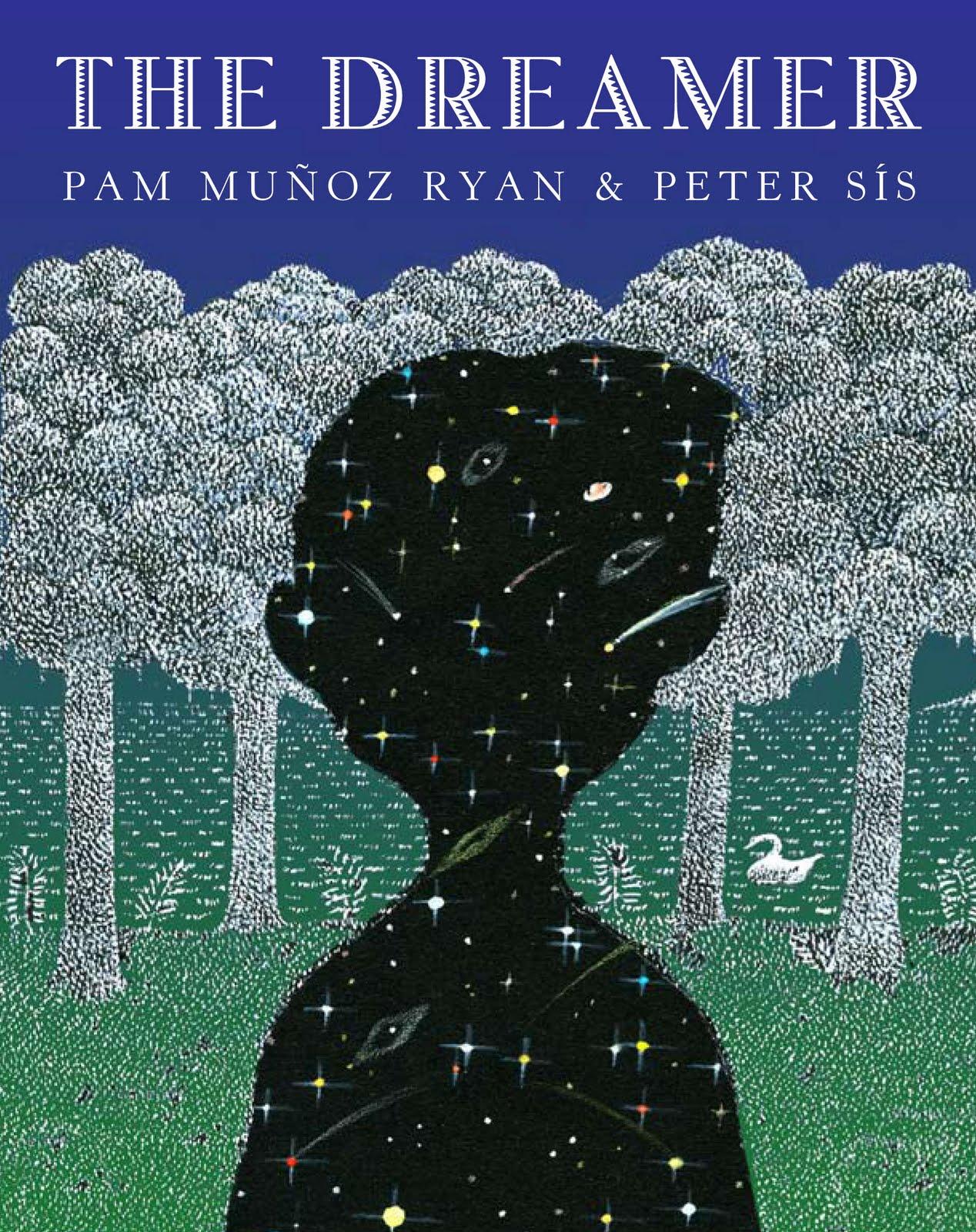
For Pablo Neruda

And the words are all the more sweeter
Because you fought for them.
You never closed your heart,
Despite the rage of the father
And silence of others
And death of dreams and swans and things you loved.
You with your scientist's mind
And artist's eyes
Dreamer's heart
And poet's soul
Are one of the riches of the world:
Take all of God's bounty–
Nature, love, beauty and the rest–
And help us to see it again.
In you the circle is complete.