Showing posts with label religion. Show all posts

Thursday, February 26, 2026

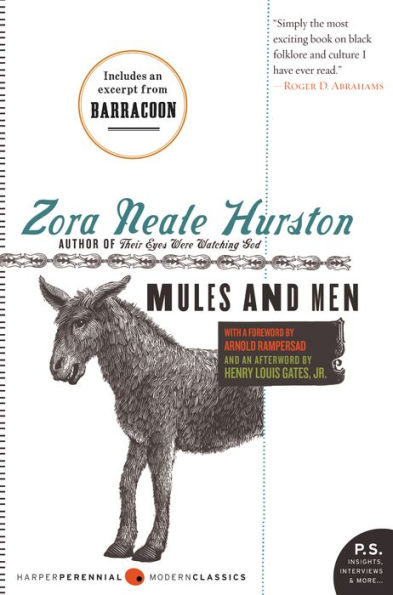
Book review: Mules and Men by Zora Neale Hurston

Zora Neale Hurston brings us Black America’s folklore as only she can, putting the oral history on the written page with grace and understanding. This new edition of Mules and Men features a new cover and a P.S. section which includes insights, interviews, and more.

For the student of cultural history, Mules and Men is a treasury of Black America’s folklore as collected by Zora Neale Hurston, the storyteller and anthropologist who grew up hearing the songs and sermons, sayings and tall tales that have formed and oral history of the South since the time of slavery. Set intimately within the social context of Black life, the stories, “big old lies,” songs, voodoo customs, and superstitions recorded in these pages capture the imagination and bring back to life the humor and wisdom that is the unique heritage of Black Americans. 

I had downloaded Mules and Men by Zora Neale Hurston last year when Barnes & Noble decided to drop a staggering amount of legit, popular free ebooks. I loved Hurston's writing in Their Eyes Were Watching God, and I'm always interested in folklore, so this was a no-brainer. I read this book for Black History Month, reading it slowly during my family's Mexico trip.

I was sort of expecting a straightforward telling of the folklore tales, like in Cuentos: Tales from the Hispanic Southwest, but the book is actually Hurston's account of her sponsored travels to Florida and Louisiana to collect the folklore and hoodoo knowledge. She relates how she goes back home (she'd been up north for college) to her hometown and then other Florida cities' African American communities, and the parties and get-togethers where the tales and 'lies' are told and songs are sung. I do think keeping the conversations and activity details was a good idea, as it keeps the context the stories were told in. The tone is narrative and casual rather than scholarly, as one might expect from a work of anthropology. There are footnotes for many (not all) of the slang and dialect terms and names, and glossaries in the back; it was very tedious to tap on the hypertext footnote numbers (I usually had to blow up the text size) and then tap back. This is the ebook formatting's fault, though, obviously. 

The folklore tales include stories of how things came to be (e.g. why cats and dogs don't get along), stories from slavery times, and more mythological stories involving God, the devil, angels, etc. Many stories are about an everyman named John who often outsmarts the slavemaster or the devil, but not always. The overall vibe is that these stories aren't true, but they're entertaining (even when things don't end happily for the characters). 'Lies' are things like, "I heard about land so fertile that when the farmer buried a dead donkey, a new one grew up out of the ground." These are often told by different people in quick succession on the same theme, to one-up each other and make everyone laugh. 

The speech is written in dialect, which is a bit difficult to read. How much you'll understand depends on what you know, as, as I mentioned, not all of the slang and dialect terms are translated in footnotes. It took me a second to realize that 'pail' in a food context meant a lunchpail, i.e., the lunch you pack to take to work or school. The term jookhouse* is never explained to my satisfaction; it's maybe like a brothel and a party house where jazz is played and dances are held all at once. The ballad of John Henry is given in full in the back of the book, but not the children's play songs. Sometimes historians omit things because they think they're common knowledge, and then future readers/scholars don't know what they are. :/

Hurston then goes to Louisiana to study hoodoo (also known, incorrectly, as voodoo) practices. She is initiated by and becomes an acolyte to at least three different hoodoo practitioners. This part took me longer to read because it freaked me out and I didn't want to read it at night (I'm a wuss when it comes to scary stuff). Besides being scared, I didn't like this part so much because some of the hoodoo practices involved killing animals in what felt like cruel ways (boiling or burying a cat alive, etc.). I thought it was kind of odd that Hurston begs her friends not to kill a venomous snake they find sleeping in her room when she's in Florida, sparing its life, but she's fine with the hoodoo animal sacrifices when those animals weren't a danger to anyone. There are lists of hoodoo practices and tools/ingredients in the back of the book. The ceremonies she observes and participates in are shared in detail, which I think is rather irresponsible (one is to bring about someone's death). Did the hoodoo practitioners, and their customers, know Hurston was going to write and share all of what they did and how they did it? Hurston says that hoodoo's whole thing is secrecy, then she shares all the secrets she learns. Ah well. 

Overall, this was a very interesting book. Hurston is an engaging and talented writer, and I enjoyed reading about her experiences. 

Score: ★★★.75 out of 5 stars (StoryGraph has opened my mind to the concept of quarter stars)
Read in: February 8-16
From: Barnes & Noble Nook

Genres/classification: nonfiction, folklore, fables, travelogue

Representation: African American/Black, poor, Southeastern American; Black female author

Trigger warnings: racism, slavery, beatings mentions, animal murder, animal cruelty, frequent period-typical N-word usage, sexism/misogynoir, violence, guns I think, alcohol

*had a sudden lightbulb moment and realized that this probably has the same root word as jukebox! See the Wikipedia entry's second paragraph. 

Thursday, January 18, 2024

Rest of December books

 I did my usual Christmas and New Year's rereading of Christmas with Anne. I also read The Nutcracker, Alexandre Dumas's version, as I was bored at my parents' house for Christmas. It was interesting and weird. 

I also read a couple of cheap or free ebooks I had downloaded.  


First up was Murder at Merisham Lodge by Celina Grace, the first book from a historical mystery series called Miss Hart and Miss Hunter Investigate. The premise is that it's the 1930s and both girls are working as servants/staff in a big country mansion for a rich family, and murder starts happening. Both girls are bright and feel there's more to the mystery than the police are seeing, and decide to keep their eyes and ears open for clues. It's sort of like Downton Abbey meets Agatha Christie, and I liked it.  Of course as a murder mystery it's pretty violent and sad. I'd read more mysteries from this series. 4/5 stars, no spice although there is mention of infidelity and extra-marital relations. Trigger warnings: murder, gore, blood, corpses, violence, sexual assault mentions, abortion mention (a girl gets pregnant out of wedlock), sexism, classism.


Next was I Was Born For This, which I snapped up because it's by Alice Oseman and I love her books and the ebook was cheap. I didn't really know what it was about, but it somehow also wasn't what I was expecting. Angel (who goes by the English version of her Arabic name) is a huge fan of a diverse boyband called The Ark, and would rather talk about the boys and their music than think about her future. She meets up with an online friend and fellow The Ark fan in London to attend the band's concert, and all sorts of stuff goes down. One of the boys from The Ark, Jimmy, finds almost every single aspect of fame and being in a boyband excruciatingly difficult and anxiety-inducing. He runs away from an important interview, and that is how he and Angel meet. A sort of weird friendship springs up between them, as Angel (who knows everything about Jimmy, yet is a stranger to him) helps Jimmy through a panic attack and running away to go back home. This book is a fascinating look at fandom, fame, friendship, and mental illness, and while it made me very sad at times, I cared for all the characters and rooted for them to be happy. The fandom stuff was interesting to me, as a decade-long user of tumblr (I was never a mega-fan of any musician/musical group, but was aware of the climate). I liked all the Christian/Biblical references and Joan of Arc quotes, etc. in the book. 4/5 stars, 2 chilis due to a little bit of (mostly mentioned) sexual content and talk. Trigger warnings: suicidal ideation, depression, panic attacks, OCD, blood, serious injuries, anxiety, alcohol, obsessive/stalking fans, transphobia, racism mentions, parental neglect, a character is kicked out by their parents, a guy lies to a girl to get her interested in him, drugs mention, knife


I think I forgot to mention this earlier, but I also read (not in December) The Screwtape Letters through one of those emailed enewsletters via substack. After the smash hit of Dracula Daily, a lot of other books (especially public domain books) got the email treatment. As an epistolary book, TSL works great for this, and it was fun to get an email in my inbox with the day's Screwtape letter. 4/5 stars. Trigger warnings for mentions of death, war, sins such as adultery and the damned being tortured/eaten etc. Nothing explicit

Monday, May 23, 2022

Book Review: Faith Unraveled: How a Girl Who Knew All the Answers Learned to Ask Questions by Rachel Held Evans

Rachel Held Evans had been on my radar since maybe the late 2000s due to her being a feminist Christian writer who was respected by literary and Christian online acquaintances of mine. Rachel is probably best known (even outside of Christian circles) as the woman who followed all the instructions of the Bible to the letter for a full year. I've been slowly buying her books when I come across them in thrift stores, etc. This one I bought on Book Outlet. (LMK if you wanna join; I get invite credits). 

Faith Unraveled: How a Girl Who Knew All the Answers Learned to Ask Questions is I think her first book; it was originally called Evolving in Monkey Town with the same subtitle. The Scopes monkey trial took place in Rachel's hometown in 1925 and acts as a neat metaphor for what the book is about: belief, doubt, politics, and fundamentalism. She wrote it after years of wrestling with her conservative evangelical Christian upbringing in the Bible belt and the doubt she experienced as an adult. Book summary: 

Eighty years after the Scopes Monkey Trial made a spectacle of Christian fundamentalism and brought national attention to her hometown, Rachel Held Evans faced a trial of her own when she began to have doubts about her faith.

In Faith Unraveled, Rachel recounts growing up in a culture obsessed with apologetics, struggling as her own faith unraveled one unexpected question at a time.

In order for her faith to survive, Rachel realizes, it must adapt to change and evolve. Using as an illustration her own spiritual journey from certainty to doubt to faith, Evans challenges you to disentangle your faith from false fundamentals and to trust in a God who is big enough to handle your tough questions.

In a changing cultural environment where new ideas seem to threaten the safety and security of the faith, Faith Unraveled is a fearlessly honest story of survival.

This book wasn't exactly fun to read, but I did enjoy reading it. It's refreshing to read a Christian writer who doesn't flinch away from the problem of pain and the other big questions, who isn't content with just accepting the traditional pat answers. When many Christians are asked the difficult questions, they are far too likely to, like Aziraphale in the beginning of Good Omens, say "it's ineffable" and refuse to think about it. I liked how Rachel described fundamentalism: as having the same beliefs, but held so tightly that one's fingernails gouge marks in one's palm. Consequently, they are afraid of change, and will do anything to keep the status quo, including turning to politics to hold on to power. 

Rachel, a pastor's daughter, went to Christian schools and college where she and her classmates were taught to be Christian apologists and debaters, concerned more with winning souls and dunking on nonbelievers than they were about determining what they really believed and if they believed it. Rachel's crisis of faith was relatable, and I felt for her. She also includes some short chapters about other people she knows and their approaches to faith and belief. This book doesn't have a neat ending, but then life and belief don't. This book is all the more poignant because Rachel passed away a couple of years ago. She was only a few years older than me.

Score: 4 out of 5 stars
Read in: May 7-8
From: Book Outlet
Status:  keep for now

Cover notes: I like the cover, although the monkey won't make sense until you read the first chapter about the Scopes monkey trial.

Trigger warnings for this book: described beheading, murder, domestic abuse mention, misogyny mentions, abortion mentions, religious abuse, bombing mentions, US war in the Middle East mentions, hypothetical torture mentions  (hell), fundamentalism, Christian-centrism, Islamophobia, that view of Christianity/Jesus as the only pathway to salvation, related topics

Tuesday, August 21, 2018

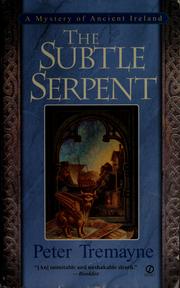
Book reviews: Shroud for the Archbishop and The Subtle Serpent by Peter Tremayne

At my previously mentioned thrift store book splurge, I found two more books in the Sister Fidelma mysteries by Peter Tremayne. Shroud for the Archbishop is the second book in the series and takes
place right after Sister Fidelma and Brother Eadulf arrive in Rome, a trip they were ordered to take at the end of the first book. Here's the Amazon summary, edited for length:
Wighard, archbishop designate of Canterbury, has been discovered garrotted in his chambers in the Lateran Palace in Rome in the autumn of AD 664. The solution to this terrible crime appears simple, as the palace guards have arrested Brother Ronan Ragallach as he fled from Wighard's chamber. Although the Irish monk denies responsibility, Bishop Gelasius is convinced the crime is political and that Wighard was slain in pique at the triumph of the pro-Roman Anglo-Saxon clergy in their debate with the pro-Columba Irish clergy at Whitby. There is also a matter of missing treasure: the goodwill gifts Wighad had brought with him to Rome and the priceless chalices sent for the Holy Father Vitalian's blessings have all been stolen. Bishop Gelasius realises that Wighard's murder could lead to war between the Saxon and Irish kingdoms if Ronan is accused without independent evidence. So he invites Sister Fidelma of Kildare and Brother Eadulf [a Saxon] to investigate. But more deaths must follow before Fidelma is finally able to put together the strange jigsaw in this tale of evil and vengeance.
I enjoyed this one because it was set in Rome, which I have visited, and the catacombs make an appearance. I liked how all the different nationalities and cultures mingled and lived side by side. I also liked how the whole relics market thing was addressed (a splinter from the cross of Christ is undoubtedly fake). Unlike the first book, the mystery had me guessing, and I had no idea who the killer was. There was a gay couple in this book, only one of which is effeminite, so Tremayne is making progress. They do die rather horribly, but baby steps. It occurred to me that Tremayne is trying to show that gay people existed in antiquity and the middle ages, to counteract the idea that no gay people existed before Oscar Wilde, with Sappho being an outlier. He does it in such a hamfisted way that it makes me chuckle to think it's him being a historically accurate(?) ally, but anyway. 

The other book, The Subtle Serpent, is actually the fourth Sister Fidelma book, so I need to find the third somehow. Despite this, I didn't really feel like I was missing any information. I initially thought it was the third SF book, because at the end of SftAb, Fidelma gives Eadulf a book before they both set off on their respective journeys, and then she finds the book she gave him on a mysteriously abandoned ship. Here's the Amazon summary:
In the year 666 A.D., a headless female corpse is found in the drinking well of a remote abbey in southwest Ireland: clasped in one hand is a crucifix; tied to the other arm is a pagan death symbol. Sister Fidelma--sister to the king of Muman, a religieuse, and an advocate of the Brehon law courts--is sent to investigate. En route, she encounters a Gaulish merchant ship under full sail off the Irish coast--one whose crew and cargo have vanished without a trace.
Faced with a tense local situation, Fidelma must discover first the identity of the body in the well and uncover who was responsible, then find out what happened to the missing crew of the adrift merchant ship, and, finally, determine how these bizarre events are connected. For these events are more than simply disturbing--the peace of the entire kingdom rests upon their solution.
This one was a fun ride, although there were enough bumps to make me uncomfortable. For starters, the abbey is run by a bitchy, pompous abbess who surrounds herself with young nuns specifically so that no one will question her authority, and she makes it as difficult as possible for Fidelma, messing with her investigation at every turn. The one disabled person in the abbey is treated with contempt, and actually hides her intelligence by affecting a stutter and reading the library's books at night. She's accused of the second murder, and the abbess whips up a frenzy in the abbey, and if it's not for Fidelma, she would have been killed. The abbess's ex-husband is the local governor's (who is also the abbess's brother) personal priest (clergy can marry in the Celtic church), feeds everyone lies, and spreads rumors that the abbess is a lesbian and is in an incestuous relationship with their own daughter. All this with a pagan idol conspiracy, Fidelma almost getting shot in the woods, and even more of that ferked up family dynamic, plus lots of secrets and political intrigue. Also, Fidelma is worried about Brother Eadulf's disappearance. It all comes together in the end.

These two books were better than the first one, for sure. I didn't figure out the killers, and the twists had me going back and forth. There were way fewer references to Fidelma's appearance, with only one mention in the beginning of the book of how "rebellious red strands of hair snaked out from her headdress", which is basically verbatim from the first book. Like, why do we have to know that. Also, people grimaced way too much in these books. People only grimace when they're in pain or thinking about something gross, not to signify agreement or greet people, ffs. Remember how I said it was stupid that Fidelma was a grown woman who had no idea what attraction or a crush felt like? Well, it turns out Fidelma had a boyfriend who dumped her or died or w/e, so it's EVEN STUPIDER. Being bitter over a failed relationship doesn't mean one forgets what butterflies in the stomach mean. Ridiculous.

Score: 3.8 and 3.9 out of 5 stars
Read in: beginning of August
From: the thrift store
Format: paperback
Status: giving away

Friday, March 16, 2018

Book review: Absolution By Murder by Peter Tremayne

You will be completely unsurprised to learn that my next book was also from the library free books rack. Absolution By Murder: A Sister Fidelma Mystery is a historical fiction mystery set in the British Isles during the medieval period and is part of a series by Peter Tremayne. Sister Fidelma is an crime-solving nun who is a sort of lawyer/detective/investigator-type official in Ireland and she has to solve, you guessed it, MURDER. Well, several.

I felt somewhat like I had started the series somewhere between the beginning and middle, so I was therefore surprised to learn that ABM is apparently the first in this series, according to Publisher's Weekly (see this book's Amazon page).
Absolution by Murder's synopsis:
The King of Northumbria has requested the services of a wise counsel to decide the people's religious future. Among the select priests, elders, and scholars from Ireland and Rome is Sister Fidelma of Kildare. Trained as an advocate of the courts, she was expecting to rule on issues of law. Instead she was plunged into unholy murder. Dead was the Abbess Étain, a leading Celtic speaker, her throat slashed. With the counsel in an uproar and civil war threatening, the desperate king has turned to the sharp-witted Sister Fidelma for help. With the aide of her dear friend Brother Eadulf and her faith in the truth, she must act in haste before the killer strikes again.
The book opens with a note from the author, which provides historical context to the era and location so that the reader can understand what's going on. For instance, Tremayne states that in medieval Ireland (until England invaded it and forced assimilation), women had more rights than in other countries and could own property and hold political office. The historical context  was very useful; I think I would have been much more confused without it. The author's bio on Amazon is as follows: Peter Tremayne is the pseudonym for Peter Berresford Ellis, a well-respected authority on the ancient Celts. He is the author of over twenty books, including The Dictionary of Celtic Mythology, The Celtic Dawn: A History of Pan Celticism, and The Druids. This shows that Tremayne/Berresford Ellis really knows his stuff about the Celts and medieval Britain. I love anything having to do with the medieval era, so I was interested in this book.

The reason the Celtic religeuses are in Northumbria is because a synod is taking place, where church clergy are debating about whether the Celtic version or Catholic version of Christianity is correct and which one they will follow. I don't remember or know all of the differences, but Celtic Christianity included celebrating Easter according to the Julian calendar, keeping the seventh day Sabbath, monks shaving the front of the head for their tonsure, clergy being able to marry and both male and female monks/nuns in the same abbey/monastery, and sticking more closely to the apostles/early Christians' version of Christianity. The Catholics believed in celebrating Easter according to the Gregorian calendar, keeping Sunday as Sabbath, monks shaving a circle on the top of their head for their tonsure, the authority of the pope, and clergy remaining celibate and separate. The Celtic Christianity probably came to Ireland with the Romans during their reign, making their Christianity purer than Catholicism, which like snowballed a bunch of pagan and "popes just wanna have total power" stuff and cared less about the Bible than about papal authority. I read somewhere that the Irish Christians kept the Saturday Sabbath until the Catholic English forced them to adopt Sunday worship. See? Older than Catholicism, and closer to the Bible. I'm Seventh-day Adventist, a Protestant denomination that has been traditionally anti-Catholic (most Protestant denominations were/are, though), so I'm biased. Anyway, the monks were straight-up coming to blows over this stuff. To me, the tonsures are stupid, go ahead and celebrate Easter on Sunday, stop being so antisemitic that you refuse to keep the Saturday Sabbath even though it says to in the 10 commandments and get mad when someone points out that Jesus was Jewish, wtf, I don't care about the rest ditch the pope. The reason they wanted/had to choose one version of Christianity was because they were afraid a schism might happen, and the gospel might be lost? idk. Obviously the Church has split up many times and it's still here, but the Great Schism (Catholic-Orthodox/East-West church split) hadn't happened yet so they didn't know that. I was very interested in all of this and liked this aspect of the book. I love fun books that teach you things.

I'm not sure why the synopsis says "her dear friend Brother Eadulf" when he and Sister Fidelma first meet in this book and don't even like each other in the beginning. They have that classic meet-cute when Fidelma starts to fall for some reason and Eadulf catches her, and there's like a frisson of attraction. This merits a full-on eyeroll. Then, Fidelma realizes he's a Saxon and a Roman Catholic, aka on the opposing side of the religious dispute (more on that later), and she makes up her mind to dislike him, Anne Shirley-stylez. Part of this decide-to-dislike is due to her unrecognized attraction to him. It's weird because she really doesn't realize that she's attracted to him, probably because she doesn't even know what attraction is or feels like. I know she's a nun, but come on. The book is full of her constantly Feeling Something around him, like the standard "flutter in the stomach", and each time she's like "What is this feeling? Why am I feeling this way? What does this mean?" Sis. (eyeroll) Also she isn't pleased at being saddled with him for an investigation partner, although she begrudgingly admits it makes sense for a Catholic to be attached to the murder investigation (she's Celtic), especially since the murder might have had a religious/political motive. Eadulf seems really disposed to like her because he's a nice friendly guy, but also probably because she's pretty. They do get on better and better throughout the book, learning to work together and ending it as friends about to do a roadtrip together to Rome. Theirs is that classic pairing of the headstrong genius + the buenaso easygoing supportive friend/bf. Overall, though, I do think it's super weird that the author pushed this romance angle on a nun and monk, even though I think the Celtic clergy were allowed to marry. Hopefully they're more platonic in the other books.

Also, Sister Fidelma is attractive. She's got flaming red hair with "rebellious strands" that are always coming out of her headdress, ooh la la. She's tall and statuesque with milky skin. Her eyes change color with her mood, blue to green and back again. WE GET IT, she's a Strong Female Character (and not very historically accurate). Ugh. I am so tired of heroines having to be pretty. Why does she have to be pretty? Why is her appearance at all important? Wouldn't it have been more interesting if she were plain? (Yes.) Being the hero/ine doesn't mean the character has to be pretty. Being smart doesn't mean she has to be pretty. Being a woman doesn't mean she has to be pretty! I am sick of this. Give us someone us normies can look up to! Also, if she's a like forensic genius and she's pretty, it makes the character less plausible and can veer into Mary Sue area. I guess when a man is writing such a character it's less self-insert and more "this is my dream woman". Think about it. Gorgeous and brilliant and religious and spirited and chaste/innocent? Eyeroll. She does have flaws, though, such as her headstrongness and stubbornness. In a way those help her with her investigations, though, so. Anyway this sort of thing is lazy writing.

On to the mystery. SPOILERS AHEAD. Abbess Étain is a dear friend of Sister Fidelma, so she's shocked and grieved when AE is murdered. As Fidelma and Eadulf get closer to catching the villain, more people keep getting killed. I had only 2 suspects in mind around the middle the book, until one of them was found dead. Then a clue was dropped: quotes from Sappho in Greek were found with two of the bodies, which was a dead giveaway for the killer. As soon as I saw the name Sappho, I immediately remembered that Abbess Étain had an assistant nun, Sister Gwid, who loved Greek poetry and was totally gangly, awkward, overly tall, and hero-worshipped the Abbess. Obviously Sappho poetry + hero-worshipping a woman = lesbian. It turns out that Gwid was in love with the Abbess and gave her Sappho quotes, neither of which the Abbess was thrilled about. When Gwid found out that the Abbess was going to marry a man, she flipped out and killed her. Then she killed the others to keep her secret from coming out. I don't really like this because 1) homophobic stereotypes much? and 2) this was lazily written and most people who read this book, per Amazon, got who the killer was like halfway through the book. It was pretty obvious, what with Sappho. Also, I didn't like that Gwid's hideous personal appearance was constantly being remarked upon whenever she was in the scene. Her giant hands, her tall stooped height, her awkward limbs, etc. Why does she have to be ugly? Why does the villain have to be ugly? Why does the lesbian have to be ugly and mannish? Why does the lesbian have to be the villain? Gwid being besotted with the Abbess and then getting murderously jealous is a homophobic trope. There's also a monk in this book who is effeminate, looks up through his eyelashes at whoever is talking to him, speaks with a lilting high pitched voice, and is a magpie, stealing pretty/shiny things. I mean?? Why all the gay stereotypes, Tremayne? This, too, was lazy writing. END SPOILERS

Anyway, I enjoyed this book, despite being frustrated with the villain, characterization, homophobia, and the synod arguments. I would recommend this book if you have a high tolerance for infodumps, lazy writing, and religious topics.

The cover kind of gets the feel of the book, with its medieval architecture (sweet qua-trefoil window) and candle. I'm not sure if the architecture is period appropriate, but at least it's not Gothic. My favorite cover is this one, even though she's wearing a monk's robe and I'm pretty sure nuns wore different habits. I like the Kells-ish patterns. The one in the Amazon page is pretty good too. Nice Irish font use.

Score: 3.4 out of 5 stars
Read in: early February
From: free books rack at the library
Format: paperback
Status: put back on the free books rack at the library

Sunday, February 25, 2018

Book Review: The Lost Tomb by David Gibbons

The Lost Tomb is one of those archaeological/religious mysteries, a la The Da Vinci Code . It is about an archaeologist, Jack Howard, who makes all sorts of exciting discoveries in and around the Mediterranean Sea which lead him on a wild goose chase to London and Southern California etc. to find what might be the actual written words of Jesus Himself. Of course, a shadowy Roman Catholic organization will do anything to bring him down, including MURDER.

David Gibbons is a diver and has dived in the Mediterranean and made interesting finds, which lends ample credence to the parts of the book where Jack and Costos dive in the Mediterranean Sea and try to find stuff on the sea floor that belonged to Paul. It is also evident that he did his research. 

TLT is apparently the third book in the Jack Howard series. In the prior books Jack discovers Atlantis and the lost menorah from the Temple in Jerusalem, and the rest of the series seem to be about similar historical discoveries. Jack is the typical ruggedly handsome archaeologist who is also a dynamite deep sea diver and is very physically fit and fearless and knows about like every type of history, art and architecture. Very Gary Stu-ish. As a result he is not a very well-rounded character, although the book tries to make him interesting by giving him a like star-crossed former lover who maybe is killed because she tried warning him about the danger (signs point to her maybe surviving).

 The other characters in TLT are from his archaeological diving team and/or are contacts in the history/archeology etc. fields who help him out in his travails. I noticed that despite their being experts in their fields, at some point or another they have an oddly out of character blank in their knowledge, something even I know, which is clearly there so that Jack can swoop to the academic rescue and explain it for them and the reader. They also spend a lot of time explaining historical/archaeological facts to each other, which is clearly intended to inform the audience. This wasn't too annoying for me, because I like these topics, but it might annoy other readers. One character, Costas, got very grossed out when having to navigate around dead and rotting bodies (that had been dead for hundreds if not thousands of years), which would be accurate for a lot of people, but I felt like it was written in for comic relief and to showcase how stoic and brave Jack is. My favorite character was the Ethiopian nun who helped them get into the main cathedral in Jerusalem.

Despite the characterization flaws, The Lost Tomb is a very interesting story that pulls you in and makes you want to know what happens next. The flatness of the characters does not diminish the story; the discoveries and chases are the point. I liked the different settings in places I'd like to visit and the subject matter. Obviously, in a genre like this you have to compare the book, main character, and writing to Dan Brown's Da Vinci Code books. I read the latter in high school, so it's been quite a while, but I think David Gibbons' series comes out on top, mostly because it isn't trying to be more than what it is and isn't smugly patting itself on the back at every clever turn. Brown's series also uses sex and murder to be shocking, while Gibbons relies on the twists and turns to keep you reading. I will say that if memory serves, Brown's writing is better than Gibbons', with more character growth. It also has more intrigue, if you're into that. Both books obviously rely on unproven things being true in order to build on them and have more untrue things being true (because A, then B, therefore C, even though A has never been proven and is probably made up). For The Lost Tomb, it was assumed that the shipwreck the Apostle Paul went through when being taken prisoner to Rome happened off a different island than was mentioned in the Bible. 

The Lost Tomb also has the same assumption as The Da Vinci Code that because the Bible has had so many transcribers and translators, the original meaning was lost, and rapacious Christian leaders co-opted Jesus' words to their own means for both profit and power. This is untrue, since great care was taken in both the transcribing and translation of the texts, and it bugs me to hear educated people still parroting that sort of view. The issues within the Church are the same as the issues with humanity in general: we are imperfect and proud and like to be right, and this creates problems when there are large groups of us. No one who began the Christian Church ever set out to profit; they wanted to spread the good news. Also, obviously the Roman Catholic church has done a lot of harm over the ages, and is not great today in terms of women's rights, covering up child abuse, and birth control, but I think we're all over making them the Big Bad. Like, it's so done. Find a new villain, you know? 

While he is not religious, Jack finds religion interesting and thinks certain things about are true, which contrasts him with the evil priest dude who wants to keep the truth about Jesus' gospel a secret in case it dismantles the Catholic church's power. This also did not really ring true to me. What devout Christian wouldn't want to hear what Jesus said? Wouldn't they want to read it even if it demolishes certain beliefs they've always held? I doubt any Christian, including high-up Catholic officials, would be like "screw what Jesus wrote! It will take away my power!" Also, murder is clearly outlined as Wrong in the 10 Commandments. There was also this whole subplot about Boudicca and how Christianity was brought to the British Isles that I thought was unnecessary (as much as I love Boudicca and Gothic architecture). Like, wasn't it just the Romans who brought it to them? I thought that was obvious. A lot of religious weirdness going on here. 

Ultimately I enjoyed this book, even though I had to suspend my disbelief a lot. I'll read the others if I come across them. 

Score: 4 out of 5 stars
Read in: mid January
From: free books rack at the library
Format: paperback
Status: put back on the free books rack at the library

Tuesday, July 18, 2017

April-June 2017 books

The first book I read in April was Ella Minnow Pea: A progressively lipogrammatic epistolary fable by Mark Dunn. This is one of the most unique books I’ve ever read because as the book goes on, it keeps using words with fewer and fewer letters. It’s also a fable with a moral in it. In a fictitious? island off the coast of South Carolina, a charmingly retro town adores its statue of a hometown boy made good: the guy who invented the phrase “the quick brown fox jumps over the lazy dog”, which is mounted on his statue. When the letters begin to fall off the decaying statue, the superstitious (or enterprising?) town elders decide it is a message from beyond the grave that the entire island must give up using that letter from the alphabet. You can imagine what happens when more and more letters keep dropping from the statue, and the faster they fall, the more outrageous and rapacious the demands on the townspeople become. This book made me angry because I could see a clear parallel between the “devout” town elders, who really just wanted a reason to take others’ houses and property, and current events. Clever, creative, sweet and mirroring our times: highly recommended. 4/5

Ellen White’s World: A fascinating look at the times in which she lived is the third book from George R. Knight’s Ellen White series. It’s basically a sweeping overview of the nineteenth century’s religious and cultural aspects, with a few EGW quotes thrown in to tie it to the Adventist prophet and writer. I had to read this for a class and found this book interesting, but I thought Ellen White’s World should have included more on the prophet herself and not kept to such an insanely short page length. 3.9/5

Bee: The Princess of the Dwarfs by Anatole France is a classic old-fashioned fairytale about a princess and her cousin/betrothed who, as children, wander from home and get kidnapped by dwarves and nixies, respectively. It was a nice story but very short, and I felt like it could have been fleshed out more. The ending was also kind of meh because there wasn’t any sort of climactic battle; the kids end up being freed by the king of the dwarfs because he loves Honeybee. Yes, that’s her nickname; not sure why they didn’t just put Honeybee instead of Bee in the title. I mostly liked this anyway. This was a Nook ebook. 3.4/5

Another Nook ebook that I read was A Sicilian Romance by Ann Radcliffe, which was a Gothic Romance. Secret passageways and tunnels below a castle, possible ghosts, tons of chases, heroine is constantly fainting and needing to be rescued, several faked deaths, a corrupt abbot, a band of thieves, caves, forced marriages and true love. A fun trip. 3/5

I guess I was in the mood for Gothic novels since after that I read Carmilla by J. Sheridan Le Fanu. Carmilla, which has been adapted into a YouTube video series, is the OG lesbian vampire who preys on pretty young women, hilariously changing her name to another anagram as the decades pass (Marcilla etc.). As with most if not all classic vampire novels, it ends with the hunting and elimination of the vampire threat. Even going in with full knowledge of what friendships between girls were like in Victorian times, this was super gay. It ended pretty abruptly (I guess a lot of novels from this period do), but I liked it anyway; it was pretty funny. 3.5/5

Technically I finished this book in July but I mostly read it in June, so I’m going to include it in here anyway. Torn: Rescuing the Gospel from the Gays-v.s.-Christians Debate by Justin Lee is an excellent book about how we should view and treat gay Christians and gay people in general, and how our church should change its view of homosexuality and how it treats those in the LGBT+ spectrum if it wants to repair relationships rather than cause pain. This was excellent; highly recommended. I honestly feel like every Christian should read this regardless of their orientation and opinion. 4.9/5

Wednesday, October 28, 2015

Science Fiction & Fantasy class essays: Ray Bradbury's The Martian Chronicles

Science fiction and fantasy stories are always placed together, and with good reason. Fantasy uses magic and myth to explain or drive its stories along, while science fiction uses science. To me, fantasy is dreaming about the past, back when things were shadowy, mysterious, holy, when there were any number of gods and spirits and fey folk. Science fiction is dreaming about the future, when technology makes all kinds of things possible and the limit has blasted past the sky. However, science fiction is sometimes only fantasy with a light dusting of science, mythology set in space. Stories like The Martian Chronicles blur the line between the two and act as a sort of transition.

Ray Bradbury posits in his introduction to The Martian Chronicles that his stories are "pure myth", which lends to them staying power: "If it had been practical technologically efficient science fiction, it would have long since fallen to rust by the road. But since it is a self-separating fable, even the most deeply rooted physicists at Cal-Tech accept breathing the fraudulent oxygen atmosphere I have loosed on Mars. [...] Myth, seen in mirrors, incapable of being touched, stays on."

In "And the Moon Be Still As Bright", Spender says of the Martians, "They blended religion and art and science because, at base, science is no more than an investigation of a miracle we can never explain, and art is an interpretation of that miracle." Stories are literature and literature is art. No matter the setting, we tell ourselves and each other stories, reaching toward the miracle, trying to explain it and capture it and understand it better. Within that miracle lies the key to who we are.

Tuesday, October 6, 2015

Science Fiction & Fantasy class essays: Dracula by Bram Stoker

That Dracula has heavy religious, especially Christian, influences throughout the story is obvious. The crucifixes, Holy Wafers, funeral prayers for the dead, etc., all act as weapons against the vampire and his powers of evil. The life-giving blood the men selflessly give Lucy in order to try to save her is the opposite of the awful “baptism of blood” Count Dracula forces upon Mina in order to damn her. Dracula and the vampire wives are four, an unlucky number associated with death in Chinese culture, while our group of heroes number seven, a holy and/or lucky number in Western culture. Even some of the characters’ names are significant: “YAHWEH has given” (Jonathan), “will/desire to protect” (Wilhelmina), “light” (Lucy), “YAHWEH is gracious” (John), while Arthur and Abraham are important literary and biblical heroes, respectively. The group fights Dracula not just because of the suffering of the women they love, but because they feel a moral obligation to stop him. To be a vampire or to succumb to one means that one will be damned and cut off from salvation. Dracula is a deeply religious book, which seems strange since it is also a horror and fantasy book, but such contradictions are common in Christianity: one must die to live, Jesus is both man and God, etc. Van Helsing’s discouraged words after their protections for Lucy keep being thwarted echo 2 Corinthians 4:8-9 (“We are hard pressed on every side, but not crushed; perplexed, but not in despair; persecuted, but not abandoned; struck down, but not destroyed.”). Suffering and helplessness in the face of the enemy are common themes in Christianity, but since the protagonists trust in God and do all they can to do what’s right, they succeed.

Saturday, February 28, 2015

Unsung Hero[in]es: In the Bible, What Did Women Do?


The Seventh-day Adventist Church, among many other Christian denominations, has been going through the issue of whether or not women should be ordained as pastors. There are already women pastors, my aunt among them, but millennia of patriarchal misogyny and male gender bias are hard to shake off. The senior pastor at my church, LLUC, has done a sermon series about some of the women leaders of the Bible in order to see what they and their roles may have to teach us about the topic of women's ordination. I wanted to write down the messages in order to remember them.
  1. Deborah: Here Comes the Judge! (sermon video) – Don't limit the way God chooses to work. Don't think that God can or should only work in one specific way.
  2. Huldah: Prophet to the King (video) – I think this one is something like, Listen to what God is saying regardless of who He's saying it through. God chooses to speak through whomever He wants. God's message is vital regardless of whoever is saying it, even if it's someone you wouldn't expect.
  3. Miriam: In the Leadership Circle (video) – "Unsung heroes can have feet of clay." God can speak or work through flawed people. Just because a person is flawed, doesn't mean that God can't work through them or choose them to be leaders. Moses also made mistakes and was flawed, but people don't point to him and say that men shouldn't be leaders because of him. (I almost fistpumped in church when he said this. I definitely made that "sips tea" face)
  4. Esther: Living with the If (video) – This sermon was given by a woman. The story of Esther should be sung and remembered because it shows us how to trust in God despite uncertainty and place our lives in His hands. We need to stand up for what's right despite our fear.
  5. Priscilla and Junia: The Apostles' Colleagues – Today's church should look like the early church, with both women and men in its leadership and playing important roles.
  6. Next week is Mary: A Woman's Place. Not sure yet which Mary it is.

I have loved this sermon series, not only because of the crumbs of representation for women that there is in the Bible and the way this shines a light on women leaders (even fewer crumbs for them), but because this is one of the ways my quiet, prefers-not-to-ruffle-feathers pastor shows support for women's ordination: by preaching from the Bible, the same place opponents of women's ordination turn to. This is simultaneously an ordinary sermon series on Bible characters and a Scriptures-supported feminist endorsement of women's ordination. I see you and I thank you.