Thursday, October 3, 2019

Things I miss from my old apartment

not to scale rendering of the kitchen/living area. bedroom & bathroom not included.
imagine there are kitchen cabinets above the counters I've shown here
  • My kitchen, which had roughly four times more counter space and kitchen cabinets as my current one, as well as a neat little nook for my trash can so it didn't stick out like a sore thumb. One side of it was a long countertop which served as a table & was fantastic for baking/cooking. I really miss that kitchen.
  • My walk-in closet. It was this little cube off my bedroom that was like four or five feet square, which doesn't sound like a lot, but the use of space was so economical. There was a rack on each side, with a flat shelf on top that I put my sweaters on. I now technically have two little closets, but there's a lot of wasted space due to my house's weird shape & design choices. My current closets are too short to have a top shelf above the top racks. 
  • My hall closet, which was small but fit a lot of things. It had one tall open space for a broom/mop, and the rest was partitioned off into shelves 10-12 inches apart & square. I have no storage area whatsoever in my current house. There is a metal garden shed next to my house for my use, but it's rusty and creepy and full of spiderwebs and really hard to open. 
  • the turnaround time for things to be fixed. I got to know my apartment's handyman pretty well. It takes forever for my super to send somebody to fix my stuff, unless they might be in liability (aka that one time my carbon monoxide alarm needed a new battery and they thought I meant my smoke alarm). 
  • My electric stove, which was sleeker and easier to clean (not to mention safer) than my current gas stove.
  • the fact that I lived near families and got to see other people's holiday decorations and had children come trick or treating every Halloween. Every weeknight at 7 pm or so a child from the family who lived below me used to practice their trombone. My house is in a secluded place where I just have like 20 feet of empty land surrounding my house in two directions and 12 in another. It's pretty isolated and has kind of a neglected air, despite my best efforts. If any children go trick or treating on my street, they are too scared to approach my house. I don't miss the noise or my former neighbor's cigarette smoke or having to watch the amount of noise I made, though. 

Tuesday, October 1, 2019

Book review: Dream Thief by Stephen R. Lawhead

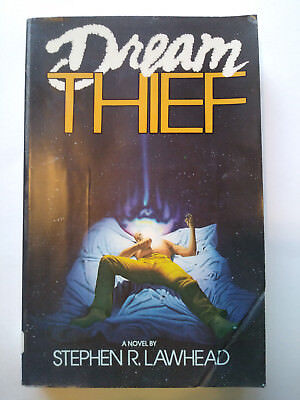
cover image for Dream Thief, showing a shirtless man tossing and turning on a white-sheeted bed. Darkness surrounds the bed, but there is light over his head.
closest thing to my copy's cover
I believe this one was a thrift store find; it's been so long since I bought it I can't really remember. Summary from the back of the book since the Internet does not seem to know this edition of the book exists:

Someone was messing with Spence's head. Every morning Dr. Spencer Reston, dream-research scientist on space station Gotham, woke up exhausted. His head felt like an overripe cantaloupe ready to burst, and he had the nagging feeling that something terrible was about to happen. Only later, with all of civilization hanging in the balance, does Spence find out that he has become a vital link in a cosmic coup masterminded by a mysterious creature known as the Dream Thief. 

I'm going to stop there, as the rest of the 'summary' goes on to praise this book to the heavens, then calls DF "the most ambitious science fiction novel to be written by a Christian since Lewis", comparing this book to CSL's Space Trilogy. If you want to compare your Christian-flavored sci fi novel to CSL's Space Trilogy, you'd better have something to back up that claim. There are a lot of people who don't consider the Space Trilogy to be science fiction, since CSL is obviously more interested in the Biblical myth aspect of his stories than the actual science, to the point where I can't really disagree with critics who say the trilogy is just fantasy in space. However, I still really love these books and the way they combined Christian and Biblical myth with interplanetary travel and other well-worn loved sci fi tropes. Does Dream Thief live up to the Space Trilogy? Not really. Lawhead does weave Christian belief into his Mars exploration story, but not so much the dreams aspect, which is the driving force of the book. I liked the Mars aspect and what he did with that, but as cool as I found the Martian influence in certain figures in Indian mythology when I was actually reading it, it feeds into the whole "we don't believe brown people are capable of doing cool things so instead we're going to believe aliens did it" thing.

I found the pace of this book rather plodding. The Mars portion and race across the world portions were fairly well-paced, or at least not so poorly paced that I noticed the pacing, but the rest kind of dragged. It was all "bad dreams, am I losing my mind? Life on a space station, blah blah blah, that girl is cute but I don't want to fall in love with her, what is going on with me??" stuff for like half the book. Another plot point is Spence's struggle to believe in God.

The writing style was very mid to late twentieth century sci fi; even though this book was published in 1983, it felt a few decades older, to the point that the now-antiquated way of writing science fiction made me think the book was taking place in the late seventies or early eighties, even though it clearly wasn't. I would read about something having taken place x number of years ago, and I would think, "so that happened in the 1950s, maybe?" and then remember the book is set in '42 (2042? 2142? 3042? who knows) in an enormous fully functioning space station. The tone kept me from believing the story was taking place in the future, as did other things written into the book. For instance, Lawhead falls into the trap many other sci fi writers have of imagining communications technology as being way less advanced than even today. Spence's experiments' data is captured on paper scrolls (seriously) as well as being put into a computer because Spence likes doing things the old-fashioned way. Scrolls!? What is this, ancient Rome? Lawhead did get videocalls (skyping) right, though. Apparently they also eat aspic on this futuristic space station (a weird savory meat-based jelly very popular in the 1950s). Like ok.

The characters all feel like they're from some 1970s book; they're somewhat flat and trope-y. There's the all-American intelligent hero, the blonde blue-eyed babe he falls in love with, a burly giant Russian who speaks in an accent, a wise Indian guy who calls the hero Sahib for some reason even though this isn't a Frances Hodgson Burnett novel and if anything he outranks the hero and has twice as many degrees as him, etc. I just wikipedia'd Sahib and while it's definitely associated with British colonial rule, it's actually a respectful honorific. Adjani didn't start calling Spence that until they became friends, so maybe that's why. Still weird to me though. Besides the Indians Spence encounters in India, the only two characters of color are Adjani and his friend Dr. Gita, who is a fat, turbaned caricature. There are only two named women in this entire book that takes place in the future, and they are Spence's love interest and her mom. And they are totally described as looking like sisters. Yeah. Ari is also, it will not surprise you to hear, a damsel in distress. At least she's kind of smart, even though the only reason she's on the space station is because her father is the president of the space station. This is the future! It can't possibly be just one woman on that space station. It can't possibly be just one person of color on that space station. Spence shows some very twentieth century standard views on women, as do the villains, even the one that's very advanced. Oh, and they have to travel through India to stop the bad guys and it's just every horrifying, gross poverty-stricken stereotype about India that you have ever heard. Orientalism and othering abound. Would things really not have changed at all in the future? The entire period seems stuck in the past. All that stuff kept taking me out of the story.

Anyway. I sort of enjoyed it, and it definitely passed the time, but it should have been 2/3s of the length it was. I don't really like this cover; I think this one is more sci-fi-ish and interesting, as is this one, although I don't like the un-canon shape of the space station.

Trigger warnings I'd apply to this book: body horror, gore, violence, casual sexism, racism. Clean of cursing and sex.

Score: 3 out of 5 stars
Read in: September 27-29
From: thrift store
Format: paperback
Status: giving away

Friday, September 27, 2019

Book review: A Summerset Abbey by T.J. Brown

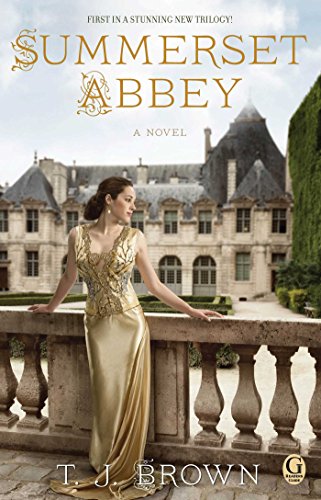
a brunette model wearing very 2000s formalwear leans against a stone fence? thing. Behind her is a beautiful old mansion with many windows.
Yet another dollar store buy, surprise surprise. Amazon summary:

1913: In a sprawling manor on the outskirts of London, three young women seek to fulfill their destinies and desires amidst the unspoken rules of society in this stunning series starter that fans of Downton Abbey will love.

Rowena Buxton
Sir Philip Buxton raised three girls into beautiful and capable young women in a bohemian household that defied Edwardian tradition. Eldest sister Rowena was taught to value people, not wealth or status. But everything she believes will be tested when Sir Philip dies, and the girls must live under their uncle’s guardianship at the vast family estate, Summerset Abbey. Standing up for a beloved family member sequestered to the “underclass” in this privileged new world, and drawn into the Cunning Coterie, an exclusive social circle of aristocratic “rebels,” Rowena must decide where her true passions—and loyalties—lie.

Victoria Buxton
Frail in body but filled with an audacious spirit, Victoria secretly dreams of attending university to become a botanist like her father. But this most unladylike wish is not her only secret—Victoria has stumbled upon a family scandal that, if revealed, has the potential to change lives forever...

Prudence Tate
Prudence was lovingly brought up alongside Victoria and Rowena, and their bond is as strong as blood. But by birth she is a governess’s daughter, and to the lord of Summerset Abbey, that makes her a commoner who must take her true place in society—as lady’s maid to her beloved “sisters.” But Pru doesn’t belong in the downstairs world of the household staff any more than she belongs upstairs with the Buxton girls. And when a young lord catches her eye, she begins to wonder if she’ll ever truly carve out a place for herself at Summerset Abbey.

Totally sounds like the kind of book I like, right? Well, it was fine. The author writes well, and it sounds like she did her research. I like that she included some recommended books on the Edwardian era at the end of her author's note. If only that attention to detail had applied to that cover as well. The model looks like a 2003 formalwear model. The locale and building behind her are perfect, but literally nothing about the model is. Not her dress, not her hair, not her jewelry. I've seen much, much, much better historical accuracy on a bodice-ripper. It actually makes me a little angry. I like the font, although it's not Edwardian at all.

This was the first of a series, which of course means that nothing was really resolved. All three girls showed a frankly surprising lack of knowledge of the social mores of their own time. "Wh-what? You mean our governess's daughter can't be a guest and stay alongside with us unless she's a lady's maid? You mean she'll have to live in the servants' quarters and answer to the higher-up staff?? What madness is this???" I don't like the class differences either, but grow up. It was ridiculous how childish and stubborn the girls were about it. I wouldn't have liked that life either, but the differences between the social classes were so entrenched and separate until, like, the 1960s. 

Each girl has a love interest, of course, and two of them are unsuitable. I was suprised, though, that one of them gives up and married somebody else instead of defying convention, the way I'm used to these historical romance girls doing. There was very little lead-up, just thrown in the epilogue, which is poor writing on the author's part. 

Rowena, the oldest, was made responsible for all the matters that fell to them when their father died, but she was so weak and wishy-washy that she was too passive to fight for anything, not that her uncle would have listened to her anyway (he was in charge of everything for real). She didn't tell Victoria or Prudence anything when she should have, and it made things worse between them and led to a rift. Victoria was positively childish, demanding that her sister argue their case to their uncle even though she know how weak and passive her sister was, and that their uncle wouldn't listen to her anyway, instead of taking matters into her own hands. She's 18 but acts like a 15 or 16 year old. Prudence was the least annoying character, but everything was hard for her because she was brought up as a lady and was the governess's daughter, so there wasn't any real place for her. And of course there was the usual aunt & uncle machinations, cute but untrustworthy rich boys, hot but unsuitable working class boys, clothes and balls and parties.

Reading this book definitely made my evening shift fly by, but I wasn't very satisfied at the ending. The big mystery was made pretty obvious by all the hints the author kept dropping, but she did succeed in making me think that the perpetrator was someone other than who it actually was, so there's that. I do want to read the other books in the series; maybe I can find them online for a song.

Trigger warnings I'd apply to this book: child death mention, possible rape mention, sexual harassment mention, plane crash depiction, blood mention, era-consistent sexism, alcohol abuse/use

Score: 3.5 out of 5 stars
Read in: September 26
From: dollar store
Format: paperback
Status: giving away

Wednesday, September 25, 2019

Book review: The Little Giant of Aberdeen County by Tiffany Baker

cover image. a dressmaker's dummy shaped like an obese woman in front of a yellow background w/ flower & leaf patterns.
I'm mad at myself for buying this book at the thrift store. It's described as "poignant"; of course it's going to be unspeakably sad! Here's the summary; see if you can guess why I picked it up.

When Truly Plaice's mother was pregnant, the town of Aberdeen joined together in betting how record-breakingly huge the baby boy would ultimately be. The girl who proved to be Truly paid the price of her enormity; her father blamed her for her mother's death in childbirth and was totally ill-equipped to raise either this giant child or her polar opposite sister Serena Jane, the epitome of feminine perfection. When he, too, relinquishes his increasingly tenuous grip on life, Truly and Serena Jane are separated--Serena Jane to live a life of privilege and Truly to live on the outskirts of town, the subject of constant abuse and humiliation at the hands of her peers.

Serena Jane's beauty proves to be her greatest blessing and her biggest curse, for it makes her the obsession of classmate Bob Bob Morgan, the youngest in a line of doctors for generations. Though they have long been the pillars of the community, the earliest Morgan married the town witch, Tabitha Dyerson, and the location of her fabled shadow book--containing mysterious secrets for healing and darker powers--has been the subject of town gossip ever since. Bob Bob Morgan, one of Truly's biggest tormentors, does the unthinkable to claim the prize of Serena Jane, and changes the destiny of all Aberdeen forever.

It is only when Truly finds her calling--the ability to heal illness with herbs and naturopathic techniques,hidden within the folds of Robert Morgan's family quilt, that she begins to regain control over her life and herself. Unearthed family secrets, however, will lead to the kind of betrayal that eventually break the Morgan family apart forever, but Truly's reckoning with her own demons allows for both an uprooting of Aberdeen County, and the possibility of love in unexpected places.

If you guessed it was the wise woman healing with herbs stuff, you were right. I was also somewhat intrigued by the main character's medical condition, which is a pituitary-caused gigantism. It's the opposite of what I have, almost, but I haven't heard of many books where pituitary conditions are discussed. Anyway, everyone is horrible to Truly, everyone close to her dies or goes away, and the entire thing was super depressing. The worst character who does the worst thing never really gets his comeuppance, apart from getting leukemia and dying a painful, wretched death, which happens to everyone anyway regardless of how nice they are (the death, not the leukemia). The second worst character got a lukewarm comeuppance, nothing like what she deserved. I'm mad that Truly never stood up for herself, but I guess with the upbringing she had it's understandable. I'm also mad at one of the deaths. There was soooooooo much fatshaming and fatbashing. Even though you get dates and the Vietnam war namedropped, the whole thing still feels like it takes place in the thirties or forties. I'm glad that the one LGBT+ character got a happy ending, even if his childhood sucked. Not nearly enough witch and healing stuff. Good writing though. Would not recommend unless you love depressing stories set in close-minded small towns in middle or southeastern America.

Trigger warnings I'd apply to this book: semi-graphic rape depiction/description, child abuse (physical and emotional), neglect, multiple suicides, fatphobia, ableism, cruelty, controlling relationships, alcoholism (at least one character), a character has PTSD, era-consistent homophobia, implied transphobia, era-consistent sexism

Score: 3.5 out of 5 stars
Read in: September 24-25
From: thrift store
Format: hardcover, with handy attached ribbon bookmark
Status: giving away

Saturday, September 14, 2019

Book review: The Twistrose Key by Tone Almhjell

cover image. a girl and a large rodent fly on a sled over a pine tree forest with evil eyes visible in the bushes below.
I picked up this book from the dollar store, surprisingly enough.* The blurb on the back of The Twistrose Key spoke of everything I like: a Chosen Child uses a mysterious key to slip through a door to another world that is filled with anthropomorphic friendly animals and mythological creatures, and because of a prophecy must go on a quest to perform some important task and save that world. It was inevitable that I would love this book, and I did.

The allusions to other beloved children's fantasy books are plentiful and obvious, but handled so well that they do not detract from the story. Chosen ones and mysterious keys to magical doors that lead to fantasy worlds are so plentiful I don't have to give you any examples. The frozen land of Sylver with its talking animals is obviously Narnia, while the Snow Queen and Puss in Boots make appearances. There are more references, but I won't list them all so you can be surprised when you read it.

There is danger, sorrow, loss, and depth to this book. Lin is devastated to lose her pet vole, Rufus, when she already has to live far away from her extended family and friends in a city and building she does not like. She is overjoyed to be reunited with him in Sylver, but when her task is completed she must return to her world again and leave Rufus behind. There's more sad stuff I won't share because I don't want to spoil the book for you. When I read about Sylver being a sort of heaven for deceased childhood pets, I immediately thought of Sammy, the large gentle boxer we had that I "rode" as a small child, and my tears made it hard to read as I imagined going to Sylver myself and seeing him. If you've ever lost a pet, especially one you had as a child, this is going to hit you right in the feels.

This book was so good! I'm definitely going to get my hands on everything Tone Almhjell writes. English isn't even her first language and she writes so, so well. I think The Twistrose Key is the first in a series, and I am so excited to read the rest!

Cover notes: This is a good cover, and it is my least favorite part of the book, which lets you know how good the book is. Rufus and Lin's proportions are not drawn correctly; Rufus is said to be about five feet tall in Sylver, and Lin is 11 years old, so she should be rather shorter. The artist drew Rufus to be less than three feet high, perhaps thinking of Narnia. I don't think the sled is drawn correctly either. There are four animals drawn at each corner of the cover image: a fox, a wolf, an owl, and a rat. The four animal families in Silver are canines, felines, birds, and rodents, so the artist should have drawn a cat instead of a wolf (a fox shows up in the story but wolves don't). There is another cover for the hardcover version that just has a big Twistrose key on the cover with the same animal corners, and I rather prefer it.

Trigger warnings I'd apply to this book: blood, child endangerment, violence (PG), kidnapping, many parts can scare children

Score: 5 out of 5 stars
Read in: September 11
From: dollar store
Format: paperback 
Status: absolutely keeping

*surprising that this book was so high quality; obviously I buy books from the dollar store all the time

Tuesday, September 3, 2019

August 2019 books

August was also a lean reading month.

I read Thimble Summer when I was in elementary school, and I loved it. 1930s rural Middle America just seemed so exotic to me. It was on sale at Barnes & Noble for less than $4, so I bought it. It still holds up, although of course I no longer have the wide-eyed wonder of a child. I'm still kind of in awe that Garnet pulled off hitchhiking to a big city many miles away. I'd be too scared to do that even as an adult (but of course times are different now). There is of course a bit of time-period-usual racism and cultural appropriation, but it'll fly over most kids' heads. Everyone in the book is white, except for the Native Americans briefly mentioned in a flashback story of settler days told by someone's grandmother. Anyway, this is an award-winning classic for a reason. I recommend it for kids; I think they'll like it even today. 4/5 stars, keeping.


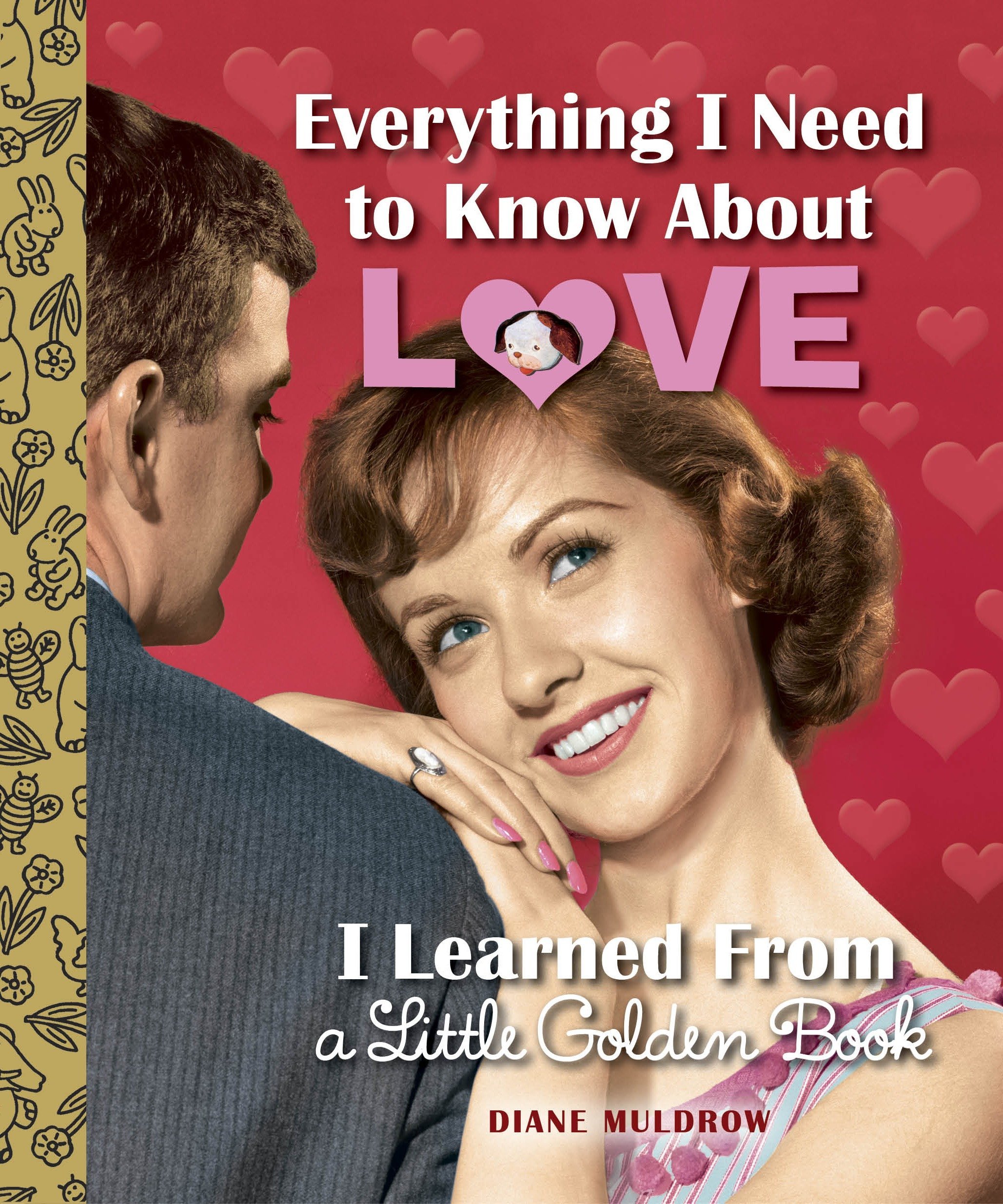
I read another nostalgia-based book towards the end of the month. Everything I Need to Know About Love I Learned From a Little Golden Book is an absolute mouthful of a sentence, but it was still a light, short, and fun read. Musings on mostly romantic love are paired with actual illustrations from real Little Golden Books. I read and loved Little Golden Books a lot growing up, so I enjoyed this book. However, I'm not sure I'll actually keep it. I rearranged my books on Labor Day and put books aside to give away, and I still have 4 medium stacks of books that don't fit in my 4 downstairs bookshelves (!). 3.5 out of 5 stars, tentatively keeping.

Tuesday, August 27, 2019

Latinx representation

Study finds films lag significantly in Latino representation


Latina women in films are all maids, immigrants (undocumented or not), gang girls or cholas, spicy and tempestuous, Jennifer Lopez, or all of the above. I'm trying to think of a Latina in movies I could relate to. America Ferrera has come close; she played Carmen in Sisterhood of the Traveling Pants, but her story was not my story. I have yet to watch Real Women Have Curves, but it's on my list.

Representation matters. Ask me why I, a white, blue-eyed, brown-haired girl, never really saw any character I identified with. (Maybe I would feel differently if I had watched Gilmore Girls. Alexis Bledel is a white Argentinian with blue eyes and brown hair and her character loved books. But her character was white.) Ask me why I saw America Ferrera's awkward bespectacled face as Ugly Betty and immediately placed the TV show in the #1 slot in my heart. Ask me why her Mexican apron-wearing, cooking dad and prettier, more popular sister felt so familiar. Ask me why I latched on to Jane the Virgin, with her love of books and dreams of being a writer and the specter of religion haunting her desires. When Jane and her mom and her abuela sang feliz cumpleaños to her son, harmonizing, I burst into tears. My family does that. I had never seen anything on television so close to my personal experiences. I feel uncomfortable when, in TV shows and movies, second and third generation Latinx Americans speak in English to their parents and grandparents while they speak to them in Spanish. I do that to my dad without knowing, and it makes me feel guilty.

Depending on your interpretation, Latinxs have been here since before the United States claimed its independence. J.Lo goes to the gym every day, but she cannot carry us all on her shoulders. Nor should she.

Friday, August 9, 2019

Websites I used to do a lot of shopping at until they turned out to be owned by evil entities

  1. Forever 21 (sweatshop labor, Christian hypocrisy)
  2. Modcloth (owned by Walmart)
  3. Amazon (human rights abuses)
  4. H&M (sweatshop labor)
  5. Wayfair (made money by selling furniture to the concentration camps where ICE dumps the people they kidnapped)
  6. In N Out (gave money to the Republican party in the California elections)
  7. I still shop there occasionally but JC Penney's, Kohl's, Home Depot, Lowe's, and Macy's have all been racist to employees/customers of color at one point or another
  8. I cancelled my UCLA Visa because it was facilitated by a bank that funded pipelines, and have not signed up for Ulta or Barnes & Noble credit cards for the same reason.