Tuesday, April 12, 2022

Rest of March books - children's books

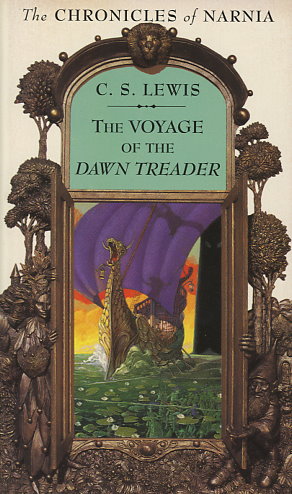
cover image of The Chronicles of Narnia: The Voyage of the Dawn Treader. The titular ship is depicted; it has a dragon head in the front and a purple sail against a yellow sky. below the sea surface, sea people and fish are seen.
Continuing my Narnia reread, next up was The Voyage of the Dawn Treader. This book has many of the same characters as Prince Caspian, and introduces the Pevensies' cousin Eustace Scrubb, a deeply annoying stuck-up brat. In the first two books, the Pevensies were called (or blundered into) Narnia to save it from an invading colonizing force; in this one, Edmund and Lucy (and Eustace) just get to chill on the Dawn Treader and go on cool interesting adventures with Caspian (now King) without any specific quest they have to do. Don't Peter and Susan deserve such a vacation?? The gang only has like 2 near-death experiences instead of being in near-constant danger and discomfort! Only 3 years have passed for Narnia, instead of the 1,000 or so in Prince Caspian. Each chapter deals with a new adventure, as Caspian and co. find out what happened to his fathers' friends who went that way some 20+ years before them and were never heard from again. They also try to get to the end of the world. I love VotDT, as the stakes aren't very high (in one adventure, Caspian, the Pevensies and Eustace are kidnapped into slavery but are rescued like 2 hours later) and the different adventures are fun and fascinating to read about. The pacing and vibe is different from the first two books; reluctant readers might do better with this one. 4.5 stars, permanent collection. I read the copy from my OG Dillons cover art series. Trigger warnings for this book: horror (psychological mostly), suspense and creepiness, death (off-page), dragon cannibalism, slavery, bullying, greed, period-typical sexism, feminism depicted as stupid (sole feminist sentiments given to worst, most annoying character), danger, animal bullied (altho Reep can take care of himself), swords and weapons, pro-monarchy statements, they almost run out of drinking water on the boat at one point


I feel like I bought A Child of Books by Oliver Jeffers and Sam Winston (illustrator) from Barnes & Noble, although of course at this point I have no record of that. I bought it several years ago and displayed it propped up on top of my AC unit, then finally read it in March. Summary below:

A little girl sails her raft across a sea of words, arriving at the house of a small boy and calling him away on an adventure. Through forests of fairy tales and across mountains of make-believe, the two travel together on a fantastical journey that unlocks the boy’s imagination. Now a lifetime of magic and adventure lies ahead of him . . . but who will be next? 

 It's exactly the kind of picture book I love to read: full of book love, wonder, and whimsical illustrations. It leaves you with such a wonderful, warm feeling after reading it. I was surprised by how grayscale the illustrations were, however; while beautiful, creative, and text-based (the text is taken from classic works of literature and classic children's books), hardly any colors were used in the illustrations. I would have also liked to see more diversity; both children appear to be white. I do highly recommend this book, especially to metabook lovers (metabook = books about books). 4.5 stars, keeping. Trigger warnings for this book: if I remember correctly, the children get into slightly dangerous situations? being chased by trolls etc. but nothing major or "real"

Tuesday, April 5, 2022

Book Review: A School for Brides by Patrice Kindl


I probably picked up A School for Brides: A Story of Maidens, Mystery, and Matrimony from the dollar store, since it seems newish, although the thrift store is also a contender. I bought it because it seemed frothy and bubbly and fun, and it kind of was. Summary:

The Winthrop Hopkins Female Academy of Lesser Hoo, Yorkshire, has one goal: to train its students in the feminine arts with an eye toward getting them married off. This year, there are five girls of marriageable age. There’s only one problem: the school is in the middle of nowhere, and there are no men. 

This book takes place sometime in the Regency era, as there are references to pelisses and Napoleon. The writing tone is that fun retro tone, as if the book were written during that time by a Regency person (albeit one with some modern sensibilities). The setting reminded me of a Regency romance novel I'd read a while back, which was also about a young ladies' school set in a remote English village/town with few marriage prospects. That one was different, though as it was purposefully a refuge for girls who wanted a different life than they were expected to have (i.e. bluestockings and headstrong girls). I want to say it was by Tessa Dare? Some decently big romance writer. That series was more bodice-ripper, and very different than this book, so no copying was going on.

 The author makes the choice to refer to everyone by the way they would be referred to in society. This means all the girls are referred to as Miss Crabbe etc., which was somehow much more confusing than if they'd been named to us as Mary or Rosalind. Luckily there is a character names and descriptions list in the front of the book, which was very helpful. Still, all the girls, except for a few archetypes (the 12 year old baby of the school, the extremely shy possibly autistic girl, the wiseass comedian girl, the probably aroace bluestocking), kind of swam together. The same was true for the older/married women (I got some step/sisters confused). Robert the himbo footman is a beautiful cinnamon roll, too good for this world, too pure. The other men were ok, I guess. No real standouts, save of course for the scoundrels (just gross, not sexy).

I would categorize this book as a young adult comic historical Regency mystery romance. There were a lot of storylines in this book, and while some were more interesting than others, I still enjoyed reading them. I figured out the two mysteries pretty quickly, and found the shy anxious girl's sad storyline very suspenseful. While we didn't spend enough time with each couple's relationship development, making their engagements seem a bit fast/out of nowhere, I felt that each storyline ended satisfyingly. I love the idea and setting of a girls' finishing school, but to provide romantic prospects for even the four oldest girls is a lot of storylines and characters to follow. 

Anyway, I did enjoy this book, and would read the next one (sort of a prequel about the step/sisters). Recommended for lovers of light fun Regency romances.

Score: 4 out of 5 stars
Read in: March 29-30
From: dollar store?
Status: give away/sell

Cover notes: A cute pastel cover, which makes this book seem more frothy and chick lit-y than it is. The font is very '90s chick lit and an interesting choice.

Trigger warnings for this book (rather spoiler-y I'm afraid): Abusive, bullying, controlling nanny/parental figure; adult bullies possibly neurodivergent child, including making her stand on the edge of a tower because she's afraid of heights; absent and neglectful parents; golddigger older man stalks and tries to groom teenage girl into marrying him for her inheritance (otherwise no inappropriate discussions/actions); children tied to borderline-abusive wooden "posture" frames for a period of time; period-typical sexism; dating deception; classism; descriptions of dangerous old medical practices (i.e. leeches)

Tuesday, March 22, 2022

Book Review: Broad Band: The Untold Story of the Women Who Made the Internet by Claire L. Evans

My brother, a software?* engineer, and sister-in-law bought me this book for my birthday, correctly guessing it would interest me. I was excited to receive it and then (all together now!) it sat on the shelf for several years. I decided to read it for Women's History Month. Summary below: 

The history of the internet is more than just alpha nerds, brogrammers, and male garage-to-riches billionaires. Female visionaries have always been at the vanguard of technology and innovation.

In fact, women turn up at the very beginning of every important wave in technology. They may have been hidden in plain sight, their inventions and contributions touching our lives in ways we don't even realize, but they have always been part of the story.

In a world where tech companies are still male-dominated and women are often dissuaded from STEM careers, Broad Band shines a much-needed light on the bright minds history forgot, from pioneering database poets, data wranglers, and hypertext dreamers to glass ceiling-shattering dot com-era entrepreneurs.

Get to know Ada Lovelace, who wove the first computer program in 1842, and Grace Hopper, the tenacious mathematician who democratized computing after World War II. Meet Elizabeth "Jake" Feinler, the one-woman Google who kept the earliest version of the Internet online, and Stacy Horn, the New York cyberpunk who ran one of the world's earliest social networks out of her New York City apartment in the 1980s.

Join the ranks of the pioneers who defied social convention to become leaders of the tech revolution. This electrifying corrective to tech history introduces us all to our long-overlooked tech mothers and grandmothers—showing us that if there's a "boy's club" that dominates Silicon Valley today, it's an anachronism.

The title is a pun - broadband and broad (early/mid-twentieth century slang for woman) band. A band of women gave us broadband. Sort of. They made the internet possible anyway. Claire L. Evans takes us through a brisk tour of of women's contributions to computer science and the World Wide Web/Internet (yes, those are two different things. No, I can't really explain it to you). She starts with Ada Lovelace and female computers (if you've seen Hidden Figures then you get it), going on to Grace Hopper and other awesome ladies programming and debugging computers etc. Then she goes on through the decades to talk about other awesome tech women, none of whom I had heard about. An English woman came up with working hypertext like a decade before Tim Berners-Lee did, but used a different format of internet. It's all such fascinating stuff. The internet makes perfect sense to me: stuff links to other stuff. But early tech and internet connections? Holy shit. How did they do that?!?!?

Evans covers all of this in an engaging way, neither too scientific or casual/chatty. As a journalist, Evans (who interviewed just about all of these women personally) is great at telling the stories, yet she doesn't tell us enough. I am dying to know more about these women, but there are hardly any pictures or a suggested reading list (I guess that's not necessary but always appreciated). Stuff I didn't need to know about (Grace Hopper's drinking problem) was shared while other stuff I did want to know (some of these women must have been queer, right?) was not. There are endnotes, but no little numbers in the body of the text to indicate which citation or quotation goes to which endnote (I guess we're supposed to count quoted sentences in each chapter?), which I personally think is irresponsible in a nonfiction book. 

Anyway, I really enjoyed this book and want to learn more about the awesome women who gave us the internet/WWW, allowing me share my stupid little book reviews that no one reads anyway. Thanks for everything, ladies. 

Score: 4 out of 5 stars
Read in: March 8-15
From: gift
Status: keep

Cover notes: I love the use of the motherboard (so punny) to make a lady figure, but I think the b00b parts are unnecessarily crass.

Trigger warnings for this book: sexism, institutional sexism, transphobia in the chapter about the 1980s social network, drug and alcohol use mentions, claustrophobic depictions of spelunking in caves

*my engineer brother does something on computers with coding that affects internet/app-seeming things. That is the best I can tell you. Software engineering sums it up as best as I understand it. It's all very tech-y.

Tuesday, March 8, 2022

Rest of February books

I read the book The Internet Is a Playground by David Thorne throughout the month of February. It is the perfect bathroom book because it's a bunch of essays and email conversations, so you can pick up and put down the book at any point. You can read the synopsis here. I had heard of the blog/website, and I'm pretty sure my brother sent me some of the greatest hits from it (as well as seeing some on tumblr), so I was somewhat familiar with a few of the chapters. One of David Thorne's viral email conversations is credited with "inventing" NFTs (the spider). It is a very funny book, but the humor is mean and problematic. The tagline includes the blog's name, Evil Online Genius, so I suppose I shouldn't be surprised. I couldn't help laughing anyway, although I did find it less funny than I would have/did ten+ years ago. I consider this a good time capsule of mid-2000s to mid-2010s online humor. 3.5 stars, giving to my brother since I know he'll find it funny. Source: BookOutlet. Trigger warnings for this book: fatphobia, sizeism, ableism, the r*tard slur is used multiple times, sexism, homophobia, homophobic slurs (directed by others towards author), child endangerment jokes, animal death & cruelty jokes, probably other stuff I can't think of


Continuing my TCON reread, I read Prince Caspian on the 27th. I had fewer problems reading this book vis-a-vis thinking of reading it out loud (I'd stick with the original vaguely Spanish accents for the Telmarines. It fits with the names). It's such a good book, and a good continuation of The Lion, the Witch, and the Wardrobe. Having the kids go back when they do adds such a fascinating, mysterious element. Memorable characters, wilderness survival, and battle scenes, not to mention magical creatures and happenings. What more do you want? I'd also try to eat the chocolate-looking soil. The copy I read was from my trusty set with the Leo & Diane Dillon cover art, since I don't yet have a full-color illustrations edition of Prince Caspian. 5 stars, permanent collection. Source: gift. Trigger warnings for this book: war, death, murder, threats of the above (including to children), blood, children fighting duels and battles against adults, child soldiers, bear attack, children using weapons, animal death, children shot at with arrows, scary fantastical characters, evil magic, fatphobia, people turned into animals, magic referred to as dark or light when we now know that's racist, suspense (mostly kid-friendly)

Sunday, February 27, 2022

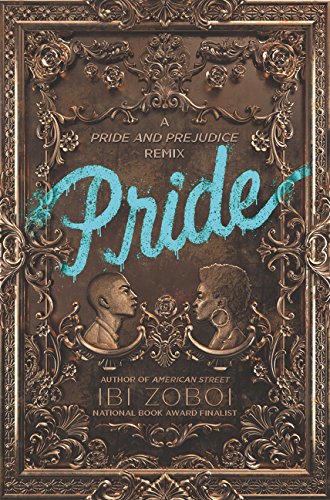
Book Review: Pride: A Pride & Prejudice Remix by Ibi Zoboi

I love Jane Austen's books and I love retellings, so I bought this book (probably at Barnes & Noble). It sat on my Austen shelf for years until I read it last week for Black History Month. Book summary:

Zuri Benitez has pride. Brooklyn pride, family pride, and pride in her Afro-Latino roots. But pride might not be enough to save her rapidly gentrifying neighborhood from becoming unrecognizable.

When the wealthy Darcy family moves in across the street, Zuri wants nothing to do with their two teenage sons, even as her older sister, Janae, starts to fall for the charming Ainsley. She especially can’t stand the judgmental and arrogant Darius. Yet as Zuri and Darius are forced to find common ground, their initial dislike shifts into an unexpected understanding.

But with four wild sisters pulling her in different directions, cute boy Warren vying for her attention, and college applications hovering on the horizon, Zuri fights to find her place in Bushwick’s changing landscape, or lose it all.

I really liked this book. I loved picking up on all the twists on the original story (Benitez = Bennet, Charlize = Charlotte, Colin = Mr. Collins). It's actually a pretty close retelling, despite the modern Brooklyn setting. Zuri, who is Dominican and Haitian American, has such a strong, confident voice. She has dreams and goals and writes slam poetry. It was soul-affirming to have a(n Afro)latine protagonist and family star in this book; they all loved each other and were there for each other no matter what. I also loved the Madrina character, who as far as I can tell takes the role of the Bennets' aunt character. She's a warm and loving Boricua Santeria priestess who counsels Zuri on her problems. I didn't think Darius had the same character arc as Mr. Darcy, as his and Zuri's interactions weren't the same as Mr. Darcy's and Lizzie's. He just chilled out some and fixed his face. The first person present tense this book is written in will also put some readers off, but it does keep us firmly in Zuri's viewpoint as she is the narrator. Anyway, I really liked this book and you should read it. 

Cover notes: Please try to find a big, hi-res image of this book cover, because it is gorgeous. It's a tactile bronze scrollwork deal with flowers and vines and such, with the title being spray-painted across. Just lovely. My hardcover has the Darius and Zuri bust portraits facing each other in the endpapers too. 

Score: 4 out of 5 stars
Read in: February 23-24
From: probably Barnes & Noble
Status: tentatively keep

Trigger warnings for this book: a minor's nudes are leaked by an older boy who groomed her, said older boy attempts to groom another young teenaged girl, alcohol use by minors, drunkenness, partying, physical fight, drug dealing mentions, racism mentions, classism, implied colorism, implied respectability politics, teens sneak out of the house to attend parties, police show up briefly

Friday, February 25, 2022

Book Review: Starry River of the Sky by Grace Lin

I bought Starry River of the Sky from the Dollar Store because of the gorgeous purple cover and because I love kids' fantasy books, plus this one is diverse and has folklore I'm unfamiliar with. Here is the B&N summary:

The moon is missing from the remote Village of Clear Sky, but only a young boy named Rendi seems to notice! Rendi has run away from home and is now working as a chore boy at the village inn. He can't help but notice the village's peculiar inhabitants and their problems.

But one day, a mysterious lady arrives at the Inn with the gift of storytelling, and slowly transforms the villagers and Rendi himself. As she tells more stories and the days pass in the Village of Clear Sky, Rendi begins to realize that perhaps it is his own story that holds the answers to all those questions.

The main story is told from Rendi's viewpoint, with various characters telling stories to one another. The accompanying artwork and the gorgeous cover art is all done by the author, Grace Lin, herself! I enjoyed reading the new to me folktales and piecing together Rendi's and the villagers' stories. This story would be a great one to read to kids. The chapters are short and easy to read, as the reading level is for kids 8-12 years old (I would have been able to read this book at 7). I have not read any other books by Grace Lin, but I plan to. It must be difficult to make one's writing lyrical when writing for children, but she does it. This book reminded me a bit of Dragonwings by Laurence Yep, as it's also about an angry, far from home Chinese boy in the "real world" who finds himself dealing with mythological figures. This book also discusses loss, grief, and big feelings. I love fairytales, folklore, mythology, and the moon, and if you do too, read this book. 

Score: 4 out of 5 stars
Read in: February 15
From: Dollar Store
Status: give away

Trigger warnings for this book: attempted kidnapping, child tied up and threatened with death and violence, animal maimed by accident, verbally abusive father, violence and killing mentions in stories, adults are drugged with poisoned wine but recover, death mentions, theft, wine mentions (several), child teases/bullies younger child, period-typical sexism, angry child with attitude problems, child runs away

Thursday, February 24, 2022

Book (and Show) Review: All Creatures Great and Small by James Herriot

Spoilers for the current show All Creatures Great and Small (last couple paragraphs)

As you know, I am an enthusiastic consumer of British period pieces, and when I heard about the new TV series All Creatures Great and Small (ACGAS), I immediately knew I would watch it, as I loved the James Herriot books as a kid. Watching the show made me want to reread the books, so here we are. 

For those of you who don't know about this series, it's the slightly fictionalized memoirs of a veterinarian in Yorkshire, England (I think it's a county? or series of counties idk) in the 1930s. They're very funny and full of amazing, gross animal facts and illnesses and treatments. The title is chosen, for obvious reasons, from a hymn. ACGAS is actually the second line, so the second book in the series has the first line in the hymn, the third book has the third line, and so on. Here's the summary of the first book from Barnes & Noble: 

For over forty years, generations of readers have thrilled to Herriot's marvelous tales, deep love of life, and extraordinary storytelling abilities. For decades, Herriot roamed the remote, beautiful Yorkshire Dales, treating every patient that came his way from smallest to largest, and observing animals and humans alike with his keen, loving eye.

In All Creatures Great and Small, we meet the young Herriot as he takes up his calling and discovers that the realities of veterinary practice in rural Yorkshire are very different from the sterile setting of veterinary school. Some visits are heart-wrenchingly difficult, such as one to an old man in the village whose very ill dog is his only friend and companion, some are lighthearted and fun, such as Herriot's periodic visits to the overfed and pampered Pekinese Tricki Woo who throws parties and has his own stationery, and yet others are inspirational and enlightening, such as Herriot's recollections of poor farmers who will scrape their meager earnings together to be able to get proper care for their working animals. From seeing to his patients in the depths of winter on the remotest homesteads to dealing with uncooperative owners and critically ill animals, Herriot discovers the wondrous variety and never-ending challenges of veterinary practice as his humor, compassion, and love of the animal world shine forth.

I enjoyed reading this, of course. I think that this first book, ACGAS, is covered by the first two seasons of the current adaptation. They of course fleshed out the characters (Mrs. Hall, the housekeeper, especially) and swapped some things around (in the show, Tristan gets kicked in the leg by a horse, whereas it's James that gets kicked in the leg in the book). They also made the strange choice of making Siegfried, James's boss, a lonely widower in his 40s who is afraid to get back into the dating world. In the book he's in his early thirties and is a total ladies' man. I guess the series thought it'd be better to have Tristan be the ladies' man. He is one in the book, and he's also depicted as being really smart, which doesn't get really depicted much in the show (television deals in absolutes). 

I really like Helen (James's eventual wife)'s character in the show, although of course they made her more spunky. She did wear trousers in the book a lot, and consequently in the show, which I thought was cool. Helen was depicted in the book as being this nice, perfect daughter who didn't talk much but served her dad and doted on him. They made the dad all gruff and kind of scary in the show, while he was all quiet and small in the book. They kept Helen's little sister, expanding her role (great kid actor. She and Helen really look related), but for some reason excised her little brother. They turned a throwaway comment in the book about Helen's dad maybe wanting her to marry his rich friend's son into a whole love triangle, of course, even going so far as to have Helen leave him at the altar. They've also left out the domineering secretary, but maybe they'll add her in season 3. Tricki Woo remains my favorite, although his mom needs her head checked. Anyway, check out the show! It's a sweet, gentle British dramedy (fairly light on the drama).

Score: 3.5 out of 5 stars
Read in: February 12-13
From: gift, I think
Format: hardcover
Status: keeping at my parents' house, where it has been all along

Trigger warnings for this book: animal death; human death mention; animals injured, in pain and suffering; gross medical descriptions such as body fluid mentions, organs, etc.; alcohol and drunkenness (lots of mentions), animal mistreatment out of misguided love, period-typical sexism, poverty, pipe smoking I think
Wednesday, February 2, 2022

January 2022 books

 'Twas a picture book-heavy reading list this month. I am very firmly a mood reader, so I never set my reading list ahead of time. These were mostly lying around the house.


Finding Narnia: The Story of C.S. Lewis and His Brother Warnie is the first book I read this year. As you know, I collect books about Narnia and C.S. Lewis (and by him). This one is a picture book biography by Caroline McAlister and illustrated by Jessica Lanan. It briefly tells the big-picture, broad-strokes story of C.S. Lewis's imaginative, creative, and physical life, from his childhood to his middle age (when he wrote The Chronicles of Narnia). It focuses a bit more on young Jack and Warnie's fantasy kingdoms that they made up, and how they joined them so they could play together. I learned a few things, such as that Warnie was the one who typed the manuscripts of The Chronicles of Narnia, which CSL handwrote! The illustrations appear to be watercolor, and I was pleasantly surprised to find an illustrator's note after the story where Jessica Lanan wrote about going to these places in Lewis's life (the Kilns, Oxford, etc.) and how she patterned places and objects to look like the real thing. She includes endnotes about liberties she took (for example, she painted the wardrobe that inspired THE wardrobe lighter than the one in real life, in order to show off the carved details). I appreciated this, and the illustrator's notes made me like this book even more. This book was a real treat, and CSL fans will love it. It deals with Narnia less than the title suggests, but Narnia fans will like this too, I think. I'm not sure how kids will like it past Jack & Warnie's childhoods. 4.5 out of 5 stars, keeping obviously. Source: Book Outlet. Trigger warnings for this book: death, war mentions, wound mention, grief mention, atheism and Christianity


Next up was the book itself by the man himself, The Chronicles of Narnia: The Lion, the Witch, and the Wardrobe! This is obviously a reread for me; I decided to reread the entire series this year since I haven't in quite a while. It was actually surprisingly difficult for me to read this; for some reason I could not stop thinking of reading this book aloud *while* reading it and of the voices I'd give each of the characters, often doing so. It kept taking me out of the story. I enjoyed it, of course. It strikes me each time I read a book I loved as a child that when I revisit it, the story is over too quickly, and it is no longer as deep and magical and mystical as I found it as a child. Now I just think of me reading it out loud to children myself. Such is growing up, I suppose. What I'm going to do next is read all of Tor's blog entries on LWW for the Great Narnia Re-Read and see what the author had to say about it. I'm going to read a book a month this way. I of course own multiple copies of the Narnia books; I read the full-color one (they added color to Pauline Baynes's illustrations). 4.5 stars, permanent collection. Source: thrift store I think. Trigger warnings for this book: war, death, murder, threats of the above, blood, spit, violent mob (lynching?), scary fantastical creatures, evil magic and enchantment, magic referred to as dark or light which we now know is racist, child endangerment, child soldiers, children using weapons, suspense (mostly kid-friendly)


After that I read The Mystery of the Venus Island Fetish by Tim Flannery, which is a historical fiction/mystery novel set in Australia and partially the Venus Islands in the 1930s. This young museum anthropologist guy goes to live with the Venus Island people for five years, then has to readjust to white Australian life and keep the museum director happy while finding out what happened to missing museum curators. He suspects the VIF has something to do with it (see title). He also has to try to win back his girlfriend and would-be fiancee, who flipped out when he gave her a penile love token as a proposal. This had that fun retro vibe I look for in comic early twentieth century lit, but it was weighed down by period-typical racism towards Aboriginals and Venus Islanders (and Italian immigrants). The main guy's roommate sets out to learn about Australia's bloody, horrible colonial past (it's much like America's with the genocide and child murder, etc.). It's good that the author didn't shy away from that and just pretend colonial Australia was hunky dory, but it did make this a much more difficult read than I was anticipating. The fact that so much of museums' historical collections are stolen from indigenous and non-European/Western people  is also included in this book (the VIF is stolen). Personally, we spent way too much time with the roommate and the rich museum donor (sort of a Trump type); it didn't really add anything to the story. I wish we'd spent more time with the Venus Islanders; they were cool. The ending was kind of rushed and weird? I also didn't get the literary device of pretending the story was found in a stuffed monkey in the Sydney museum; it also didn't add anything to it. I did like reading a book from Australia; usually everything I read is from the US or England. I did overall enjoy this (minus the awful colonial racism parts). 3.5 stars. Source: Dollar Tree. Trigger warnings: all the awful colonial racist violence I mentioned, murder (including of children), violence, racism, genocide, candid descriptions of body parts and bones from dead people and animals, cultural insensitivity and theft of "foreign" items for the museum, racist evolutionary ideas, inappropriate museum and archival/preservation practices


 I went back to children's lit after this, reading two different picture books about libraries and books.


The Night Library by David Zeltser, illustrated by Raul Colón. This cute picture book has one of the famous New York Public Library lion statues coming to life at night and taking a little boy who doesn't like books to discover the magic of the public library. I liked the dreaminess of this one and its art. This is the sort of book I'd have pored over and loved as a child. Recommended for both children and adults, although if you read a lot like I do, the story is not unique. It also feels more like it should be a short film than a book. Supposedly the boy is latino; I did not pick up on that. Bonus diversity points, I guess? It was probably Raul Colón's doing. 3.5 stars, probably keeping. Source: Book Outlet. Trigger warnings: can't think of any. Might make children think lions are safe to ride? They might also start throwing library books around to make them fly


Waiting for the Biblioburro by Monica Brown, illustrated by John Parra. This book is about a little girl in Colombia who has only one book and dreams of more. Luckily, her town is visited one day by the Biblioburro, a traveling library on the backs of two burros named Alfa and Beto (I cry. Get it, alfabeto? Alphabet?). The bright, colorful, naive-ish Latin American-inspired illustrations are nice to look at. The librarian with the Biblioburro is real; this is based on a true story. I enjoyed this, and it's nice to see a library-related picture book that is from Latin America. Both author and illustrator are latines. 3.5 stars, probably keeping. Source: Book Outlet. Trigger warnings: hinted-at poverty, hinted-at educational neglect of children, suggested parentification of child, can't really think of anything else