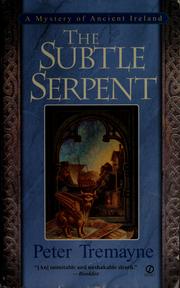
You will be completely unsurprised to learn that my next book was also from the library free books rack.
Absolution By Murder: A Sister Fidelma Mystery is a historical fiction mystery set in the British Isles during the medieval period and is part of a series by Peter Tremayne. Sister Fidelma is an crime-solving nun who is a sort of lawyer/detective/investigator-type official in Ireland and she has to solve, you guessed it, MURDER. Well, several.
I felt somewhat like I had started the series somewhere between the beginning and middle, so I was therefore surprised to learn that
ABM is apparently the first in this series, according to
Publisher's Weekly (see this book's
Amazon page).
Absolution by Murder's synopsis:
The King of Northumbria has requested the services of a wise counsel to decide the people's religious future. Among the select priests, elders, and scholars from Ireland and Rome is Sister Fidelma of Kildare. Trained as an advocate of the courts, she was expecting to rule on issues of law. Instead she was plunged into unholy murder. Dead was the Abbess Étain, a leading Celtic speaker, her throat slashed. With the counsel in an uproar and civil war threatening, the desperate king has turned to the sharp-witted Sister Fidelma for help. With the aide of her dear friend Brother Eadulf and her faith in the truth, she must act in haste before the killer strikes again.
The book opens with a note from the author, which provides historical context to the era and location so that the reader can understand what's going on. For instance, Tremayne states that in medieval Ireland (until England invaded it and forced assimilation), women had more rights than in other countries and could own property and hold political office. The historical context was very useful; I think I would have been much more confused without it. The author's bio on Amazon is as follows:
Peter Tremayne is the pseudonym for Peter Berresford Ellis, a well-respected authority on the ancient Celts. He is the author of over twenty books, including The Dictionary of Celtic Mythology, The Celtic Dawn: A History of Pan Celticism, and The Druids. This shows that Tremayne/Berresford Ellis really knows his stuff about the Celts and medieval Britain. I love anything having to do with the medieval era, so I was interested in this book.
The reason the Celtic religeuses are in Northumbria is because a synod is taking place, where church clergy are debating about whether the Celtic version or Catholic version of Christianity is correct and which one they will follow. I don't remember or know all of the differences, but Celtic Christianity included celebrating Easter according to the Julian calendar, keeping the seventh day Sabbath, monks shaving the front of the head for their tonsure, clergy being able to marry and both male and female monks/nuns in the same abbey/monastery, and sticking more closely to the apostles/early Christians' version of Christianity. The Catholics believed in celebrating Easter according to the Gregorian calendar, keeping Sunday as Sabbath, monks shaving a circle on the top of their head for their tonsure, the authority of the pope, and clergy remaining celibate and separate. The Celtic Christianity probably came to Ireland with the Romans during their reign, making their Christianity purer than Catholicism, which like snowballed a bunch of pagan and "popes just wanna have total power" stuff and cared less about the Bible than about papal authority. I read somewhere that the Irish Christians kept the Saturday Sabbath until the Catholic English forced them to adopt Sunday worship. See? Older than Catholicism, and closer to the Bible. I'm Seventh-day Adventist, a Protestant denomination that has been traditionally anti-Catholic (most Protestant denominations were/are, though), so I'm biased. Anyway, the monks were straight-up coming to blows over this stuff. To me, the tonsures are stupid, go ahead and celebrate Easter on Sunday, stop being so antisemitic that you refuse to keep the Saturday Sabbath even though it says to in the 10 commandments and get mad when someone points out that Jesus was Jewish, wtf, I don't care about the rest
ditch the pope. The reason they wanted/had to choose one version of Christianity was because they were afraid a schism might happen, and the gospel might be lost? idk. Obviously the Church has split up many times and it's still here, but the Great Schism (Catholic-Orthodox/East-West church split) hadn't happened yet so they didn't know that. I was very interested in all of this and liked this aspect of the book. I love fun books that teach you things.
I'm not sure why the synopsis says "her dear friend Brother Eadulf" when he and Sister Fidelma first meet in this book and don't even like each other in the beginning. They have that classic meet-cute when Fidelma starts to fall for some reason and Eadulf catches her, and there's like a frisson of attraction. This merits a full-on eyeroll. Then, Fidelma realizes he's a Saxon and a Roman Catholic, aka on the opposing side of the religious dispute (more on that later), and she makes up her mind to dislike him, Anne Shirley-stylez. Part of this decide-to-dislike is due to her unrecognized attraction to him. It's weird because she really doesn't realize that she's attracted to him, probably because she doesn't even know what attraction is or feels like. I know she's a nun, but come on. The book is full of her constantly Feeling Something around him, like the standard "flutter in the stomach", and each time she's like "What is this feeling? Why am I feeling this way? What does this mean?" Sis. (eyeroll) Also she isn't pleased at being saddled with him for an investigation partner, although she begrudgingly admits it makes sense for a Catholic to be attached to the murder investigation (she's Celtic), especially since the murder might have had a religious/political motive. Eadulf seems really disposed to like her because he's a nice friendly guy, but also probably because she's pretty. They do get on better and better throughout the book, learning to work together and ending it as friends about to do a roadtrip together to Rome. Theirs is that classic pairing of the headstrong genius + the buenaso easygoing supportive friend/bf. Overall, though, I do think it's super weird that the author pushed this romance angle on a nun and monk, even though I think the Celtic clergy were allowed to marry. Hopefully they're more platonic in the other books.
Also, Sister Fidelma is attractive. She's got flaming red hair with "rebellious strands" that are always coming out of her headdress, ooh la la. She's tall and statuesque with milky skin. Her eyes change color with her mood, blue to green and back again. WE GET IT, she's a Strong Female Character (and not very historically accurate). Ugh. I am so tired of heroines having to be pretty. Why does she have to be pretty? Why is her appearance at all important? Wouldn't it have been more interesting if she were plain? (Yes.) Being the hero/ine doesn't mean the character has to be pretty. Being smart doesn't mean she has to be pretty. Being a woman doesn't mean she has to be pretty! I am sick of this. Give us someone us normies can look up to! Also, if she's a like forensic genius
and she's pretty, it makes the character less plausible and can veer into Mary Sue area. I guess when a man is writing such a character it's less self-insert and more "this is my dream woman". Think about it. Gorgeous and brilliant and religious and spirited and chaste/innocent? Eyeroll. She does have flaws, though, such as her headstrongness and stubbornness. In a way those help her with her investigations, though, so. Anyway this sort of thing is lazy writing.
On to the mystery.
SPOILERS AHEAD. Abbess Étain is a dear friend of Sister Fidelma, so she's shocked and grieved when AE is murdered. As Fidelma and Eadulf get closer to catching the villain, more people keep getting killed. I had only 2 suspects in mind around the middle the book, until one of them was found dead. Then a clue was dropped: quotes from Sappho in Greek were found with two of the bodies, which was a dead giveaway for the killer. As soon as I saw the name Sappho, I immediately remembered that Abbess Étain had an assistant nun, Sister Gwid, who loved Greek poetry and was totally gangly, awkward, overly tall, and hero-worshipped the Abbess. Obviously Sappho poetry + hero-worshipping a woman = lesbian. It turns out that Gwid was in love with the Abbess and gave her Sappho quotes, neither of which the Abbess was thrilled about. When Gwid found out that the Abbess was going to marry a man, she flipped out and killed her. Then she killed the others to keep her secret from coming out. I don't really like this because 1) homophobic stereotypes much? and 2) this was lazily written and most people who read this book, per Amazon, got who the killer was like halfway through the book. It was pretty obvious, what with Sappho. Also, I didn't like that Gwid's hideous personal appearance was constantly being remarked upon whenever she was in the scene. Her giant hands, her tall stooped height, her awkward limbs, etc. Why does she have to be ugly? Why does the villain have to be ugly? Why does the lesbian have to be ugly and mannish? Why does the lesbian have to be the villain? Gwid being besotted with the Abbess and then getting murderously jealous is a homophobic trope. There's also a monk in this book who is effeminate, looks up through his eyelashes at whoever is talking to him, speaks with a lilting high pitched voice, and is a magpie, stealing pretty/shiny things. I mean?? Why all the gay stereotypes, Tremayne? This, too, was lazy writing.
END SPOILERS
Anyway, I enjoyed this book, despite being frustrated with the villain, characterization, homophobia, and the synod arguments. I would recommend this book if you have a high tolerance for infodumps, lazy writing, and religious topics.
The cover kind of gets the feel of the book, with its medieval architecture (sweet qua-trefoil window) and candle. I'm not sure if the architecture is period appropriate, but at least it's not Gothic. My favorite cover is
this one, even though she's wearing a monk's robe and I'm pretty sure nuns wore different habits. I like the Kells-ish patterns. The one in the Amazon page is pretty good too. Nice Irish font use.
Score: 3.4 out of 5 stars
Read in: early February
From: free books rack at the library
Format: paperback
Status: put back on the free books rack at the library