Showing posts with label Regency. Show all posts

Sunday, September 14, 2025

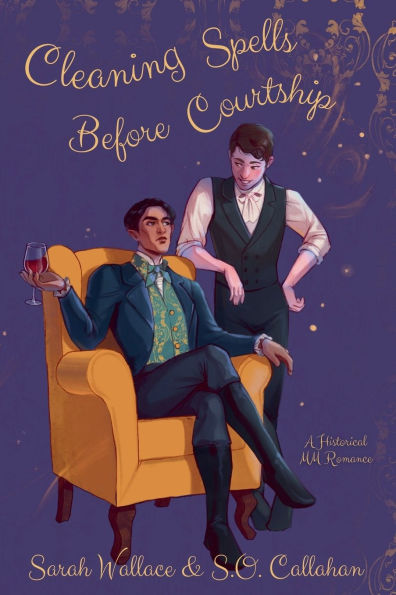
ARC Book Review: Cleaning Spells Before Courtship by Sarah Wallace and S.O. Callahan

The authors put out a call for ARC (advanced reader copy) readers for their upcoming book earlier this month, and I jumped at the chance. I was chosen to receive a digital ARC (the first 100 to sign up got accepted), which is so exciting and makes me feel like a real bookstagrammer/book blogger! 🀩

Official book summary:

To look at someone and to truly see them were entirely different.

Summer 1814: Moody fae Sage Ravenwing is on his way to the country estate of Wyndham and Roger Wrenwhistle - and very confused as to why he was even invited.

Still pining after Wyndham and nursing a grudge against Roger, Sage reluctantly joins the raucous house party, which soon adds a mysterious guest to their number.

Conrad Moore has come a long way from the docks of Bristol. Armed with a humble education, middling magical skill, and a great deal of audacity, he journeys to the Wrenwhistle estate to inquire about the open position on the Council.

Thrown together in the only remaining available room, the surly fae and cheerful human establish a tentative acquaintanceship. As they learn surprising lessons from each other - riding, swimming, and mending a broken heart - a tender friendship blooms and an explosive magical connection forms.

But just as Sage starts to yearn for a new future with Conrad, he discovers that the hardest lesson of all will lie in atoning for his mistakes and scrubbing his messy past clean.

The Fae & Human Relations series is one where you absolutely have to read every book in order, as each one builds on the one that came before. Cleaning Spells Before Courtship is the fourth and last book in the series (😭), but its establishing events took place in the first book. Sage and Wyn were fuck buddies, but Sage was in love with Wyn (without Wyn knowing) and took Wyn and Roger's whirlwind romance really badly (leading to the "light stalking by an ex" in my review's trigger warnings list for BSaBG). Sage said some really mean things to Roger and Wyn told Sage that unless he apologized to Roger, they wouldn't be in each other's lives anymore. I'm going off of what was recapped in the book, because it's been a while since I read the first one and I've kind of already forgotten  what went down between Sage and Roger. In the second and third books of the FaHR series, Sage is randomly mentioned in the Torquil Tribune gossip paper as having attended parties and events and sneaked off with various random men, which gives him a reputation. From these brief mentions, it was obvious that Sage was trying to make Wyn jealous and get over him, and I was sad for him and hoped that he would find happiness and love, so I was glad to see that this book is just that.
 
Anyway, Roger invites Sage to his and Wyn's country estate, ostensibly for a weeks-long house party they're having with their friends, but mostly so Sage can help Roger plan Wyn's surprise 30th birthday party and hopefully reconcile with him. The reason Roger gives for this is because if Wyn saw/knew Roger was meeting one on one with one of their friends, Wyn would suspect Roger of planning a surprise party for his birthday. I understand Roger wanting his husband to reconcile with one of his oldest ex-friends, but asking the man who is still heartbroken and pining after Wyn to plan his birthday party is kind of callous. Sage reluctantly accepts. 
 
The house party consists mostly of Roger's friends that we met in book one and then kind of never spent time with again, apart from mentions in the gossip column (understandably, since the romantic leads in books two and three didn't know them). Speaking of, Torquil and Emrys and Silas and Keelan are part of the party too, and the friends are all having a great time... while Sage watches from the sidelines. Luckily he doesn't have to be the sole single person for long, because Conrad Moore arrives. 
 
Conrad is a dockworker who learned about the open position on the Council for Fae and Human Relations (which Wyn, Roger, Torquil, and I think Silas are all on), and decided to travel to meet with Roger and Wyn to hopefully be allowed to interview for the position. Like, he doesn't know anyone, doesn't write a letter of introduction, just shows up. Pretty ballsy. He's a friendly and eager to please person, and Roger and Wyn are nice, so they invite him to stay with them and join their house party, only, wouldn't you know it? All of their rooms are filled up, so he'll just have to room with Sage. What a surprising coinkidink. You'll be shocked, just shocked, to learn that there's only one bed!!! Sage is pissed at this turn of events, then pleasantly surprised to see that Conrad is hot and ripped, then pissed again as his hints to hook up just go winging over Conrad's smiling head. 
 
The couples (and one throuple) at the house party start to do the whole wink-wink, nudge-nudge, jokey-jokey thing at the two of them, so Conrad and Sage decide to fake-date to get them off their backs. I think you can gather what happens after this decision is made. 
 
Besides the couple machinations and Roger and Conrad doing magic, this book consists of the friends just hanging out, eating, and having fun together. It was a nice change from the last book, which was all "working on magic at & for the Council" and stressful due to Keelan's unwanted engagement. It was sweet to see how our two leads become close and fall in love, with Sage learning to trust and be vulnerable and Conrad enjoying taking care of and protecting Sage. Sage also slowly befriends everyone and apologizes to Roger (hopefully that's not a spoiler since "atoning for his mistakes" is in the summary). 
 
I'm sad the series is over, but I've really enjoyed visiting this world and cheering on its couples. I highly recommend this series to anyone who likes Regency romances and queer love stories. Cleaning Spells Before Courtship comes out on October 4.
 

Score: ★★★★.5 out of 5 stars
Spice score: 🌢🌢

Read in: September 12
From: digital ARC

aesthetics moodboard for CSBC

Genres/classification: romantasy, cozy fantasy, Regency romance

Representation: gay MMC who is a man of color, asexual MMC, 2 nonbinary side characters who use they/them pronouns, a side sapphic character who is masc/butch (wears men's clothes), 1 poly triad, queernorm and racially diverse society with lots of queer side and minor characters, Roger has anxiety

Spoilers past this point

Tropes: close proximity, and they were roommates, only one bed, waking up wrapped around each other, rich x poor, grumpy x sunshine, morning person x night person, height difference (smol & tol), fake dating, they already think we're dating/fucking so we may as well pretend, catching real feelings while fake dating, found family

Trigger warnings: a character had hookups to feel wanted/avoid negative emotions and was not treated with respect (past), a character struggles with low self-esteem and feeling unwanted, unrequited love, past sex-shaming, food instability mentions, poverty mentions, amatonormativity

Thursday, June 5, 2025

Book Review: Fire Spells Between Friends by Sarah Wallace & S.O. Callahan

London, 1813—fae and humans alike are abuzz whenever Torquil's Tribune drops a juicy new tidbit. At the center of the gossip is handsome fae, Emrys Wrenwhistle, heir to his family's fortune. As speculation over his prospects grows, the search for a suitable spouse begins.

The trouble is, Emrys can't find anyone who measures up to the person he's been secretly seeing for years: the Tribune's witty society writer.

Torquil Pimpernel-Smith is accustomed to using the force of gossip to pull the strings of social influence. So when they are offered a position as the Council's first fae-human member, they readily accept.

However, their first project plunges Torquil into upper class circles rife with snobbery. Facing prejudice head-on is hard enough, without having to hide their true feelings for the eligible Emrys.

As the line of suitors starts to form, the Wrenwhistle family is intent on making a worthy match. Emrys and Torquil's passion burns perfectly in private, but navigating society together will determine if their love is a blaze—or in danger of being extinguished.

I adore Sarah Wallace's Meddle & Mend series and also really liked the first book in this series (despite my criticisms lol), so I snapped this ebook up when it went on sale. (I reread Breeze Spells and Bridegrooms first before reading this one, of course.) This book takes place right after the events of BS&Bg, so you do need to read it first as Roger & Wyn and their rubrics feature heavily in this book (yay!). Emrys is Wyn's older brother, and Torquil is the gossip columnist/editor who, in book 1, was like:

you know what would be hilarious? and posts that [Wyn & Roger] are engaged. They of course visit the editor to demand they retract the engagement announcement, but [Torquil is] like "no + deal with it + you two are cute together :)"

Poor Torquil, who is nonbinary and uses they/them pronouns, faces so much racism (speciesism?) because they're half fae, half human. They and their parents were shunned from society and disowned by Torquil's fae mother's rich and influential family; both the human and fae schools refused to accept them or test their magic, so they're basically without status or prospects in this magic-based society. My first paragraph in my BS&Bg review talks about this world a bit more and includes my thoughts. Torquil is poor and used to being alone and looked down on/discriminated against. 

By contrast, Emrys is the heir to his rich, influential elf family, one of the most eligible gentlemen in society, and wants for nothing... except that he can't put off his enterprising mama who will accept nothing but the best (aka rich and from a good family) spouse for her son, and keeps setting him up and making him go on dates even though he's less than enthusiastic. I was sort of surprised at Emrys having grudgingly-yet-long-accepted that his marriage would be arranged for him, instead of hoping to marry for love (I guess that's pretty common in this era). The way Torquil and Emrys meet (plus a short backstory for Torquil) is detailed in a short story (free if you sign up for the authors' email newsletters); basically they've been hooking up for years in a no-strings-attached to friends-with-benefits situationship. They both know they're from different social classes and financial situations, and that there's no way they could marry. 

Torquil is asked to join the Fae-Human Relations Council as its first fae-human member, and accepts in order to hopefully better things for themself and other fae-humans. However, they have to deal with prejudice from several council members and society folk, as being on the Council gets them invited to society events (Wyn's grandma gets them  the invites and makes them join society, much like she meddles in Wyn and Roger's lives). Roger and Wyn's new human and fae magic (respectively)-measuring rubrics are accepted, and it is decided a new rubric is needed for children like Torquil who have one fae parent and one human parent. Consequently, Torquil, Wyn, and Roger are entrusted to test out Torquil's magic and figure out a rubric that is both similar to the fae & human rubrics and that will work for the magic abilities of human-fae people. 

There's that classic SW "a character is cared for/given gifts against their will" thing, and that thing from book 1 about a newlyweds' wedding spell showing how much they're in love/compatible is expanded on in an ~interesting~ way. Much of this book takes place during December/Yule/Generic Winter Holiday That Is Definitely Not Christmas (Except It Totally Is) and would be perfect for a cozy winter/winter holidays read. I think I'll reread this in December for that reason. 

Some spoiler-y thoughts I want to talk about (highlight to read): I thought it was sad how Torquil's parents had zero qualms about buying Toquil the press and bouncing. They left them alone! :( I was so happy for Torquil when they got letters from other fae-humans like them, showing how they weren't the only one! I was shocked by that bombshell that Torquil's grandma actually didn't want to disown her daughter for marrying a working-class human but had to pretend to go along with it and wait until her husband/Torquil's grandfather died to publicly accept them as their family! Poor Torquil grew up thinking their grandmother hated them and wanted nothing to do with them.  I think it was wrong of Torquil's mom to keep that from her child; at least, she should have told them before she and Torquil's dad left for the continent. But at least they're not alone anymore, and being part of the rich and influential Pimpernel family means they can marry Emrys after all! We love to see an alone/unloved character end up with so much love and loved ones. However, I did find it kind of ridiculous that even after Torquil is publicly part of the Pimpernel family again, they and Emrys are still like "we can never be together" because of Emrys' social standing-obsessed mother. Hello? Torquil is a catch now that they're a Pimpernel officially. Get it together, kids. I'm a bit sad that Torquil had to give up their gossip newspaper, but at least it's in good hands. 

Overall, I really enjoyed this book and rooted for the two romantic leads to end up together. I'm looking forward to reading the next book in this series!

Score: ★★★★.5 out of 5 stars (Blogger, return to me the half star special character! 😠)
Spice score: 🌢
🌢 
Read in: May 14
From: B&N Nook

Everything from this point on is spoilery 

Tropes: forbidden romance, "society would never accept our love", rich x poor, outcast x rich/famous/society darling etc., proud poor character who won't accept gifts/money from their rich lover, catching feelings during what is supposed to be a sex-only arrangement, "this perfect-on-paper suitor leaves me cold but I can't stop thinking about my forbidden lover", "I'll hide how I'm in love with them because we can never marry, never", rags to riches, long-lost/previously unknown rich family/family member who shows up and makes the character part of their family and fixes their social/financial situation, hurt/comfort (sick/comfort?), that thing where one character collapses and their "secret" lover freaks out making it super obvious he's in love with them, secret couple think they're hiding their secret relationship/feelings successfully but their loved ones suspect something/become aware/totally know

Representation: nonbinary character who uses they/them pronouns, bisexual/pansexual characters including both main characters, I think Roger and his family are Hispanic/Latinx, probably some other characters of color, queernorm, non-sexist & racism-free society; poor character

Trigger warnings: racism/speciesism, including microaggressions and bigoted language;  classism, poverty, a man in his mid-thirties briefly courts an 18-year-old girl who is into him (he's not into her. Several people point out their age gap is gross and he breaks up with her), hunger/food insecurity. (the authors give trigger warnings at the beginning of the book)
Monday, April 14, 2025

Book Reviews: the Gentlemen of Uncertain Fortune series by K.J. Charles

I loved K.J. Charles' Will Darling trilogy and A Charm of Magpies series, and my love for Regency romances is well-documented on this blog, so when I saw that KJC had written gay Regency romance novels, I snapped up the ebooks when they were on sale.  I read the two books in the Gentlemen of Uncertain Fortune series by K.J. Charles back to back in one day. They're set in the same world (well obviously all Regency romance novels are set in Regency-era England, but, you know, the characters have mutual friends and eventually interact etc.) but you don't really have to read them in order. Both ebooks are from B&N/Nook.


The Gentle Art of Fortune Hunting

Robin Loxleigh and his sister Marianne are the hit of the Season, so attractive and delightful that nobody looks behind their pretty faces.

Until Robin sets his sights on Sir John Hartlebury's heiress niece. The notoriously graceless baronet isn't impressed by good looks or fooled by false charm. He's sure Robin is a liar, a fortune hunter, and a heartless, greedy fraud -- and he'll protect his niece, whatever it takes.

Then, just when Hart thinks he has Robin at his mercy, things take a sharp left turn. And as the grumpy baronet and the glib fortune hunter start to understand each other, they also find themselves starting to care -- more than either of them thought possible.

But Robin's cheated and lied and let people down for money. Can a professional rogue earn an honest happy ever after?

Gold-digging scammer siblings + an autistic-coded baronet who is not taken in by their charm + paying off a gambling debt by ~creative means~ πŸ‘€ They start catching feelings during what is supposed to be strictly a ~physical~ arrangement!! 😱 Both Robin and Hart are forced to come face to face with their parent wounds/childhood trauma, and decide whether they can let themselves be loved as they truly are. Marianne is dead-set on marrying a titled noble so she'll be rich for the rest of her life, but Hart's non-rich, non-titled friend is in love with her, and she might be falling for him... Also there's the math genius niece and card games. I liked this a lot and found it interesting to read about all the ways the Loxleigh siblings acted to achieve their desired results and manipulations. Hart and Robin gave me Roy x Jamie from Ted Lasso vibes. There's also a little KJC name punning going on.  ★★★★, 🌢🌢🌢


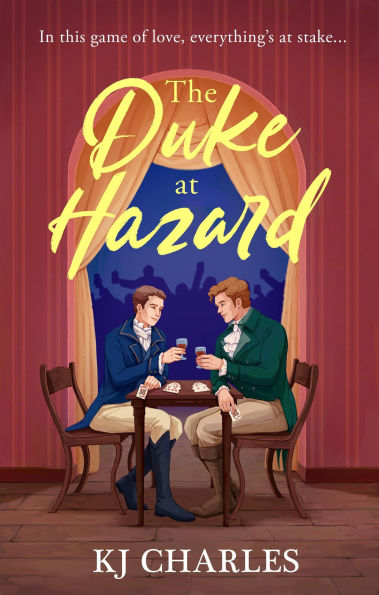
The Duke at Hazard 

The Duke of Severn is one of the greatest men in Britain.

He's also short, quiet, and unimpressive. And now he's been robbed, after indulging in one rash night with a strange man who stole the heirloom Severn ring from his finger. The Duke has to get it back, and he can't let anyone know how he lost it. So when his cousin bets that he couldn't survive without his privilege and title, the Duke grasps the opportunity to hunt down his ring--incognito.

Life as an ordinary person is terrifying... until the anonymous Duke meets Daizell Charnage, a disgraced gentleman, and hires him to help. Racing across the country in search of the thief, the Duke and Daizell fall into scrapes, into trouble--and in love.

Daizell has been excluded from polite society, his name tainted by his father's crimes and his own misbehaviour. Now he dares to dream of a life somewhere out of sight with the quiet gentleman who's stolen his heart. He doesn't know that his lover is a hugely rich public figure with half a dozen titles. And when he finds out, it will risk everything they have...

Poor sheltered Sev (the Duke of Severn) just wanted to have one anonymous hookup, but gets plied with alcohol and robbed while unconscious. His well-meaning relations basically run his life and are always impressing the Grandeur and Importance of his title, so they can't know his ring was stolen; no one can know, as gay hookups are illegal. It was actually stressful reading about Sev (going by Cassian, one of his many names) trying to get around by himself when he has no idea what he's doing. Luckily he stumbles on Charnage, who was a few years above him at Eton, and hires him to help him look for the guy who robbed him. Their adventures have both highs (sightseeing, There Was Only One Bed) and lows (having to ride in a public coach that packs in smelly people like sardines, being in a horrible coach crash with casualties, getting kidnapped), but overall Sev/Cassian finds the freedom exhilarating. He and Charnage also keep running into a young lady hell-bent on eloping and evading her awful guardian, and try to help her. Charnage's deal was sad; I hated how he was cast out from society because his dad committed a crime he had nothing to do with. The fact that Sev/Cassian has been lying to him this whole time doesn't help. Overall this was a wild ride, and I loved reading how Sev came into his own as a Duke and how he used his position to make things right with Charnage and his friends and fix their issues.  ★★★★, 🌢🌢🌢  DM me for TWs (I believe both books have them listed at the beginning)

unorganized moodboard for the Gentlemen of Uncertain Fortune series

Thursday, March 13, 2025

Book Reviews (ish): The Meddle & Mend series by Sarah Wallace redux

I heard about the Meddle & Mend series by Sarah Wallace from a bookstagrammer I follow who loves and promotes the books almost more than the author does. The first one was free, and as it was billed as a Regency cozy queer romance, I obviously downloaded it. I read them during my big summer East coast trip where I went from my annual conference to visit my aunt in Maryland and then stay with my sister and her family for a week during their trip to New York. Reader, I loved the book so much I immediately downloaded the next ebook, and repeated this (read & downloaded the next) for each book in the series. I almost never do that! The rapidity with which this became one of my favorite series is remarkable, as is them becoming one of my comfort series despite only having read them once. Since last July I've been fighting the urge to reread the series at least once a month, which also never happens. Here's a meme I made depicting my monthly struggle: 

I finally gave in to the urge last month because the sixth book in the series was released! I reread all five M&M books over the weekend, and then (after a struggle with stupid B&N who had put a hold on my account for no reason) downloaded and read the sixth book. I thought I'd do a mini rundown review (such as it is) of each book since I didn't have time or space to do so last time I reviewed them. All of the books take place in the same world: a sort of alternate Regency England that has magic and is queernorm, racism-free (and consequently racially diverse), and mostly free of sexism. Classism and poverty still exist, and birth order has replaced patriarchy: firstborns take the place of eldest brothers in terms of inheritance and heading the family after the parents die, plus having more freedom re: reputation. I appreciate the lack of sexism and homophobia etc. as a socially conscious reader, but at some point the genre (Regency historical romance) stops being what it is, plus it raises questions* about the world-building.

Mild spoilers throughout because that's who I am as a person

Letters to Half Moon Street - (synopsis) The first book in the series is an epistolary novel, consisting mainly of letters between Gavin Hartford, who is lonely and bored in London, and his sister Gerry, who is visiting family in Tutting-on-Cress (a country village), plus a few between Gavin and his new friend Charles Kentworthy, who Gerry thinks may be interested in her brother... Gavin is very introverted, shy, antisocial, and terrified of other people (mood), so it is up to charming extrovert Charles to make the friendship happen and make Gavin leave the house and do stuff around London. I enjoyed watching their relationship develop, but I didn't see why Charles needed to be so pushy (why make Gavin take up boxing when he hates it? Why didn't Gavin stand up for himself and say no?). Charles basically made the entire relationship happen himself, and he had to force Gavin every step of the way. Despite my frustrations with the characters, I really liked this book. The story is a bit slow-moving, but in a nice calm way; it's an enjoyable world to live in for a bit. Gay and pan rep, I believe. ★★★★, 0 chili peppers as there's no spice, just kissing and sex work mentions


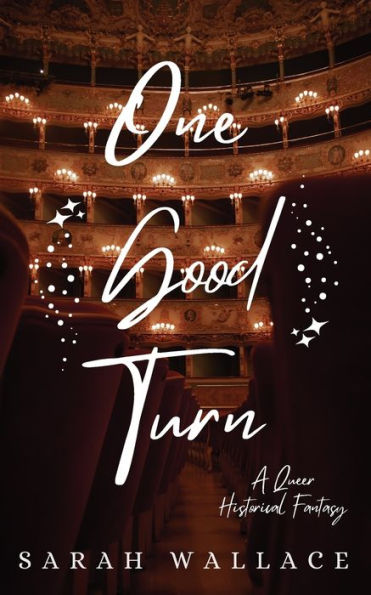
One Good Turn - (synopsis) The second book is written in third person limited (I think), as is most of the rest of the series. Poor, barely-working-class Nell protects a rich man (Charles) from being robbed, kicking off a series of events that change her life. The crimelord, not happy that Nell's sympathy cost him money, sends her and her best friend Pip (who is the crimelord's lover) to steal a magical artifact from a viscount who happens to be Charles's best friend Bertie (we meet him in book 1 but he's not a big part of it). Bertie recognizes Nell's and Pip's magic abilities and offers them a chance to live and study magic with him. Nell jumps at the chance, and begins the life she always dreamed of. She also has to figure out her relationship with her friend with benefits (whose name I of course forgot), a single mother who has no time to go out with her (Nell is ridiculously slow at understanding this). Nell is, as far as I can tell, an aromantic lesbian who is allosexual; the representation is on-page but of course those terms are not used. She's also fat but I didn't pick up on this while reading the book; it may just be a throwaway mention. This book talks about sex much more frankly and frequently since it's from Nell's POV and poor people are not protected from reality the way upper-class people are (there are sex worker characters). This book is sadder and more angry-making than book 1 (it's implied that Pip was groomed into being the crimelord's lover; he basically raised Nell and Pip so that skeeved me out). There is a list of trigger topics in the beginning of the book, plus you can ask me for specifics. ★★★.5 (affectionate), 🌢🌢


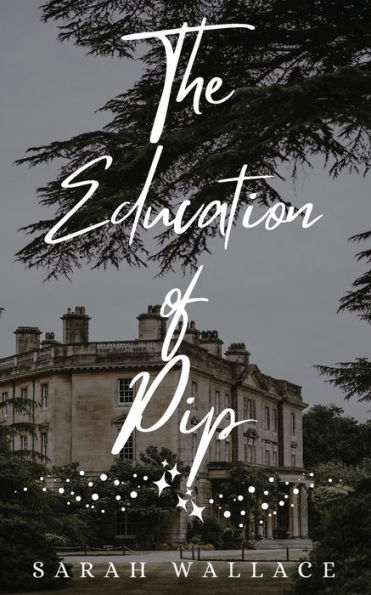
The Education of Pip - (synopsis) Don't worry, Pip is rescued from the awful crimelord who groomed him into a sexual relationship after having basically raised him and, it turns out, forced him into sex work. Pip is thrown in jail, which gives Bertie an opportunity to whisk him away from London and his abuser, and takes Pip to live with Charles, Gavin, & Gerry in Tutting-on-Cress (Bertie has a house there too). Like Nell, Pip is taught to read and write and about magic, but he has a lot of healing to do. The T-O-C gang and their staff are so gentle, patient, and understanding with Pip; for him to finally be treated with care and love after everything he went through is so important to me! Part of the reason for Pip being in T-O-C is for him to be Gerry's assistant at her spell shop, which was very interesting to read about. Pip's relationship with Bertie slowly begins to develop as well. This book is pretty heartrending but it does have a happy ending. Gay rep as well as PTSD from everything Pip went through. There is a list of trigger topics in the beginning of the book, plus you can ask me for specifics. ★★★.5 (affectionate), 🌢🌢


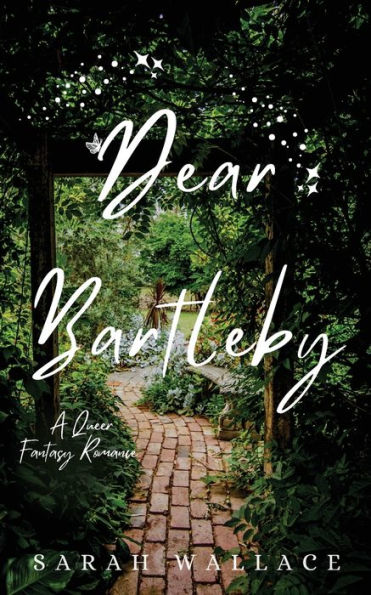
Dear Bartleby - (synopsis) Gavin and Gerry have a younger brother, Sebastian; we meet him in the first book when he writes to Gavin to ask him for a loan for his gambling debts. Unsurprisingly, Seb's wildness and pranks cause him to be pulled from Oxford and sent to live with his older siblings and brother-in-law in Tutting-on-Cress. His father gives him a journal to encourage reflection; Seb christens it Bartleby so he can pretend he's writing to a friend so journaling will feel less boring. These journal entries make up the book, which I guess makes this book an epistolary novel despite epistle meaning letter and not diary entry, but whatever. Seb writes about his day, being bored, his pranks, and his attempted seductions. He's kind of annoying at first, but his older siblings and brother-in-law learn how to best love and support him, and he matures, even getting a love interest of his own (a wonderful trans man named Laurence). Also in this story is Bertie's search for a new Royal Magician; he hires Seb as his assistant, so he's very involved in the process. Some of Pip's past comes up as well, so trigger warnings for that. I also really enjoyed this book despite the sad parts. Gay and trans rep. ★★★★, 🌢🌢


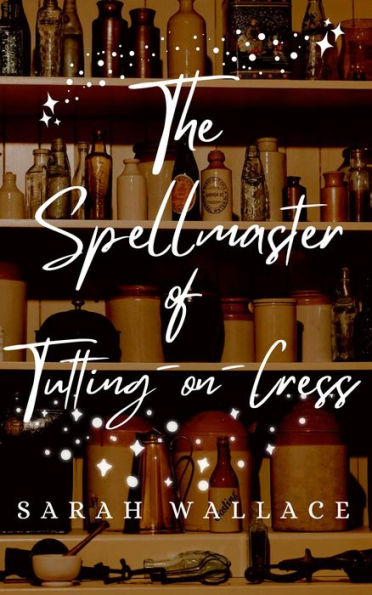
The Spellmaster of Tutting-on-Cress - (synopsis) It's Gerry's turn to have a book, a love interest, and her family and friends' meddling. Gerry took over the Tutting-on-Cress spell shop when the previous spellmaster retired, and she's very happy despite it being a step down in society. Everyone in her life thinks it's high time she met someone and settled down, so they all force her to endure blind date teas and, you guessed it, meddling. Basil Thorne has just moved to T-O-C after losing his father to step in as the new head of the family to his much-younger half-siblings (who are just delightful) and stepmother. He's never been part of a big, loud family before, and, on a sibling-demanded trip to the village, has his head turned by the kind, pretty spellmaster...

Skip this part if you don't want to read spoilers or my rants. I ranted about the lack of consent and amatonormativity from the meddling in this other blog post:

everyone kept trying to set up the heroine with this guy she obviously liked even though she explicitly asked them all to not do that and respect her wishes re: not being set up because it's cringey and embarrassing. The whole "it's for your own good! otherwise you'd be single forever!" excuses being used to ignore said wishes just felt gross. It's the lack of respect and ignoring of consent for me. 😠 The lack of apology and/or realization that the setting-up was being pushed on people without their consent is very annoying to me. And the whole smug "see? I was right!" thing when the couples invariably ended up together used to justify it! Ugh. It's not cute or funny, and it smacks of amatonormativity. Not everyone needs to be paired up, and single people aren't tragic! 
The reason it bothers me to read about this amatonormativity and lack of consent is because this series is so otherwise respectful, queer- and trans-friendly; it throws me for a loop. You expect this sort of thing from regular cishet romance novels, you know? In book 2 Nell's aromanticism is respected, although they kind of have her "end up" with someone too. Gerry is basically the sole straight in the series, but she discusses maybe being demi-romantic with her friends and family since she likes Basil (who is pan and in love with her) but doesn't feel a romantic spark and isn't swept off her feet like she expected. They kind of lost me there, since the chemistry between her and Basil was swoony, and reading about how she interacted with him and felt about it didn't feel that different than the way reading about other romantic pairings have felt. Shit, Gerry and Basil have more romantic chemistry and cute interactions than Gavin & Charles and Bertie & Pip combined! Am I on the aromantic spectrum? Who even knows. 

Another sublot is that the Kentworthys host the eldest Hartford brother John and his wife Veronica (and their child who we never see because Veronica believes children should be unseen and unheard???). They are the worst and I hate them. Charles starts his signature loving psychology on John and he starts to improve. Literally how did the Hartford parents fuck up their kids so much that Gerry is the only one who doesn't hate herself and/or is a jerk in the beginning??? Shoutout to Basil's transfem bestie Modesty who is one of my favorite characters in the entire series; she's so awesome and I hope SW writes a book about her or at least that she shows up in all future books. I loved all the kids, even if some of them were written a bit too old and a bit too young sometimes; maybe we'll get a spinoff series about them finding love after they grow up?  This review has gotten way too long so I'll end it here. ★★★.5 (affectionate), 0 chili peppers (just kissing)


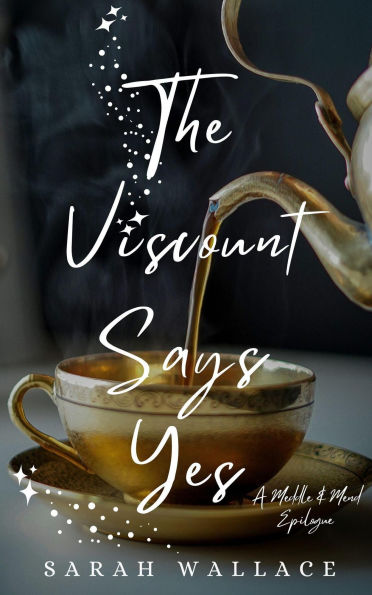
The Viscount Says Yes - (synopsis) This book wraps up Pip and Bertie's love story, which started in book 2 (1GT) when Pip flirted with Bertie after being caught trying to steal from him, and Bertie fell in love with him immediately. Their relationship developed very slowly over the next few books, each one giving us a little glimpse into how they felt about one another (how is them just looking at each other without touching in the garden at dusk so gd romantic??). The slow pace was necessary due to Pip's sad history that he needed to heal from (this book takes place about 2 years after TEoP). Bertie and everyone else had always taken great care to avoid touching Pip and asking for consent before doing so etc., and Pip decides he's ready to start initiating physical acts of affection with Bertie as he (B) never would initiate out of respect, and starts thinking about proposing to Bertie for the same reason... Charles, now that he has seen all his other friends and relations settled or about to be, sets his sights on Pip and Bertie, but at least his meddling is proportionally gentler due to Pip's history. I like Charles a lot but with all the meddling, he's basically as controlling as Veronica. Like just let your friends find love their own way and on their own timelines, dude! Anyway, with that title you can guess what happens in the book. Wallace wrote a little note at the end saying they've burned themself out writing the M&M series so they're wrapping up the series with this book. I hope it's a pause and not a full ending, and that she heals from the burnout soon because I need like 1000 more books in this series! ★★★★, maybe half a chili pepper due to sex mentions? dealer's choice


I know I've complained a bunch about the characters and their decisions, but I really do love this series. The magic is very interesting to read about. All the books are kind of slow, but in a nice cozy way; I enjoyed all the time we spent with the characters. If you like cozy fantasy and Regency romance books, especially ones with lots of LGBTQ+ rep, give this series a try!


*If it's a mostly non-sexist and queernorm society, then why do they still care about reputations (basically a code word for virginity)? What does reputation even mean/matter for people/couples who can't get pregnant? Why the heavy emphasis on birth order when being the oldest sibling doesn't automatically mean you're the most responsible and reliable? (I'm the oldest and my siblings are all more responsible and reliable than me. I should NOT be the head of my family.) Why should the laterborn spouse in a firstborn-laterborn marriage take on the 'wife' role (running the household, raising children, etc.) just because they're a laterborn, while the firstborn spouse takes on the 'husband' role (being in charge of the family and finances etc.)? Shouldn't it be based on personality and interests, and/or shouldn't the roles be shared? Why are there still social classes and poverty? How does capitalism still exist without white supremacy and the patriarchy there to support it?

Wednesday, May 1, 2024

Book Review: An Infamous Army by Georgette Heyer

On the eve of battle, passions are running high... In the summer of 1815, with Napolean Bonaparte marching down from the north, Brussels is a whirlwind of parties, balls and soirees. In the swirling social scene surrounding the Duke of Wellington and his noble aides de camp, no one attracts more attention than the beautiful, outrageous young widow Lady Barbara Childe. On their first meeting, dashing Colonel Charles Audley proposes to her, but even their betrothal doesn't calm her wild behavior. Finally, with the Battle of Waterloo raging just miles away, civilians fleeing and the wounded pouring back into the town, Lady Barbara discovers where her heart really lies, and like a true noblewoman, she rises to the occasion, and to the demands of love, life and war...

This is the second book I've read from Georgette Heyer (here's the first), and I've found her to be a writer of solid historical Regency romances. I've just found out by looking this book up that An Infamous Army is the third book in a trilogy, which is not mentioned at all in my 1970s copy. To be fair I skim or ignore everything before chapter one. The title comes from a phrase the Duke of Wellington wrote in a letter complaining about how ill-prepared and -uniformed his army was. 

Basically this book is Barbieheimer, if the Barbie part were a historical Regency romance novel and the Oppenheimer part were a dry, grim Napoleonic war novel. Actually, I just remembered the heroine's name is actually Barbara so that works perfectly! She's a young widow who is so beautiful and bewitching that she's constantly surrounded by enthralled lovesick men. She's scandalous because she flirts with all of them and paints her toenails gold like a Parisian prostitute!! Quel horreur!!! Alexa, play "Maneater" (either version works fine). The hero is Colonel Audrey, a dashing handsome man who is boring sensible and respectable; this is contradicted in the text by him falling in love with Barbara at first sight and proposing like the second time they meet, as well as him being stupid enough to think Barbara will stop being such a scandalous flirt after they're engaged, despite her telling him straight to his face that she won't stop and will keep doing whatever she wants. He's like "no you won't" and then gets all surprised Pikachu face when she does. Who could have foreseen this??? I don't get why he had to be so much older than her (about ten years). GH really had a thing for older male love interests; in The Nonesuch her hero was like 35 (like Audrey) and her heroine was 28. The gendered double standards re: aging are annoying to me.

The war half of this book is about the Duke of Wellington planning/preparing for war, which mostly seems to consist of him writing letters during the day and then going to balls and dances at night. He's basically the third main character of this book. Audrey is one of his aides, and other aides and their love interests are side characters. This part of the book is very dry and boring; when we get to the Battle of Waterloo it's very violent and sad with all the deaths and injuries. The injured survivors basically crawl to the town where the civilians are staying and the ladies bind up wounds etc. as best they can. The two halves of the book are very inharmonious and the nonexistent transitions between the two are jarring. It'll be like: "Her eyes flashing, Barbara bounded away. [paragraph break] The Duke of Wellington sat down to write a letter..." Heyer really did her research (she has a bibliography in the back of the book; take note, nonfiction writers) and did her best to write about the Duke of Wellington and the Battle of Waterloo in an accurate way, but it would have been better if she'd split the two books up. Pick a lane, Heyer. Don't go chasing war-terfalls; stick to the rivers and the balls that you're used to. Barbarloo was not fun; at least Barbieheimer was two different films so you could choose to skip one. Oh, and the ending was so abrupt I turned the page and was shocked to find it blank. Did they lose a page? Or did Heyer really think the best way to end the book was to have, you guessed it, the Duke of Wellington sit down to write a letter? 

Score: 3 out of 5 stars
Spice score: 0.5 out of 5 chilies 🌢 (just kissing)
Read in: March 30-31
From: a used bookstore called Griffeys' Book Emporium

Trigger warnings: death, dismemberment, limb loss, war, violence, fighting, animal (horses) death, period-typical sexism, period-typical sex shaming, teenage girl forced to marry much older man (past, off-page), infidelity I think

Wednesday, December 13, 2023

November Reads

 I'm so behind on book reviews lol


The Hollow by Agatha Christie - 3 ½ stars

This is another Hercule Poirot mystery that I picked up from the thrift store, and like all the other AG mysteries I've read, it's well-written and interesting. You can read the summary here.  Just about everyone in the story, who are all related or friends, is a suspect, and I didn't guess who the killer was. Besides our beloved M. Poirot, the most fleshed-out characters were the dead man's wife and mistress. The mistress (I've forgotten all their names, of course) is an artist, and it was really interesting to read about how the muse would overtake her and she'd walk around everywhere hunting for the right inspiration until she found it and could create the art she needed to. The wife, a dim woman who worships her husband, is a rather pitiable figure. There's a scene where she and the children are sitting at the table waiting for her husband to arrive, and the food is getting cold, but she's stuck in decision paralysis because if she sends the food back to be warmed right before her husband arrives, he'll be mad and scold her for making him wait, but if she doesn't send the food back he'll be mad and scold her for it being cold. That is such a realistic portrayal of decision paralysis and anxiety. I found the older lady interesting, with her speed-of-light thought process that is definitely ADHD. Poirot obviously solves the murder but it's sad. Still, I enjoyed reading this. The characterization is strong in this one, even for characters who don't come into the story much. 3 ½ stars, 1 chili pepper as there's mentions of sex but no scenes. Trigger warnings: murder, firearms, infidelity, misogyny and sexism, controlling and verbally abusive relationship, antisemitic depiction/description of Jewish character, classism


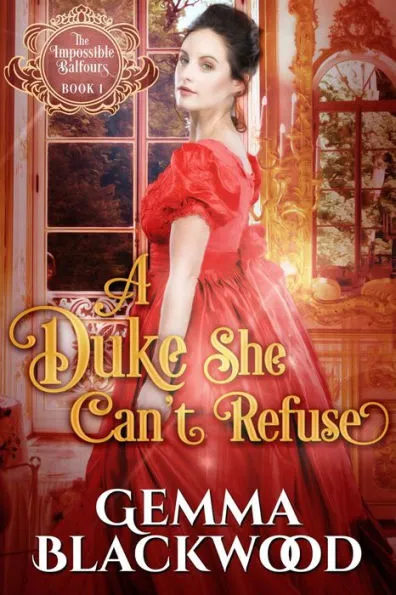
A Duke She Can't Refuse by Gemma Blackwood - 3 ½ stars

This was a free ebook I downloaded from Nook. Book summary here  It's got several romance novel tropes: the nobility love interest (duke, obvs. You'd think no other types of men exist in Regency romance novels except nobility ones), forced/fake engagement, "don't fall in love with me" but of course they do, wallflower/bluestocking doesn't want to marry, etc. This book also has a mystery that was quite interesting, with a couple of thrilling rescues. It's actually a no-spice romance, which I didn't realize until end the because I enjoyed the book so much that I didn't notice. The sexual attraction, "no we mustn't" and kissing is still there though. This, unsurprisingly, is the first of a series; I'd be willing to read the rest, preferably free or from the library. 3 ½ stars, 1 chili pepper for the kissing and lusting. Trigger warnings: young woman is kidnapped and held at gunpoint, a character falls out of a window and dies (off-page/past), house fire/arson, grief, I think someone cuts their hand and bleeds?


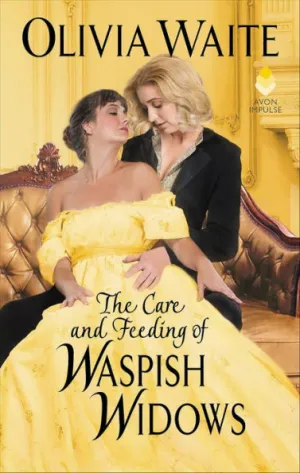
The Care and Feeding of Waspish Widows by Olivia Waite - 3 ½ stars

This is a sapphic Regency romance novel, so of course I put it on my to-read list. The ebook went on sale for $1.99 and I snapped it up. Book summary here  I like that the protagonists are both women in their 40s and have their own careers that they enjoy and are fulfilled by. Type-A Agatha runs a printing business and gentle Penelope is a beekeeper. They meet because a swarm of bees creates a colony inside Agatha's warehouse, and are attracted to each other. Agatha is a widow (although not the waspish one in the book) and Penelope is in a lavender marriage to her brother's partner. This keeps them apart initially as Agatha thinks it's a real marriage (well, it is legally but you know what I mean) and tries to keep her distance, and Penelope sees this as lack of interest. Penelope reads butch/masc as she wears trousers 90% of the time because of the bees and has short hair. There are several other queer people in this book, which I really liked. I also learned a lot about Regency beekeeping practices. There's a lot of conflict with the Lady of the village and her brother the vicar, who together rule the village with an iron fist and attempt to impose their will (touted as "morality" rules) on the townspeople and especially Penelope and her queer friends and family members. They fight back, of course; there's surprisingly a lot of political activism in this book. The Queen Caroline Affair comes up a lot; I had never heard about it but it needs to be made into a period drama. I know I only gave it 3 ½ stars, but I really enjoyed this book and will definitely check out Olivia Waite's other books. 4 chili peppers (this is definitely a spicy book). Trigger warnings: homophobia, religious homophobia, corrupt religious leader, bee killings mentioned, bee cruelty/endangerment, grief, infidelity mentions

Aesthetics moodboard for TC&KoWW

Tuesday, April 5, 2022

Book Review: A School for Brides by Patrice Kindl


I probably picked up A School for Brides: A Story of Maidens, Mystery, and Matrimony from the dollar store, since it seems newish, although the thrift store is also a contender. I bought it because it seemed frothy and bubbly and fun, and it kind of was. Summary:

The Winthrop Hopkins Female Academy of Lesser Hoo, Yorkshire, has one goal: to train its students in the feminine arts with an eye toward getting them married off. This year, there are five girls of marriageable age. There’s only one problem: the school is in the middle of nowhere, and there are no men. 

This book takes place sometime in the Regency era, as there are references to pelisses and Napoleon. The writing tone is that fun retro tone, as if the book were written during that time by a Regency person (albeit one with some modern sensibilities). The setting reminded me of a Regency romance novel I'd read a while back, which was also about a young ladies' school set in a remote English village/town with few marriage prospects. That one was different, though as it was purposefully a refuge for girls who wanted a different life than they were expected to have (i.e. bluestockings and headstrong girls). I want to say it was by Tessa Dare? Some decently big romance writer. That series was more bodice-ripper, and very different than this book, so no copying was going on.

 The author makes the choice to refer to everyone by the way they would be referred to in society. This means all the girls are referred to as Miss Crabbe etc., which was somehow much more confusing than if they'd been named to us as Mary or Rosalind. Luckily there is a character names and descriptions list in the front of the book, which was very helpful. Still, all the girls, except for a few archetypes (the 12 year old baby of the school, the extremely shy possibly autistic girl, the wiseass comedian girl, the probably aroace bluestocking), kind of swam together. The same was true for the older/married women (I got some step/sisters confused). Robert the himbo footman is a beautiful cinnamon roll, too good for this world, too pure. The other men were ok, I guess. No real standouts, save of course for the scoundrels (just gross, not sexy).

I would categorize this book as a young adult comic historical Regency mystery romance. There were a lot of storylines in this book, and while some were more interesting than others, I still enjoyed reading them. I figured out the two mysteries pretty quickly, and found the shy anxious girl's sad storyline very suspenseful. While we didn't spend enough time with each couple's relationship development, making their engagements seem a bit fast/out of nowhere, I felt that each storyline ended satisfyingly. I love the idea and setting of a girls' finishing school, but to provide romantic prospects for even the four oldest girls is a lot of storylines and characters to follow. 

Anyway, I did enjoy this book, and would read the next one (sort of a prequel about the step/sisters). Recommended for lovers of light fun Regency romances.

Score: 4 out of 5 stars
Read in: March 29-30
From: dollar store?
Status: give away/sell

Cover notes: A cute pastel cover, which makes this book seem more frothy and chick lit-y than it is. The font is very '90s chick lit and an interesting choice.

Trigger warnings for this book (rather spoiler-y I'm afraid): Abusive, bullying, controlling nanny/parental figure; adult bullies possibly neurodivergent child, including making her stand on the edge of a tower because she's afraid of heights; absent and neglectful parents; golddigger older man stalks and tries to groom teenage girl into marrying him for her inheritance (otherwise no inappropriate discussions/actions); children tied to borderline-abusive wooden "posture" frames for a period of time; period-typical sexism; dating deception; classism; descriptions of dangerous old medical practices (i.e. leeches)

Monday, July 16, 2018

Book review: The Passion by Jeanette Winterson

The only book I read in June was The Passion by Jeanette Winterson. I picked it up because it sounded interesting. It's set during the Napoleonic wars, aka Regency times, and part of the book takes place in Venice, which I love and have been to. It also sounded kind of mysterious and magical. Here is the summary, from both the back of this book and Amazon:

Set during the tumultuous years of the Napoleonic Wars, The Passion intertwines the destinies of two remarkable people: Henri, a simple French soldier, who follows Napoleon from glory to Russian ruin; and Villanelle, the red-haired, web-footed daughter of a Venetian boatman, whose husband has gambled away her heart. In Venice’s compound of carnival, chance, and darkness, the pair meet their singular destiny.

Right off the bat, I can tell you that I don't like this summary. Whoever wrote it did not read the book that thoroughly. The most glaring example is that the summary says that Villanelle's husband gambled away her heart. This is not true: he gambled away her body. Because he lost at cards, the husband had to give Villanelle to his opponent to work as a "comfort woman" to Napoleon's troops. That is how she and Henri meet. Also, I don't think it's right to give away that Villanelle has webbed feet in the summary, when the book itself is very secretive about it. It gives away the surprise reveal in the last part of the book. The summary makes it sound like Henri and Villanelle meet by chance in Venice. They actually meet in Russia when both decide to run away from the doomed military enterprise (Russia in winter? Does no one ever think?), and Villanelle takes Henri to Venice to hide from Napoleon's men.

As you will have guessed, this book does not shy away from the ugliness of life or war. There was a lot of horrible stuff mentioned, and while I will not list it all, I would apply trigger warnings for explicit sexual scenarios (including non-consensual), forced prostitution, a mention of gang rape, murder, blood, gore, violence, mentions of abandoned feral children, starvation, animal death, and that's all I can think of right now. 

While I liked Henri and Villanelle individually, I don't think I really liked them together as a couple. Villanelle can do so much better than Henri, and she doesn't even feel that way towards him. I am tired of reading/seeing couple pairings that happen just because the guy is in love with the girl. I was also displeased at the ending. After all that suffering and misery, there is no happy ending for the two of them. Villanelle refuses to marry Henri (despite having a child with him) and he goes mad in an insane asylum. Like what? Why? 

However, this was really good and rather beautifully written. If you can stomach all of the ugliness listed above and like the historical setting and topics, I would recommend this book. I liked the Venice setting and events and magical fantasy stuff, such as Villanelle literally losing her heart to a married woman and Henri having to find it before Villanelle is held in thrall. The summary writer probably got this part of the book confused with Villanelle's husband's gambling problem. I also love Villanelle's name; it is a poetic form I learned about in college. (Parents, do not get any ideas.)

The above cover is the one my copy has, and it's ok. Obviously the cards are due to Villanelle's job before she's gambled away, and the mask is because it takes place in Venice. I don't think I've ever seen a book with the author's picture on the front (apart from important literary people like C.S. Lewis). I didn't realize this when I bought the book, but Jeanette Winterson is an important lesbian/LGBT+  writer. I'm not a huge fan of the cover art, but all the other covers were just as bad if not worse. A lot of them featured chickens since Henri works plucking and preparing chickens for Napoleon and apparently the artists only read up to that point in the book.


Score: 4 out of 5 stars
Read in: early June
From: the thrift store
Format: paperback
Status: idk I might give it away at some point

Thursday, January 11, 2018

October-December 2017 books

I read fewer books in the last 3 months of 2017.

I downloaded The Governess Affair by Courtney Milan because it sounded like a fun Regency romp, and instead it turned out to be about a girl who went to work as a governess for a duke and was raped by her employer. She decides she’s going to make him pay or be shamed, and the duke's fixer tasked with getting rid of her falls in love with her. It was a well-written romance with good chemistry between the leads. I think it’s a series that continues. 4/5

Next was another Regency ebook, Hand-Turned Tales, which is a sampler of stories from one author. They were pretty good and enjoyable, some more than others. 3.7/5

I almost forgot this book since I started it in September, but I checked out At the Root of this Longing: Reconciling a Spiritual Hunger and a Feminist Thirst from the library since it was on my to-read list and they had it. I thought this was going to be a book about how to reconcile your religious beliefs with feminism and vice versa, but instead it was about the author, Carol Lee Flinders,’s path to reconciling her spiritual beliefs with the evil and violence towards women in the world. She studied Hinduism with a mentor raised in a matriarchal Indian tribe, and was a scholar of Julian and other medieval Christian women mystics. It was an interesting book, but not as applicable as I thought. I recommend it. 4/5

Remember how last time I wrote about Morality for Beautiful Girls like it was the first in its series? I was wrong. M4BG is the third book, and the first book gives its name to the series: The No. 1 Ladies’ Detective Agency. It was enjoyable, but it centered so much on Mma Ramotswe’s failed first marriage to an abuser and subsequent miscarriage, and that made me sad. Mma R is such a self-possessed and practical person that it’s hard to see her choosing a man like that. 4/5

I reread a kids’ book that I was on the fence about keeping, Midnight Magic by Avi. It has a lot of the elements I like: medieval or renaissance period, magic, mystery, magic is explained as science, plucky girl, hidden passageways, castles, etc. I like this story a lot but I’m going to give it away anyway. 4/5

Portrait of an Unknown Woman by Vanora Beckett is set during the English Reformation and centers on Thomas More’s family, with his adopted daughter as the narrator, and a Dutch painter who made a lot of famous portraits of nobles such as Henry VIII. This was a really good story with political and religious tension, art, secrets, and shocking revelations. A lot of the characters were real people, but this is a historical fiction novel. It was really good, but to me the ending was too abrupt. 3.9/5

My favorite kids’ book that I’ve read in a long time is The Garden of Eve by K.L. Going, which is about a grieving girl who has lost her mom and gets wrapped up in a mystery around a cursed apple orchard, possible Edenic seeds, missing children, and a garden that may not be of this world. It was sad and beautiful and magical, but to me it felt too short, and I had too many unanswered questions. It felt like there was supposed to be more to the story, like it should have been several hundred pages longer. I loved it, though. 4/5

I took the fattest trade-size paperback I had to Cuba with me, The Light Bearer, which was about a Germanic chieftainess leading her people against Rome and trying to deal with treachery at home, as well as a slave turned senator’s son trying to survive corrupt emperors. They’re destined for each other, of course. It was sweeping and very Game of Thrones-esque, as it was very violent and women were getting raped all the time. The heroine was that annoying “the most skilled warrior yet slender and beautiful and everyone fell in love with her and she cheats death 1000 times” thing, which gets old. It was well-researched, but the author kept referring to statues and buildings as white when we now know everything was painted bright colors. I still finished it before the end of my Cuba trip, and was bookless for the last few days. 3.5/5