Friday, September 2, 2022

Book Review: Cuentos: Tales From the Hispanic Southwest

I was thrilled to find this book at my thrift store, as I am not very familiar with Latinx folklore the way I am with other cultures' stories. Back of book summary below:

Witchcraft and magic and the events of everyday life in the Hispanic villages of New Mexico and southern Colorado flow through this collection of cuentos. Together the tales evoke the rich tradition--the wisdom, customs and values--of the early Spanish Settlers and their descendants.

What this doesn't say, and what the compilers/translators emphasize, is that it's not just the Spanish heritage; it's all of the cultures in the Southwest who are combined in the people and in their stories: Spanish, Mexican, and Native American. You see Mexican Spanish words derived from Aztec used (tecolote, zacate), Native American terms (tata/tatita), as well as terms that are clearly from the local dialect of the time (asina for asi). This is fascinating from a linguistic standpoint, and I recommend those studying Spanish and/or Latin American dialects to read this book. There is a glossary in the back for some of the different terms, which of course I did not find out until I was almost at the end. 

Each tale is told in both Spanish and English, with the Spanish on the left page and English on the right; this makes it a bit annoying to read. I struggled through the Spanish parts because of the archaic terms and dialectal differences, and also because my Spanish reading level never improved past elementary school. I'd say I understood anywhere from 80-99% of the text. The English translations definitely took liberties with the source material. I understand that good translations capture the spirit of the text rather than translating just the specific words directly, but there were way too many changes, many of which didn't make sense. Some changes I could see, as the original tales took it for granted that everyone would automatically know everything referenced in the story, but some things were expanded on in an unnecessary way. Some translation choices actually changed the connotation or story. Some examples: one cuento mentions a somewhat conniving Jewish jeweler, while the English translation doesn't mention he's Jewish at all (because of the antisemitism? This was published in 1980; were people that concerned about antisemitism then? Wouldn't it be the correct thing to leave the antisemitism in?). Another cuento mentions women turning into owls; the English text calls them old women. Yet others ascribed emotions, actions or descriptions to characters etc. that weren't present in the original text. It's just so irresponsible. These are learned writers who should know what they're doing! Bad translations are one of my pet peeves.

You may notice that I didn't include an author; this is because it's a bit muddled. The subtitle states that Juan B. Rael originally collected these oral folktales from Colorado and New Mexico, and Jose Griego & Maestas compiled and adapted them for this book, while Rudolfo A. Anaya (author of Bless Me, Ultima!) is the one who made the English translations. Of course, it's basically impossible to know the sources/authors of these stories, as with oral tradition, each teller can add their own details in every telling.

Some of the stories are very short and are almost like longish jokes with punchlines. These often poke fun of or criticize corrupt priests or selfish rich men. Simple indio/Native American characters often get back at these. Christian and Catholic personages like Jesus, the Virgin Mary, St. Peter, and God often show up and are depicted as characters, sometimes acting human. Death also shows up a lot. I learned there are different versions of death, not just the one skeleton with a scythe. One is called manita muerte, short for little sister (hermanita) death. Some of the stories are unsurprisingly moralistic and Catholic/Christian; others involve people getting rich. These reminded me of fairytales I've read, because of the formerly oral feel and moralistic/getting rich themes. There's one about a guy who saves a snake and is awarded the ability to talk to animals and consequently finds money and gets rich that, apart from the setting and language, could have come from Grimm's (the introduction says it's from the 1001 Arabian Nights, which, fascinating). Instead of the familiar "habia una vez.." beginning, these all begin very plainly with "Habia..." or "Esta era un hombre...", which I found interesting. Almost all of these stories have male protagonists; the only one who kinda has a female protagonist is about a shapeshifting witch who's bested by a man.

Overall, I enjoyed this book and am glad I bought it. I think I'm keeping it, although I'm lending it to my dad next so it might end up at my parents' house. I like learning more about Latinx literary culture. 

Score: 3.5 out of 5 stars
Read in: July 24-August 31
From: Savers thrift store
Status: keeping for now

Cover notes: The cover depicts art from the same artist who drew the inside illustrations. I think it's fine. Death never flies over anyone's house in any of the stories, although they are featured quite often.

Trigger warnings for this book: elder abuse and neglect, child abuse and neglect mentions, anti-indigenous racism, period-typical sexism, gambling addiction, fantasy violence, death, Christianity and Catholicism, church and clergy corruption, thievery, witchcraft, can't think of anything else but if you've read fairy tales and folklore from the 1800s then you know the vibe

Sunday, July 24, 2022

Book Review: Simon vs. the Homo Sapiens Agenda by Becky Albertalli

I got this one from the thrift store. This book and its subsequent movie have been pretty famous, so I decided to see what it's all about. Book summary:

Sixteen-year-old and not-so-openly gay Simon Spier prefers to save his drama for the school musical. But when an email falls into the wrong hands, his secret is at risk of being thrust into the spotlight. Now change-averse Simon has to find a way to step out of his comfort zone before he's pushed out—without alienating his friends, compromising himself, or fumbling a shot at happiness with the most confusing, adorable guy he's never met.

This book was good, with real-feeling, relatable teen characters and a cute romance. Simon has an anonymous email correspondence with another closeted gay guy in his high school (they use pen names), and they flirt and fall in love through emails. I am a jaded crone and I still found their conversations and romance to be really cute and properly swoony. Simon forgets to log out of the school computer, and this absolute blister classmate, Marty, sees his logged-in email and blackmails Simon: help Marty get together with Simon's friend Abby, or he'll out Simon. Simon has to try to satisfy Marty, avoid betraying Abby, deal with the tension within his friend group, and learn the blocking for the school play, all while falling in love with Blue (the email guy) and trying to figure out who he is. 

SPOILERY PARAGRAPHS AHEAD

Simon is outed, of course, on the school's secrets tumblr (oh man, remember those? This book was published in 2015). Marty, angry that Abby doesn't like him (duh, he has rancid vibes) anonymously submits a profane, homophobic tirade "from"/about Simon. Simon has to deal with homophobic insults and bullying (nothing physical) at school, as well as people gossiping about him. Luckily some boys are sent to the principal after making sexually suggestive comments/actions about Simon, and the drama teacher stands up for him. Simon comes out to his family because of Marty's actions, and they're supportive. There's a hilarious part where his BFF Nick goes to sleep over at Simon's, and Simon's parents are like "keep the door cracked open" bc Nick's a boy and Simon's like "MOOOM!!! It's not like that!!"

I didn't like the way Simon's friend Leah treated him and their other friends: she was jealous and resentful of Abby for being pretty and popular and skinny, and because Nick liked Abby instead of her. She was obviously hurting, but she made her best friends feel like they had to walk on eggshells around her, and she took out her emotions on them/blamed them for her emotions too much. Leah gets her own book later, and I think it's revealed that she's bi, so I feel like part of the thing with Abby is that she also has a crush on her. That's my hypothesis, anyway. I loved her secretly being in a band and playing the drums.

I liked Abby, but I think it was a bit self-centered of her to be irritated with Simon when she found out about the blackmailing, saying he should have told her since she's not a prize to be won, etc. She's right, but she doesn't understand the level of fear a closeted teen has, and how terrified they are of others finding out, and of the severity of Marty's action. Abby does come to her senses about that later and apologizes to Simon.

There's a scene where Simon, Nick and Abby drive to Atlanta and go to a gay-friendly restaurant, where Simon is immediately adopted by some adult gay guys and plied with alcohol until they realize he's not a college student, getting him hammered. I'm not sure if I was supposed to see it as funny, and while I understood how great it felt for Simon to be around his people, this scene was very anxiety-inducing for me. To their credit, the gay guys immediately deposited Simon back to his friends' table once they found out he was in high school, with the very sweet line "go be seventeen, sweet Simon", but WHY didn't they make sure he was 21 or at least 18 before loading him up with alcohol? It made me very angry with them, and worried for Simon. To their credit, when Simon's parents find out he's drunk, they have a talk with him and ground him.

Marty does get some comeuppance, thankfully. Obviously Abby rejects him, and Simon tells him exactly how his actions made him feel in a very cathartic monologue to read ("you took that [coming out in his own time] away from me!"). Marty's older brother, who is gay, finds out what he did and reads him the riot act off-page. Good.

Some reviewers have said there's not enough conflict or real fear for Simon, but I think there's plenty. There were plenty of jerks at his school being homophobic to him, and he didn't know for sure that his parents would accept him, or to what degree. The setting is in the suburbs (I think) of Atlanta, so it's not super homophobic as the rest of Georgia. Blue turns out to be a cute sportsball player, and isn't that the dream for gay teen boys? To end up with a cute jock who's also sensitive and smart? Good for him. 

END SPOILERS I GUESS

I enjoyed this book and would recommend it to people who like YA and LGBTQ+ books about coming out. Becky Albertalli writes really well, and I think it sucks that she was basically forced to come out because people on the internet have no sense of boundaries or privacy, and hounded her for daring to write a gay character as a "straight" author. That is not how Own Voices is supposed to work. Sorry for ending this review with a bummer. 

Score: 4 out of 5 stars
Read in: June 30
From: Savers thrift store
Status: keeping for now because I need it for next year's pride rainbow book stack

Cover notes: I like the cover ok. Simon's being headless suggests he's holding back, not showing all of himself. Not sure why the title says "homo sapiens agenda" when it's never discussed. 

Trigger warnings for this book: homophobic bullying (non-physically violent) and mocking, teen is forcibly outed, teen is blackmailed about his sexuality, homophobia, adults ply teen boy with alcohol and get him drunk (not knowing he's a teen), underage drinking, sexism re: the Abby thing, internalized fatphobia (Leah), low self-esteem (Leah), mildly suggestive flirty talk between teen boys, masturbation mentions. I can't remember if any slurs are used. Simon's school has Spirit week which includes Cross-Dressing Day, which is probably transphobic

Thursday, July 7, 2022

Book Review: Super Adjacent by Crystal Cestari

I bought this one from Book Outlet because it seemed light and fun and sapphic. I was right about the last part. Book summary:

Claire has always wanted to work with superheroes, from collecting Warrior Nation cards as a kid to drafting "What to Say to a Hero" speeches in her diary. Now that she's landed a coveted internship with the Chicago branch of Warrior Nation, Claire is ready to prove she belongs, super or not. But complicating plans is the newest WarNat hero, Girl Power (aka Joy), who happens to be egotistical and self-important... and pretty adorable.
 
Bridgette, meanwhile, wants out of WarNat. After years of dating the famous Vaporizer (aka Matt), she's sick of playing second, or third, or five-hundredth fiddle to all the people-in-peril in the city of Chicago. Of course, once Bridgette meets Claire—who's clearly in need of a mentor and wingman—giving up WarNat becomes slightly more complicated. It becomes a lot more complicated when Joy, Matt, and the rest of the heroes go missing, leaving only Claire and Bridgette to save the day.

The setting is an alternate universe Chicago where superheroes are real and are a cross between celebrities, public figures, and law enforcement. It's similar to Marvel/DC, except the celebrity angle is really pitched up (disclosure: I've only read a few comics). Each big city region gets four superheroes to protect it, and Warrior Nation is a national corporation/publicity machine/etc. The Chicago WarNat headquarters were really cool to read about; they were kind of like a cross between what I imagine the Avengers tower, CIA headquarters, and Google headquarters to be like. The worldbuilding was fleshed out, and the author's love for Chicago shows.

 Claire is obsessed with the superheroes and with Warrior Nation. Her diary mentioned in the book summary is actually a bulging super-scrapbook filled with files and information on all the superheroes and every aspect of WarNat. She's geeky and a little much with her superhero worship. While she initially thinks Joy is full of herself and used to getting her way due to her pretty girl privilege, it's a very short hate to love thing that quickly becomes them making out in WarNat headquarters broom closets. Their relationship is cute, if a bit first-love-cloying. I liked that the WarNat top brass made Claire the Girl Power advisor because she's young; there's a cool scene where she talks them out of making Girl Power wear a revealing sexy costume.

Bridgette's an old hand in WarNat, having dated Matt/Vaporizer for four years. Her part of the story shows the dark underside of superherodom and celebrity. Vaporizer's fangirls bash her online and, when they come across her in real life, scream into her face that her boyfriend can do better than her. She's called all sorts of horrible names, both online and in person. Also, she's in constant danger since Matt has no secret identity and everyone knows they're dating, so she's been kidnapped countless times, attacked in the street, had important public events ruined by mobbing fans and her boyfriend flying though glass windows. Matt often stands her up, and while it sometimes is to rescue a kidnapped girl, it's just as often to film a commercial for something. It was really sad to read about everything she went through, and I'm pretty sure she was only 18 or so. Bridgette deserved better. I liked that she was friends with the other superheroes' significant others, and they made a little "super-adjacent" club.

The summary makes it sound like Bridgette takes Claire under her wing, but in the story, Bridgette and Claire are thrown together because they're kidnapped by superpowered bad guys. Those baddies are the reason why the superheroes disappear, and WarNat is being all tight-lipped about it. With the help of smarmy assistant Teddy, Claire and Bridgette must find out the truth and save the superheroes.

This book was a fun read in the beginning and suspenseful in the middle and end. It really took a hard look at how difficult it must be to be the significant other or parent of a superhero. Much like professional athletes, the supers join Warrior Nation in part because of the huge paychecks, but their loved ones are constantly afraid they will be hurt or killed. The part where the superheroes go missing is harrowing to read about because of their families' and partners' grief and worry. This book isn't afraid to go dark, despite the cover and premise, and for that I respect it. In terms of the queer representation, there is no homophobia in the book. Claire is out, and while no mention is made of whether Joy is out, she does take her on dates in public and stuff, even after she's famous.

Score: 4 out of 5 stars
Read in: June 20-21
From: Book Outlet
Status: give away eventually

Cover notes: I like the hardcover (which I have) book's purple cover better than the paperback's blue cover. The font is fantastic; lightning bolts and hearts are the letter's holes and sometimes legs, which is perfect for the subject matter. The superheroes are on top of the word "Super", while the girls gaze up at their paramours: Claire lovingly and Bridget exasperatedly. I like that Claire is holding her notebook, but the paintbrushes Bridgette is holding aren't her medium (I don't like the splashes of paint on her jumper; if she did paint she would totally cover her regular cute clothes). Bridgette makes intricate paper sculptures; she doesn't paint. It's an important plot point in the book! They gave Claire red hair when it's said to be purple (with an undercut) in the book. This book cover is fairly neutral, if you're worried about being seen reading a gay book; it will appear to the casual cishet observer that Claire is gazing up at Girl Power in a hero worship way, not a gay way.

Trigger warnings for this book: teen girl is stalked and grossly touched/sniffed by creepy adult man, kidnapping, teen girl grabbed and has her hair set on fire by adult man, violence, misogyny, online trolling/hate directed at teen girl, a character's hand is broken (sound mentioned), blood, injuries, verbal abuse of teen girl by strangers, obsessive parasocial relationships with celebrities

Tuesday, July 5, 2022

Book Review: The Sullivan Sisters by Kathryn Ormsbee

I picked this book up at the Dollar Tree because of its pretty cover, which is in the ace colors. When I saw from a blurb on the back that Kathryn Ormsbee also wrote Tash Hearts Tolstoy, I immediately purchased it. Book summary:

Time changes things.

That painful fact of life couldn’t be truer for the Sullivan sisters. Once, they used to be close, sharing secrets inside homemade blanket castles. Now, life in the Sullivan house means closed doors and secrets left untold.

Fourteen-year-old Murphy, an aspiring magician, is shocked by the death of Siegfried, her pet turtle. Seventeen-year-old Claire is bound for better things than her Oregonian hometown—until she receives a crushing rejection from her dream college. And eighteen-year-old Eileen is nursing a growing addiction in the wake of life-altering news.

Then, days before Christmas, a letter arrives, informing the sisters of a dead uncle and an inheritance they knew nothing about. The news forces them to band together in the face of a sinister family mystery...and, possibly, murder.

The Sullivan Sisters is an unforgettable novel about the ghosts of the past, the power of connection, and the bonds of sisterhood.

So, I'm just going to say it: I was acebaited. I saw the ace-colored cover; I saw that Kathryn Ormsbee wrote Tash Hearts Tolstoy, one of the first ace YA books, and just assumed this book would have at least one asexual character as well. NOPE. I was tricked, deceived, bamboozled; I was acebaited. It should be illegal to have a book's cover be purple, white, grey and black if there are no ace characters! Kathryn and the colors led me astray. Disappointment. At least one main character, Claire, is gay. There are a couple other minor characters who are gay as well, and show Claire what her future can look like as a queer person in a small town.

Despite this, this book was good. It is very sad, what with the death of one parent and the physical/emotional neglect of the other, the family's financial difficulties and alienation from each other. The oldest girl, Eileen, is a teenage alcoholic reeling from the discovery of a family secret. Claire turns to magical thinking and a #girlboss YouTuber for the advice she's missing from her sister and mom. Murphy's desire to be a magician stems from the lack of attention she so desperately craves; she feels invisible. Murphy was probably a bit weaker as a character; she's 14 but feels 12. Even when I wanted to shake the girls, I cared about them and rooted for things to improve for them. 

I have less love for the mother. I can understand working so hard to pay off the father's medical debt, but she didn't have to emotionally withdraw as well. And it made no sense for her to refuse her oldest daughter's money, given their financial situation. She should have been on top of the situation and picked up on her daughters' struggles. Now that I think about it, the mom is totally depressed, but still. She's kind of the least-rounded character; we're mostly told stuff about her.

The story really picks up when Eileen decides to check out their dead uncle's house several towns away, begrudgingly allowing Claire along for gas money; Murphy stows away and surprises her older sisters halfway there. The mystery about their family is quite dark, with murder and abuse involved. It was very interesting and kept me guessing. The book has a happy ending, with the girls starting to get and choose what they want.

Score: 4 out of 5 stars
Read in: June 16
From: Dollar Tree
Status: give away eventually

Cover notes: I have already mentioned how acebaited I was by this cover. It really is quite lovely, although the girls don't look enough like how they're written.

Trigger warnings for this book: murder, blood, gore, parental abuse, verbal abuse, emotional abuse, parental neglect, physical neglect, emotional neglect, maggots in food (including partially eaten food), alcoholism, teenage alcoholic, underage drinking, underage binge-drinking, drunk driving, teen drunk driving, death of parent (from cancer I think?), animal death, animal neglect, animal corpse carried around in tupperware, mention of smell from said corpse, hate mail with threats and slut-shaming, teenage pregnancy mention, poor family (economically disadvantaged), medical debt, bats, creepy doll (does nothing), nice sheriff character

Tuesday, June 21, 2022

Book Review: Upside Down by N.R. Walker

This book was highly recommended by ace bookstagram, which is where I first heard about it. One ace bookstagrammer I follow said it's her comfort read and that she reads it dozens of times a year! I had high hopes for this one. Book summary:

Jordan O’Neill isn’t a fan of labels, considering he has a few. Gay, geek, a librarian, socially awkward, a nervous rambler, an introvert, an outsider. The last thing he needs is one more. But he when he realises adding the label ‘asexual’ might explain a lot, it turns his world upside down.

Hennessy Lang moved to Surry Hills after splitting with his boyfriend. His being asexual had seen the end of a lot of his romances, but he’s determined to stay true to himself. Leaving his North Shore support group behind, he starts his own in Surry Hills, where he meets first-time-attendee Jordan.

A little bewildered and scared, but completely adorable, Hennessy is struck by this guy who’s trying to find where he belongs. Maybe Hennessy can convince Jordan that his world hasn’t been turned upside down at all, but maybe it’s now—for the first time in his life—the right way up.

It was definitely the fact that Jordan is a librarian that cinched it for me. Ace rep AND a librarian? Insta-buy. Jordan's librarianship seems to consist mostly of shelving, helping patrons, and gossiping with his lesbian BFF Merry (who works with him). That seems fair. I liked that Jordan suggested Hennessy hold the ace support group meetings in the library's meeting room, as that is such a librarian thing to do. Jordan's claim that he needs to wear a grey suit & button-up shirt every day, forcing him to accessorize solely with scarves and shoes, seems less likely. Public librarians typically dress anywhere from casual to business-y. You probably won't see a librarian in jeans, but I highly doubt you'll see one in a full business suit. Australia (where this book is set) does not strike me as an overly formal place. Merry wears the colorful twee librarian aesthetic, obvi.

This book is, naturally, very heavy with ace rep. It's always affirming to read a book with asexual characters, but this one is almost too heavy, with whole paragraphs sounding like they've been pulled from AVEN or an encyclopedia. This could be a good introductory read for people who best consume concepts from stories, but as a seasoned ace from the Graduate School of Tumblr, I got kind of impatient with the Asexuality 101 and 102 explanations. Both Hennessy and Jordan have had relationships end because they were ace, and Jordan felt like he was broken because he didn't want to have sex. The pain behind those occurrences felt real and grounded the story. I wish I had a local ace support group; that would be sweet.

To me, the characterization is the weakest point. Neither character really seems real; they just seem like a combination of various tropes, attributes and roles. Hennessy (SUCH a dumb name) is basically a perfect guy: he's really good-looking, really smart, really nice, very moral and a good friend. He's the encyclopedia entry-spouter. His awful name and cool job are the only interesting things about him. He's pretty boring. Jordan is Adorkable To The Max. He rambles CONSTANTLY, like the stupidest stuff no one in their right mind would say out loud. He truly sounds unhinged and is constantly drowning in anxiety to an unhealthy degree. His brain goes immediately to the worst-case scenario for the smallest things. He's also constantly blurting out Samuel L. Jackson's favorite word, very loudly, in the most inappropriate times. Merry truly deserves a medal for putting up with him. It would be exhausting to be his friend, let alone his significant other. I grew tired of his spiels very quickly and found them embarrassing and annoying rather than funny or cute. Jordan is supposed to be 26, but he sounds and acts much younger, like a teen baby gay. It irritated me that I was supposed to find this anxiety-ridden mess funny.

Jordan and Hennessy's relationship is kind of cute. They ride the same bus and are cute together, and the other commuters get emotionally involved in their relationship and ship them and give advice, which is kind of funny. Their dates are cute, and I want to go to the restaurants they visited because the food sounds amazing. Hennessy is constantly having to reassure Jordan due to his anxiety and low self-esteem. I found the climax of the plot irritating because it involved Jordan's anxiety and thinking-the-worst-ness and a lack of communication. There's also a poly secondary plot with some of their friends. The writing in this book felt very fanfiction-y, kind of juvenile, romance-focused and gush-y. To be fair, I have read amazing writing in fanfiction before, better than some published books I've read (like this one). The book was published in 2019 but feels like it takes place in the early 2010s for some reason.

Overall, I mostly liked this book and am glad I read it. I wish I'd had/read this book when I was an older teen, as I think I would haven enjoyed it more and gotten more from it. Other people hyped it up so much for me that I expected more and was kind of disappointed.

Score: 3.5 out of 5 stars
Read in: June 14-15
From: Book Shop dot org
Status: keep for now

Cover notes: This cover seems really late 2000s/early 2010s to me, with the dots and the partial faces and the zany font (which I do like). I think this cover is subtle enough, for those who are wary of reading gay books in public. The back cover does have the blurb though. I like how the asexual flag is on the top arrow of the  N of the title.

Trigger warnings for this book: acephobia, anxiety, panic attacks (I think),  homophobia mentions, character estranged from birth family, house break-in and theft mention, sex mentions, an interaction can be read as polyphobic, high on chemical fumes mentions, drunk amorous couple mention

Wednesday, June 15, 2022

Book Review: Ash by Malinda Lo

Spoilers throughout, since I'm incapable of talking about a book without saying them


Malinda Lo's books have at least tangentially been on my radar for a while because she writes a lot of fairytale retellings, and those are my favorites. I've never read anything by her, though, as I don't read a lot of YA these days (well, much less than I used to in my twenties). I got this one from Book Outlet, unsurprisingly. Book summary:

In the wake of her father's death, Ash is left at the mercy of her cruel stepmother. Consumed with grief, her only joy comes by the light of the dying hearth fire, rereading the fairy tales her mother once told her. In her dreams, someday the fairies will steal her away. When she meets the dark and dangerous fairy Sidhean, she believes that her wish may be granted.

The day that Ash meets Kaisa, the King's Huntress, her heart begins to change. Instead of chasing fairies, Ash learns to hunt with Kaisa. Their friendship, as delicate as a new bloom, reawakens Ash's capacity for love—and her desire to live. But Sidhean has already claimed Ash for his own, and she must make a choice between fairy tale dreams and true love.

Entrancing and empowering, Ash beautifully unfolds the connections between life and love, and solitude and death, where transformation can come from even the deepest grief.

Everyone is familiar with the sadness of the Cinderella story: Cinderella's father is dead, or isn't around to defend/protect her from her wicked stepmother and stepsisters; said steps treat her cruelly and force her to be a servant; they don't let her go to the ball. But Ash is soaked with grief from beginning (we open on Ash's mother's funeral) to almost the end. Grief and a desire to escape is the constant throughout the story. An explanation is given for the stepmother forcing Ash to be a servant: Ash's father saddled the family with his debt when he died. The numbness from grief and depression explains why she stays and doesn't fight back. Ash does feel grief about her father's death, but it's more about losing the last bit of childhood safety and security that she had. If her grief for her father's death is a lake, her grief for her mother's death is the ocean.

The plot with Sidhean is interesting. You may have gathered from the name that the country this book is set in is based heavily on, or is a version of, medieval/renaissance Ireland (Ash's actual name is Aisling, pronounced ASH-ling). The fairies of this book and its stories are the dangerous, alluring fairies of Irish (and other) folklore. They spirit unsuspecting or enthralled humans away, steal babies and leave changelings, time in fairyland is different than time in the human world, and they are said to be found in the deep forest. Ash returns to the forest again and again for this reason. Her life is so miserable that she'd prefer to be taken by the fairies, and wonders if they took her mother. Ash's dynamic with Sidhean, who of course is gorgeous, alluring, and kind of creepy in his unhumaness, is very standard YA/sometimes adult fantasy romance. She is attracted to him, literally; she is drawn to him like a pin to a magnet. She continually asks him when he will take her away. She is SPOILER the one human Sidhean has ever fallen in love with, due to a curse. That Ash ends up with the huntress Kaisa instead is truly the funniest form of straightbating I've ever seen. I knew it was going to happen, but the way their dynamic is written made me question it, as the straight pairing really feels inevitable. END SPOILER

The dynamic with Kaisa is interesting. She's the King's Huntress, which is such a kickass title and job to have. Their relationship is a really slow-burn one, in contrast to the instant attraction to Sidhean. At first they just seem like friends. While Sidhean represents the deep, dangerous, and dark part of the forest, Kaisa is the normal, light-filled, nature part of the forest. Ash has been cooped up in the house and walked constantly in the dark of the forest, hoping to be taken, but Kaisa brings light into her life, offering her kindness and friendship to Ash. Kaisa teaches Ash to ride a horse. Ash goes to the royal hunt and the ball to see her. It may seem to most readers that less time and effort is spent on developing or depicting the relationship between Ash and Kaisa, that it lacks the spark that Ash and Sidhean have, but it's important that love is shown as not the flash of attraction, but as a quiet, steady thing you build together over time. 

I loved the little flashes of queerness in this book. It is of course very queer to feel as if one doesn't belong, to long for escape, and to be hated or abandoned by one's family, sadly. Read this article for a queer mini-analysis of Cinderella. The first time Ash feels seen after her parents' deaths and enslavement is when the huntress before Kaisa visits the manor Ash's stepfamily are guests at and smiles at and talks to her, telling her a fairytale and maybe winks at her? Ash feels alive and is a bit disappointed when the huntress leaves without looking at her again. Kaisa tells her a fairytale about a huntress and fairy queen falling in love (!) to gauge if Ash is queer. When at her stepmother's relative's house, the other servants convince her to sneak off with them to a bonfire costume party and give her a (boy's) page uniform to wear. Ash is struck at how transformed she is in male clothing, and she likes what she sees in the mirror. At the bonfire, she sees two women laughing and kissing. There is no homophobia in this universe, although heteronormativity exists. The prince still needs to marry a princess, and when Ash sees him, she wonders why her stepsisters would ever find him handsome (lol). I think today's teens would get too impatient with the lack of overt queerness (besides KAisha), as this book was published ten years ago. This was one of the first mainstream lesbian YA books, and one of the first with a happy ending. There is something healing about reading a lesbian/queer fairytale retelling, as fairytales are told to children from a young age, and are part of the indoctrination into heteronormativity. 

 My only quibble is that there is no comeuppance for the stepmother and bitchy stepsister (in keeping with other adaptations, one stepsister is nice-ish). I didn't want birds to peck their eyes out, but for Ash to stand up to them and tell them exactly how she felt about them treating her like that would have been nice. She just leaves without saying anything. Anyway, I really liked this book and am glad I bought and read it. Lo's writing is just lovely and brings to mind Robin McKinley and Patricia M. Wrede. 

Score: 4 out of 5 stars
Read in: June 7-8
From: Book Outlet
Status: keep

Cover notes: A typical example of the YA fairytale retelling from the 2000s. The girl (who appears to be Asian, like Lo, even though Ash/Aisling is probably Irish) is posed in a way that recalls Ash lying down on her mother's grave. She was wearing clothes over the corset & petticoats, though.

Trigger warnings for this book:  child abuse, (step)parental abuse, child enslavement, domestic slavery, physical abuse of child/teen, child and young adult locked in cellar, controlling and isolation of child/teen/young adult, immortal adult fairy man could be seen as grooming young human teen girl, death, grief, girl threatened with homelessness, it is implied that girl will be raped if she is homeless, adult viciously cuts girl's hair off as punishment, kidnapping mentions, animal death, hunting, blood, gore, magic/enchantment, magical curses

Tuesday, June 7, 2022

Rest of May books - children's books

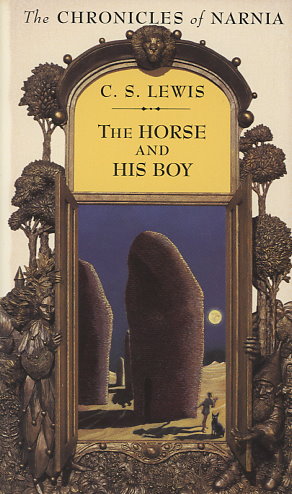
Continuing my Narnia reread, I read The Horse and His Boy, which is one of the most unique books of the series. Two enslaved Talking Horses and their runaway child charges escape from Calormen (Arabian Nights land) to go to Narnia, braving the bustling capital city, royal entanglements, and mysterious lions. All the other books are set in Narnia and partially in England, so the change is refreshing. We see the story through the eyes of Shasta, a Northern (white) boy who decides to run away with Bree (Talking Horse) when his adoptive father decides to sell him to Bree's master. I would have liked to equally hear the story from Aravis, the Calormene noble girl escaping an arranged marriage with her Talking Horse Hwin. But of course the whole point of this book is that brown people can't be trusted, except for One Good Brown Person. Fascinating setting, even if the males in this story act stupidly. The kids stumble onto conspiracies which are interesting and dangerous. I liked this book despite the racism, and I liked Aravis' classism being pointed out and comeuppance given. 4.5 stars, permanent collection. Trigger warning: racism, racist stereotypes and caricatures, misogyny, slavery, war, child soldiers, children with weapons, physical violence, child abuse mentions, children hit by adults, a slave is whipped, a lion claws a child, sexism, classism, entitlement, child marriage, arranged marriage


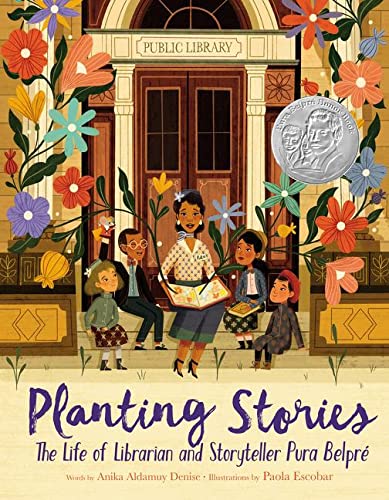
Next was Planting Stories: The Life of Librarian and Storyteller Pura Belpré by Anika Aldamuy Denise and illustrated by Paola Escobar, which I bought from Book Outlet. This is a picture book biography of Puerto Rican librarian Pura Belpré, who brought Spanish stories and bilingual storytelling to the latine children who attended the New York Public Library. The American Library Association has a Pura Belpré award for excellent latine children's books, such as this one (note the silver medal). This is a beautiful semi-bilingual book with bright, lovely illustrations, and I enjoyed reading it. My mom, who was born in New York and grew up in the sixties and seventies, was delighted to learn about Belpré. I really look up to Belpré, as a latina librarian. Representation is so important, and I laud those who paved the way. 4.5 stars, keeping.

Monday, June 6, 2022

Book Review: The Sherlockian by Graham Moore


I think I bought this one from the thrift store. I've been into Sherlock Holmes since I was a kid, plus I liked the academia angle of this Sherlockian mystery. Back of book summary:

Hurtling from present day New York to Victorian London, The Sherlockian weaves the history of Sherlock Holmes and Sir Arthur Conan Doyle into an inspired and entertaining double mystery that proves to be anything but "elementary."

In December 1893, Sherlock Holmes-adoring Londoners eagerly opened their Strand magazines, anticipating the detective's next adventure, only to find the unthinkable: his creator, Arthur Conan Doyle, had killed their hero off. London spiraled into mourning-crowds sported black armbands in grief-and railed against Conan Doyle as his assassin.

Then in 1901, just as abruptly as Conan Doyle had "murdered" Holmes in "The Final Problem," he resurrected him. Though the writer kept detailed diaries of his days and work, Conan Doyle never explained this sudden change of heart. After his death, one of his journals from the interim period was discovered to be missing, and in the decades since, has never been found.... Or has it?

When literary researcher Harold White is inducted into the preeminent Sherlock Holmes enthusiast society, The Baker Street Irregulars, he never imagines he's about to be thrust onto the hunt for the holy grail of Holmes-ophiles: the missing diary. But when the world's leading Doylean scholar is found murdered in his hotel room, it is Harold-using wisdom and methods gleaned from countless detective stories-who takes up the search, both for the diary and for the killer.

Sounds right up my alley, right? First off, a quibble about the title. As the main character explains, Sherlockians are from a school of thought that Sherlock Holmes was real and really wrote the books (similar to the Sherlockian game, I guess), while the Doyleans were more normal about it and did see Arthur Conan Doyle as the author of the books. According to The Sherlockian, the groups were opposed to each other, nearly rivals. The dead guy made looking for Conan Doyle's lost diary his life's goal, which suggests he was not a Sherlockian but a Doylean. The main guy didn't seem like much of a Sherlockian either, but then he wasn't purely academic. Clearly the title is chosen more for its appeal, as more people know who Sherlock Holmes is than Arthur Conan Doyle.

This book has two plots: we follow Harold in the present day as he tries to solve the dead scholar's murder and find the lost diary, and in the second we follow Conan Doyle himself as he deals with the aftermath of "killing off" Sherlock Holmes (people wore mourning bands because they were so sad, and some angry ones physically attacked ACD in the street, lol) and tries to solve some serial murders. This part actually felt weaker than the "modern" part, which is saying something. ACD and Bram Stoker (they were BFFs IRL) are kickass sleuths! At one point they crossdress to get into a suffragette meeting, lolwut. The modern stuff was also rather suspend-your-disbelief-y (Harold really wore his deerstalker cap around EVERYWHERE? And no one ever bullied him for it?). I did like how the book made it clear that murder is horrible and sad; sometimes murder mysteries gloss over that. 

There's an obligatory female character (I want to say her name is Sophie or something?) who's all chipper and nice and normal and I braced myself for their inevitable falling in love and getting into a relationship together and it. didn't happen? The reason she kept hanging out with him to solve the murder made sense (it wasn't because she thought he was cute but because she was being paid to), and while Harold does feel comfortable around her (which he never does with anyone because he's so anti-social), they grow to like each other as friends I think, not as romantic prospects. So that part was somewhat refreshing to read. Also she was quick-thinking and kind of badass. In the 1900s part of the book, it's young women who are getting serial-murdered, and they're found naked, so :/ There are suffragettes, which is cool, although ACD was sexist to them (at one point IRL they mailed him a pipe bomb, lol [he wasn't hurt]). ACD really was such a dick, though, wasn't he? Having Sherlock Holmes be his most famous creation when he hated him is so hilarious. It's what he deserves.

I'm writing about my thoughts on the ending here, highlight to read: So obviously he finds the diary but it's so sad 'cause the dead scholar really killed himself thinking it was burned when it wasn't so he threw his life away for nothing. Plus that guy was smarter than Harold and he didn't figure it out? Plus then he's so sad after reading about the serial murders and ACD killing the incel serial killer guy and his sister accidentally that Harold lets the girl throw the book into Reichenbach Falls??? Like I don't care how sad a culturally valuable item makes me, or if it changes things or the author's reputation; I am absolutely not going to destroy it, or let anyone else destroy it. My archivist brain is cringing just thinking about it. Also, they really threw the diary down Reichenback Falls. Like Sherlock Holmes. Wow. Also, the serial-murdered women are suffragette best friends, two of whom are lesbians in love. The first two were wooed by and eloped with the same young man so he could rape and kill them, just because he was so violently misogynistic and hated suffragettes. These young women were best friends, and they didn't even talk to each other about who they were courting? That makes no sense. Women talk to each other, and these girls were really close.

Anyway, if you're a true Sherlock Holmes scholar/academic/fan this may annoy you, but it was an enjoyable way to pass a four-hour reference shift. I'm not sorry I read it, but as you can see, I don't even remember the characters' names. Check it out from the library if it sounds interesting to you. 

Score: 3.5 out of 5 stars
Read in: May 23
From: Savers thrift store
Status: give away

Cover notes: I really like the use of the classic pipe turned on its side with a blood splatter to make a question mark. I also like the old paper-esque background. Such good cover design.

Trigger warnings for this book: murder, rape, misogynistic violence and murder, blood, gore, suicide, shooting deaths, wound and corpse descriptions, serial killer, homophobia, lesbophobia, sexism, bomb mentions, terrorism mentions, archival items misuse and destruction